What Mysteries Do the Nag Hammadi Texts Reveal About Early Christianity?
Unlocking Ancient Mysteries: The Enduring Fascination with Gnosticism and its Spiritual Insights
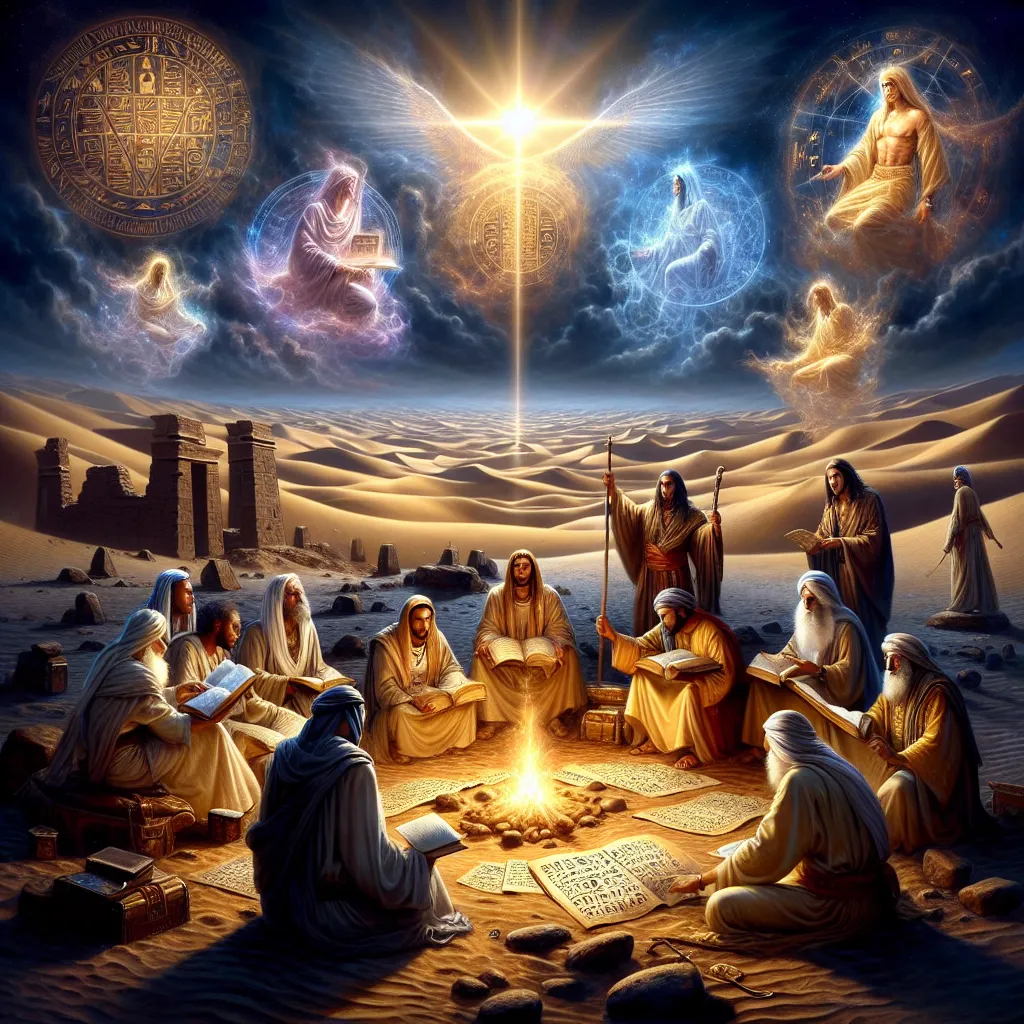
Since the discovery of the Nag Hammadi library in Egypt in 1945, interest in early Christianity’s roots has skyrocketed. People are particularly fascinated by the Gnostics and their unique take on biblical scriptures. Gnosticism, as a field of study, is relatively new, causing various scholars to have different interpretations. Consequently, misconceptions abound, often sensationalizing and mystifying these ancient teachings beyond scholarly intent.
The term “Gnostic” derives from the Greek word “gnosis,” meaning knowledge, especially a form of spiritual or intuitive insight. Ancient texts used this term positively, suggesting a superior spiritual condition. Even today, scholarly literature frequently applies the label to individuals connected with a supra-rational kind of knowledge, such as Islamic mystics or Sufis.
However, when discussing the Gnostics, we refer to a specific movement within early Christianity, notorious for its world-neglecting attitudes and complex metaphysical systems. The Gnostics represented an early strand of interpretive Christianity that eventually faded as orthodox Christianity emerged. For centuries, the only mention of Gnostics came from their critics, the heresiologists, who deemed them heretics.
The discovery of the Nag Hammadi library changed everything. These Coptic texts written by Gnostics themselves provided scholars with a clearer understanding of their beliefs and practices. However, there is still no scholarly consensus on how to categorize Gnosticism. Some view it as a broad religious movement, including various non-Christian traditions. Others argue that “Gnosticism” as a category is a modern construct misunderstood by contemporary contexts.
David Bracke, a notable scholar, proposes a narrower definition, identifying Gnostics specifically with the group known as the Sethians while recognizing overlapping movements like the Valentinians.
So, who exactly were the Gnostics? They operated within the chaotic environment of early Christianity, a period often misrepresented as a unified orthodox church splintered into heresies. Instead, it was a time of diverse and competing interpretations of what it meant to follow Christ.
The Gnostics’ worldview was distinct. They believed the material world, created by an ignorant and imperfect deity named Yaldabaoth, was inherently flawed. According to their myth, a higher divine realm exists, ruled by an unknowable God called the Invisible Spirit. The material world is a prison from which humans must escape through acquiring gnosis, or hidden spiritual knowledge.
Jesus, in the Gnostic view, was a divine being sent to impart this secret knowledge, not to suffer and die as an atonement for sin. The Gnostics often rejected common Christian practices like the Eucharist, focusing instead on mystical and intellectual ascent.
The Valentinians, often confused with the Gnostics, also shared similar myths but blended in more traditionally with mainstream Christianity. They emphasized secret teachings within study circles. Marcionites, another related group, rejected the Hebrew Bible completely, unlike the Gnostics who saw it as misguided yet useful.
As orthodoxy cemented itself in the Roman Empire, the once-thriving Gnostic movement faded into obscurity. But remnants of their thought persisted in later movements like Manichaeism and Mandaeism. Today, there’s renewed interest in Gnosticism, with individuals and communities aiming to revive these ancient spiritual practices.
Understanding Gnosticism sheds light on the complex tapestry of early Christian beliefs and modern religious movements. The rich diversity of thought during Christianity’s formative years continues to intrigue and inspire, making this ancient “heresy” a subject of enduring fascination.