How Did Neoplatonism Shape Our Understanding of Reality and the Soul?
Tracing the Mystical Blueprint: Neoplatonism's Enduring Legacy in Western Thought
Neoplatonism is often heralded as one of the cornerstones of Western thought, deeply influencing philosophy and theology across many religions. It’s usually seen as a continuation and evolution of Platonism, the teachings of Plato. While calling it “new” might be modern scholars’ doing, the thinkers themselves just saw it as a true interpretation of Plato’s teachings.
Rooted in late Antiquity, Neoplatonism profoundly impacted Christianity, Islam, Judaism, and all of Western thought—even informing much of what we call mysticism today. But what exactly is Neoplatonism?
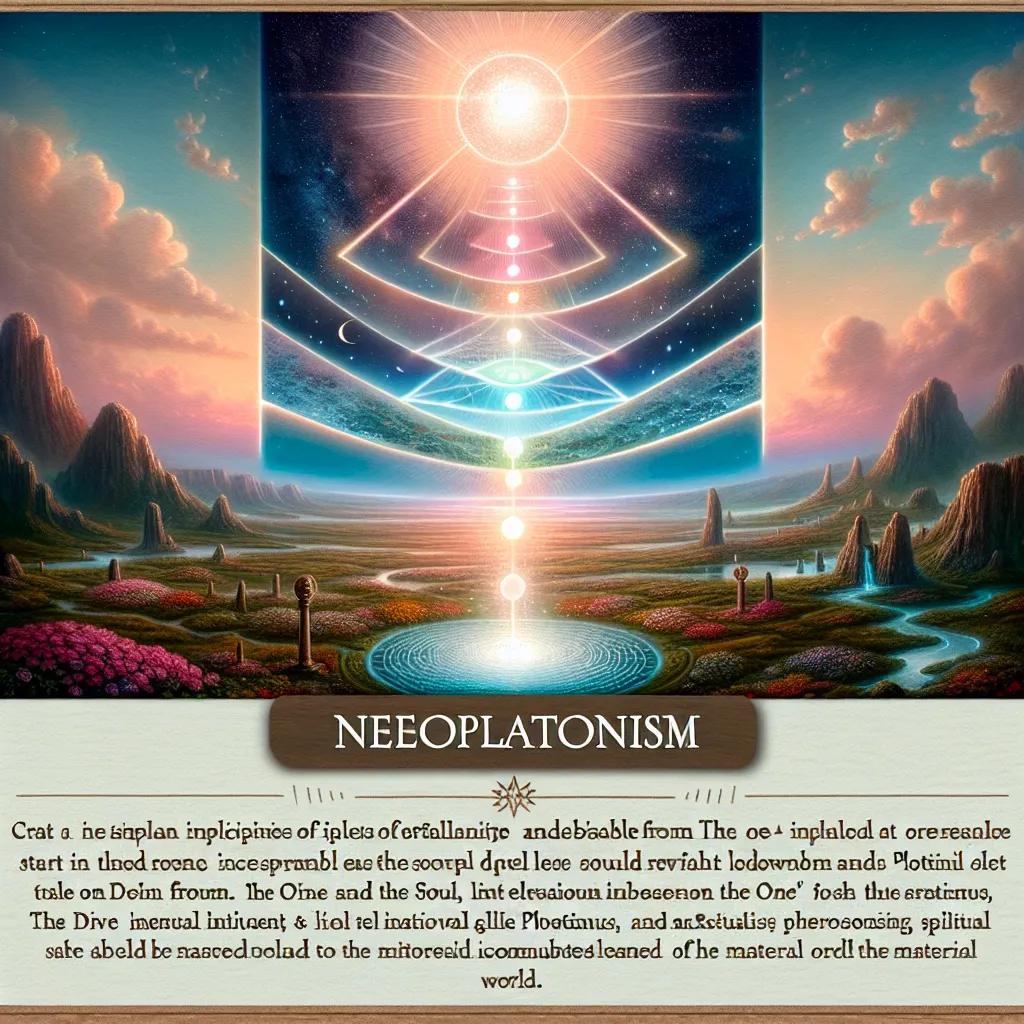
Platonism originally centered around the world of forms, as Plato described. Neoplatonists built on this, introducing more structured interpretations about reality’s levels. For them, reality started with “The One,” an indescribable source beyond all comprehension. From The One emanated the Noose (a form of divine intellect), then the Soul, and finally, the material world we experience.
The father of Neoplatonism is usually considered to be Plotinus, a philosopher from the third century who spent his career in Rome. Renowned in his lifetime, much of what we know about him comes from his student, Porphyry, who compiled his writings into the Enneads. These writings outline Plotinus’s philosophical system, which tries to expound on Plato’s teachings and introduces us to the complex hierarchical structure of reality.
Plotinus’s vision is striking for its emphasis on inward journey and unity with The One. For instance, he believed in an “undescended soul,” where part of our soul always remains in the Noose, even if we aren’t aware. Plotinus advocated for a turn away from bodily desires and towards intellectual and spiritual perfection. For him, realizing one’s true nature involved a sort of inward contemplation, stripping away all that’s external to recognize our participation in higher realities.
His followers, like Porphyry, stuck closely to his teachings while others, like Iamblichus and Proclus, expanded and added complexity. Iamblichus, for instance, introduced the concept of theurgy—ritual practices to invoke the gods’ help in the soul’s ascent. He visualized the divine realm much more elaborately than Plotinus did, positing various levels within both The One and the Noose.
Neoplatonism’s influence spread widely. Early Christian theologians like Dionysius showed clear Neoplatonic influences in their apophatic (negative) theology, discussing how the ultimate divine reality is beyond all human concepts. In the Islamic world, philosophers like Avicenna and the Sufi Ibn Arabi intertwined Neoplatonic ideas with their own. Jewish mysticism, particularly Kabbalah, also bears Neoplatonic marks.
Even today, the ripples of Neoplatonism are evident in modern philosophy, esoteric thought, and various spiritual traditions. Its structure of ascending levels of reality, flowing from and returning to a singular, ineffable source, provides a framework that’s been adapted in myriad ways.
Understanding Neoplatonism allows us to recognize its echoes across Western thought and various religious traditions. It’s a rich and continuous field of study, punctuated by profound attempts to understand the nature of reality and the place of the human soul within it. As we dive deeper into its depths, we uncover insights that not only shaped the past but also inform our current contemplations.