What Can Ancient Demons Teach Us About Modern Superstitions?
A Glimpse into Mesopotamian Demonology: A Complex and Nuanced World of Supernatural Forces and Protective Rituals
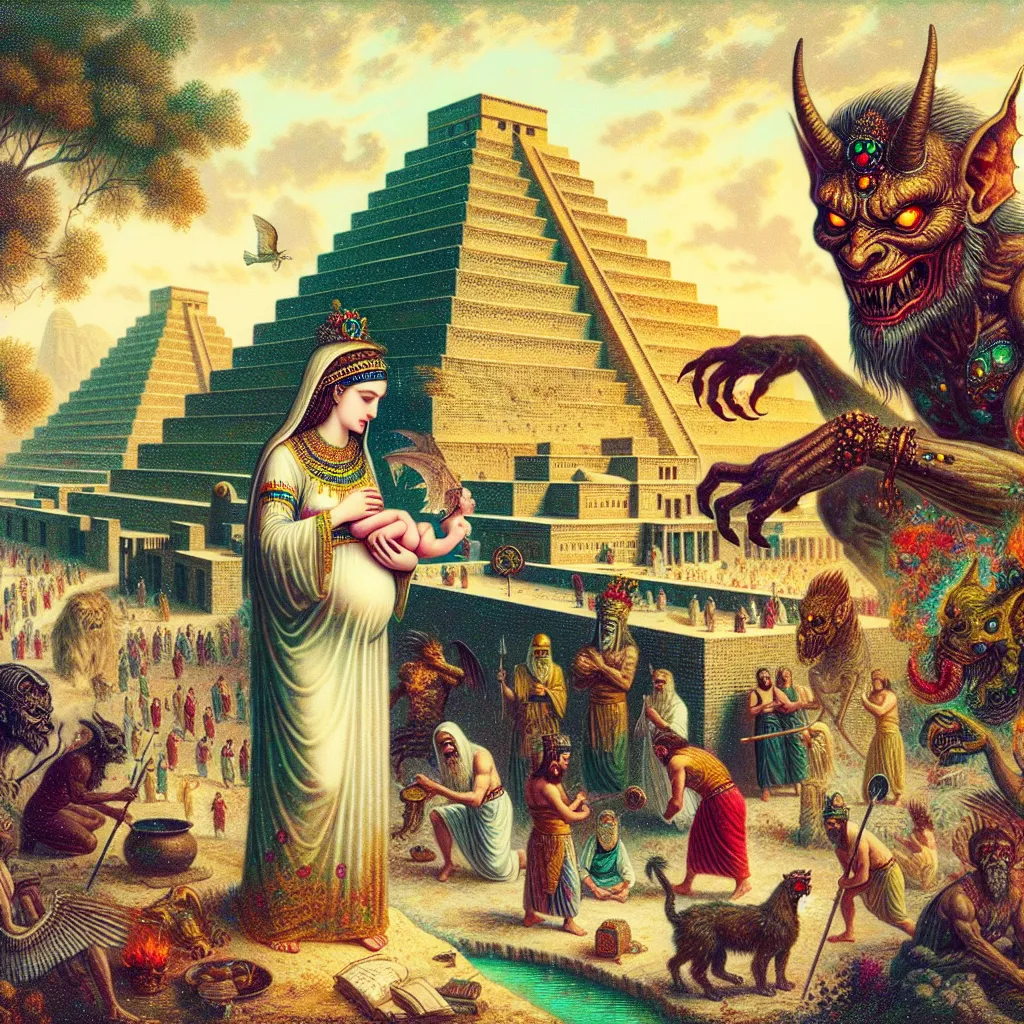
Life in ancient Mesopotamia wasn’t just about farming and building impressive ziggurats. It was a world teeming with invisible forces and supernatural beings. Demons, gods, ghosts, and witches were part and parcel of daily life for these early civilizations. Unlike our present-day skepticism about such entities, the Mesopotamians took their existence for granted. They didn’t question whether these beings existed but instead focused on how to interact with them, especially if they were the troublesome sort.
The Mesopotamian outlook on demons was far more nuanced than the one that developed later in Christianity. For the ancients, demons weren’t uniformly evil. While Christian writings often depict demons as malevolent entities under the devil’s command, Mesopotamian demons could be either beneficial or malevolent. Their roles were more complex, and their behaviors varied. Some could act as protectors, while others brought disease or misfortune.
Imagine encountering a demon like Pazuzu. He’s the same one featured in the movie “The Exorcist,” but in ancient Mesopotamia, he wasn’t always the bad guy. Despite his terrifying visage, with beastly features and long claws, he was often a protector, especially against another demon, Lamashtu. Pregnant women would carry amulets of Pazuzu’s head to keep their newborns safe from Lamashtu, who was notorious for harming infants and causing miscarriages.
It’s fascinating how the Mesopotamians meticulously catalogued their supernatural fauna. They had detailed theories about different demons’ personalities and crafted various strategies to deal with them. This demonology was a blend of fears and rituals, woven into the fabric of everyday life. For instance, Lamashtu, the baby-eating demon, was often depicted with a lion’s head and taloned hands, accentuating her fearsome nature. To ward her off, The Mesopotamians devised intricate rituals that involved appeasing figurines of her, reciting incantations, and finally, burying these figurines outside city walls.
Protective practices were vital. The Mesopotamians had a host of techniques designed to fend off malevolent forces, which ranged from elaborate exorcisms to simpler amulets made from animal hide containing sacred herbs. These talismans were seen as vital in protecting individuals from all sorts of supernatural threats. The role of the ashipu, or exorcist, was crucial in this society. Called upon much like we summon a doctor today, the ashipu would diagnose spiritual illnesses and execute the necessary rituals to cleanse individuals or households of demonic influences.
Ghosts in Mesopotamia were spirits of the dead who hadn’t transitioned to the underworld. They could cause trouble based on how they died—a ghost from fire death causing fevers, one from drowning affecting breathing, and so on. Rituals to send these spirits to their rightful resting place involved specific incantations urging them to leave the living in peace.
Magic wasn’t always about protection. Witches or kasheptu were another group feared in Mesopotamia. These malevolent magic users could cast harmful spells, prompting the exorcists to craft rituals to neutralize these witches’ powers.
The Mesopotamians’ beliefs and rituals around supernatural beings laid a foundation for much of what we see in later magical and religious practices. Many of the protective spells and rituals found in later cultures may have their origins here. Exorcists would conduct ceremonial acts, sometimes involving figurines, to symbolize and ultimately rid the offending spirits.
In essence, the world of ancient Mesopotamia was rich with supernatural beliefs that played a pivotal role in daily life. Understanding these practices not only sheds light on the spiritual lives of ancient peoples but also reveals the roots of many traditions that have persisted through the ages.