religion

What Did Ancient Mesopotamians Really Think About Demons?

When Demons Wore Many Hats: The Multifaceted Spirits of Ancient Mesopotamia

What Did Ancient Mesopotamians Really Think About Demons?

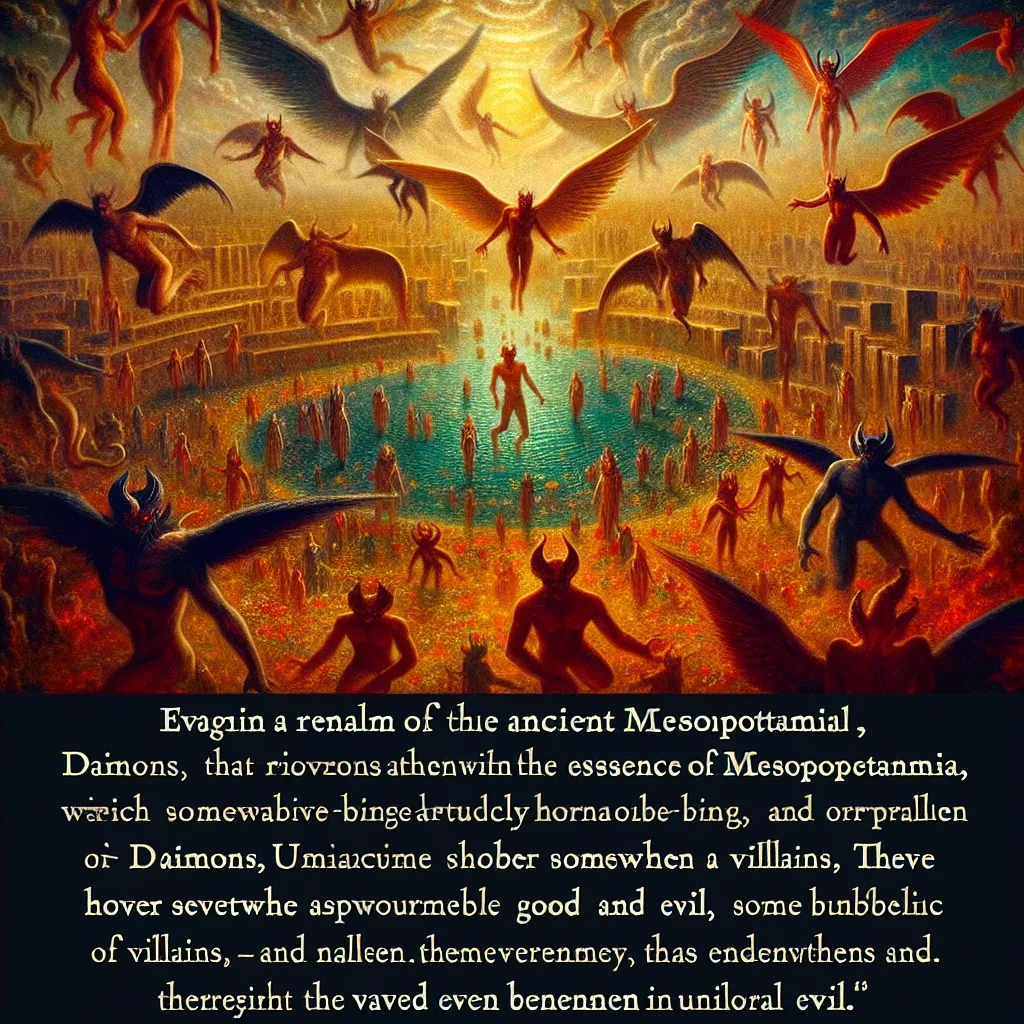
Back in ancient Mesopotamia, demons were quite different from what we think of today. The modern idea of a demon as a purely evil entity, often linked with the devil and seeking to harm or possess humans, is a concept that really took shape with early Christian writers.

In pre-Christian times, people had a more nuanced view of demons. The word “demon” itself comes from the Greek term “daimon.” A daimon in ancient Greece wasn’t inherently good or evil. Daimons were spiritual beings that stood between gods and humans, playing various roles that could be beneficial or harmful.

So, while the idea of an evil daimon did exist, it was just one category of these mysterious entities. Daimons could be good, bad, or somewhere in between, making their identities and intentions much more complex than the solely evil demons we think of today.




Similar Posts
Blog Image
Which Religion Holds the Most Influence on Our World Today?

World's Faiths Woven into the Tapestry of History and Culture

Blog Image
What Haunting Secrets Lurk in the World of Jinn Possession?

Unveiling the Haunting Layers of Jinn in Islamic Lore and Culture

Blog Image
What Could Your Next Life Be? Dive into the Mysteries of Reincarnation

Endless Dance of the Eternal Soul in Hindu Philosophy

Blog Image
Is Letting Go of Grudges the Ultimate Key to Happiness?

Discarding Grudges: How Forgiveness Transforms Minds, Hearts, Relationships, and Health for a Thriving Life

Blog Image
Did You Know Christianity Has Its Own Mystical Traditions That Rival Eastern Religions?

Unveiling the Hidden Tapestry of Christian Mysticism Through the Ages

Blog Image
Pilgrimage Profits: How Religious Tourism Boosts Economies Worldwide

Religious tourism significantly impacts economies worldwide. Pilgrimage sites like Makkah, Lourdes, and Kumbh Mela attract millions, generating billions in revenue. This boosts local businesses, creates jobs, and stimulates infrastructure development. Beyond immediate spending, it fosters cultural exchange and international relationships. Governments invest heavily to support this sector, recognizing its potential for economic growth and diversification.