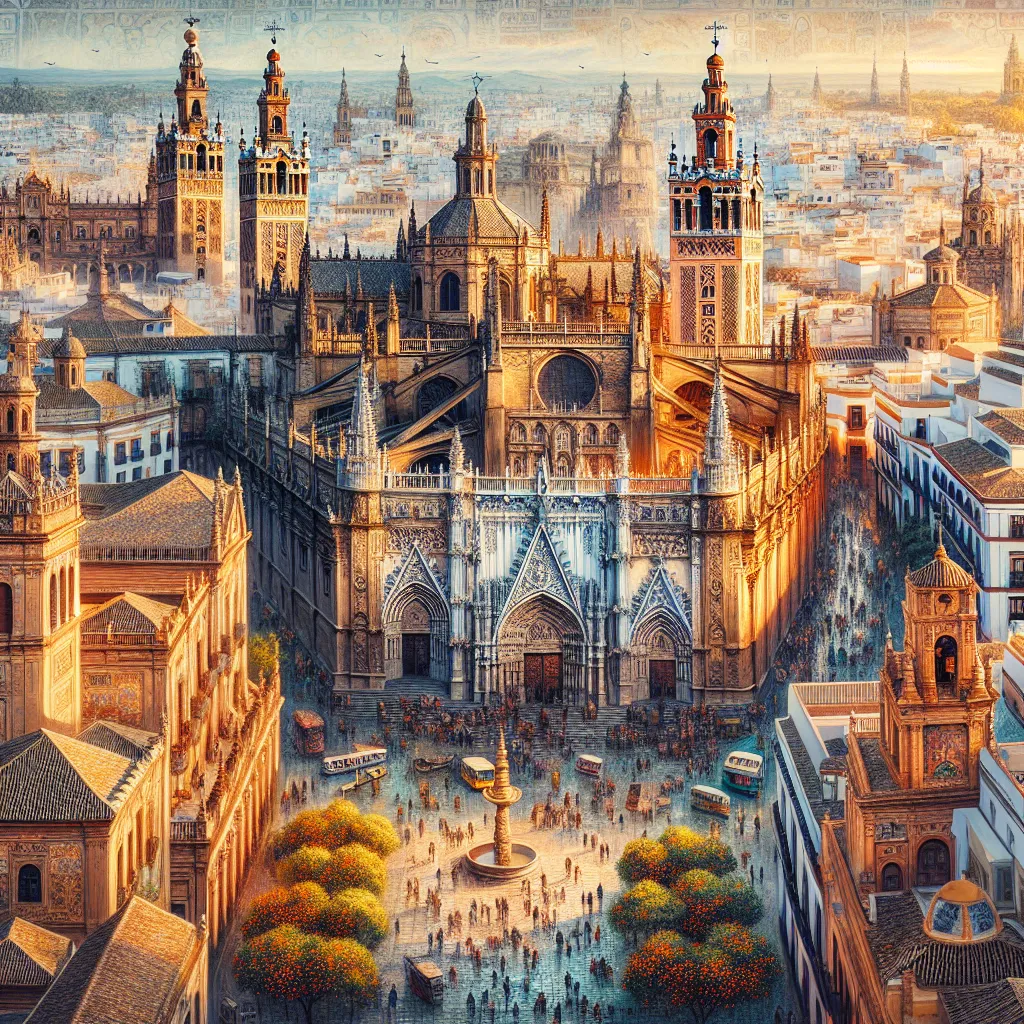
Seville, or Sevilla, is the largest city in Andalusia and a place teeming with history, culture, and energy. This city has been a vital political and cultural hub since the Al-Mahads made it their capital in the 12th century. Today, you can still feel the legacy of its flourishing literature, arts, and religious influence as you stroll through its vibrant streets in southern Spain.
As a visitor, Seville offers a cornucopia of experiences. Wander around the breathtaking Plaza de España or relax in one of the thousands of tapas bars dotting the city. However, if you’re drawn to religious history, Seville’s many stunning Catholic churches are a must-see. The star of them all is the Seville Cathedral, also known as the Cathedral of Saint Mary of the Sea. This massive Gothic structure is one of the largest cathedrals in the world and a UNESCO World Heritage site.
The Seville Cathedral was built between the 15th and early 16th centuries on the site of the old Grand Mosque, which served the city until the Christian conquest in 1247. The mosque’s transformation into a cathedral involved numerous changes, and after a significant earthquake in 1356, a decision was made to rebuild the entire structure. The new cathedral was completed in 1506 and stands today as an awe-inspiring testament to Gothic architecture.
Walking inside feels like stepping into a different world. The cathedral boasts an enormous nave, 80 chapels filled with art, relics, and other religious objects, and impressive depictions of figures like Jesus, Mary, and the city’s patron saint, Justa. Not to forget, it also houses some remains of Christopher Columbus.
One of the most notable parts of the Seville Cathedral is its stunning altarpiece, crafted by Pierre Dancart and finished in 1564. This golden masterpiece stretches 20 meters high and mesmerizes with its intricate scenes from the Gospels, topped off by a beautiful depiction of Mary with baby Jesus.
Interestingly, some features of the old mosque still survive within the cathedral complex. The Courtyard of Orange Trees and the bell tower, known as the Giralda, are remnants of its Islamic past. The Giralda was originally a minaret and remains largely unaltered apart from the bell section added by the Christians after the Conquest.
Seville is not just about its cathedral. The Church of El Salvador, built on the site of an even older mosque, is another hidden gem. This Baroque church, finished in 1712, is filled with chapels and stunning art. Its courtyard still contains remnants from its time as a mosque, adding a layer of historical richness.
For those particularly interested in Seville’s Islamic heritage, the city’s landscape offers another dimension. The hills outside the city, which have changed little over centuries, were once a retreat for mystics like Ibn Arabi and Ibn Barajan. Exploring these natural settings can provide a deeper connection to the past, far from the bustling modern streets.
Whether your interests lie in exploring Seville’s Islamic roots or its magnificent Christian landmarks, the city offers a unique blend of history and beauty. Its dynamic streets, historic buildings, and serene landscapes make it a central and deeply spiritual part of Andalusia. So, take your time, soak in the history, and let Seville’s charm captivate you.