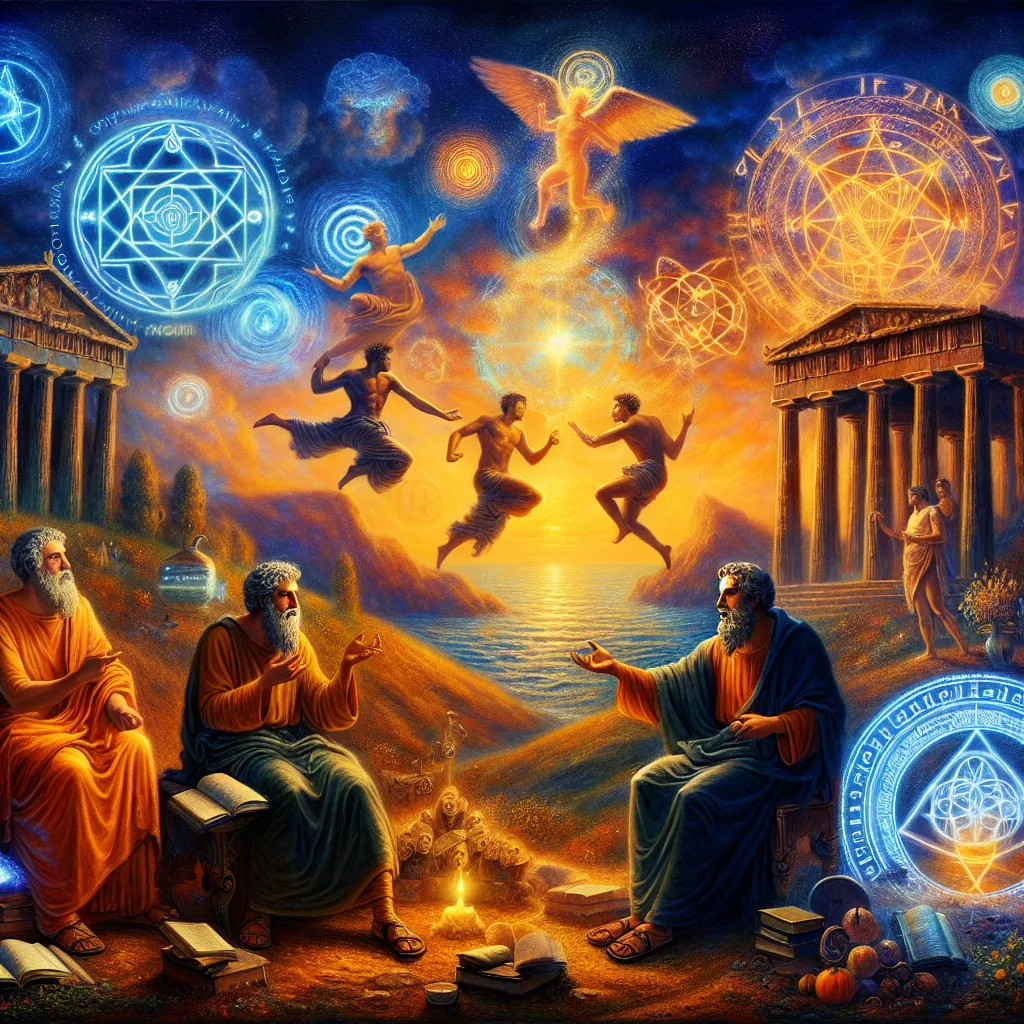
When thinking about ancient Greece, most people quickly mention philosophers like Socrates, Plato, and Aristotle, who symbolize the pinnacle of rational thought and early scientific inquiry. These figures are often celebrated as the forerunners of our modern enlightened age, a time praised for its emphasis on reason before the so-called dark ages of superstition and religious dogma. However, this vision is both oversimplified and misleading. The ancient Greeks were far more complex, with many of their greatest thinkers deeply involved in what we would call religious practices and mysticism.
While Plato emphasized reason in many of his philosophical teachings, he and his contemporaries also believed in attaining truth through mystical experiences. Ancient Greece was rich in mystical practices and experiences, but historians have often overlooked this aspect, preferring to focus on the rationalistic narrative. This perspective doesn’t just misrepresent the ancient Greeks—it reflects more about our modern biases and assumptions.
To better understand the mystical side of ancient Greece, we must explore its mystery cults. These religious movements promised initiates some secret knowledge or wisdom. Among the most prominent were the Eleusinian Mysteries, the Bacchic Cults of Dionysus, and the Orphic traditions. The Eleusinian Mysteries, for instance, were a highly secretive and transformative initiation ceremony centered on the goddesses Demeter and Persephone’s myth, reflecting themes of death and rebirth.
During the annual Eleusinian Mysteries, initiates would undergo intense experiences, often involving altered states of consciousness, to symbolize Persephone’s descent into the underworld and her eventual return. This simulation of death and rebirth was said to profoundly transform participants, leaving them with a diminished fear of death and a deeper understanding of divine truths.
The Bacchic Cults of Dionysus, often associated with frenzied states and ecstatic rituals, were equally significant. Followers of Dionysus would engage in rituals that induced mania, a form of divine madness that united worshippers with the god and expanded their consciousness. This divine madness was seen as a higher state of being, allowing for direct encounters with the divine and mystical insights.
Orphism, associated with the mythical poet Orpheus, also emphasized the afterlife and the soul’s journey. Though it is debated whether Orphism was a distinct group, its influence permeated throughout various mystery traditions. It focused on achieving a more enlightened afterlife through purification and specific rituals.
Even the famous philosophers weren’t removed from these mystical traditions. Parmenides, often considered the first metaphysician, claimed to have received his philosophical insights through a mystical journey to the underworld, where a goddess revealed the nature of reality to him. This suggests that mystical experiences were integral to his philosophical conclusions.
Plato, too, infused his works with mystical elements. He wrote about divine madness and the recollection of the soul’s true knowledge, claiming that true wisdom could be achieved through a state of divine illumination, often described as a form of divine love or erotic madness. This mystical aspect of Plato’s philosophy is overlooked but is crucial to understanding his complete philosophical system.
These mystical traditions show that ancient Greek culture was not solely about rational thought but was also deeply intertwined with mystical practices and beliefs. This understanding challenges the modern perception of ancient Greece and highlights the multifaceted nature of its culture and philosophical legacy.
Supporting these mystical practices were the mystery cults, which played a significant role in the religious and philosophical lives of the ancient Greeks. These cults were not fringe sects but were mainstream and had a profound influence on the broader society. Initiation into these mysteries often promised a more favorable afterlife, which might explain their popularity.
In summary, the common view of ancient Greece as a bastion of pure reason devoid of mysticism is incomplete. A closer look reveals a rich tapestry of mystical experiences and practices that were integral to their culture and philosophical traditions. These elements were as essential to the Greeks as their celebrated rationalism and should not be dismissed when considering their legacy.