In our discussions, we often delve into historical figures from ages long past, like the Middle Ages. But it’s just as crucial to remember impactful individuals from more recent times, figures who have significantly influenced religious landscapes. One such luminary in the Islamic world over the last century is the Senegalese Sufi saint and social revolutionary, Ahmadu Bamba. He stands out not just for his Sufism but for his non-violent resistance to French colonialism—a peaceful approach that met considerable success.
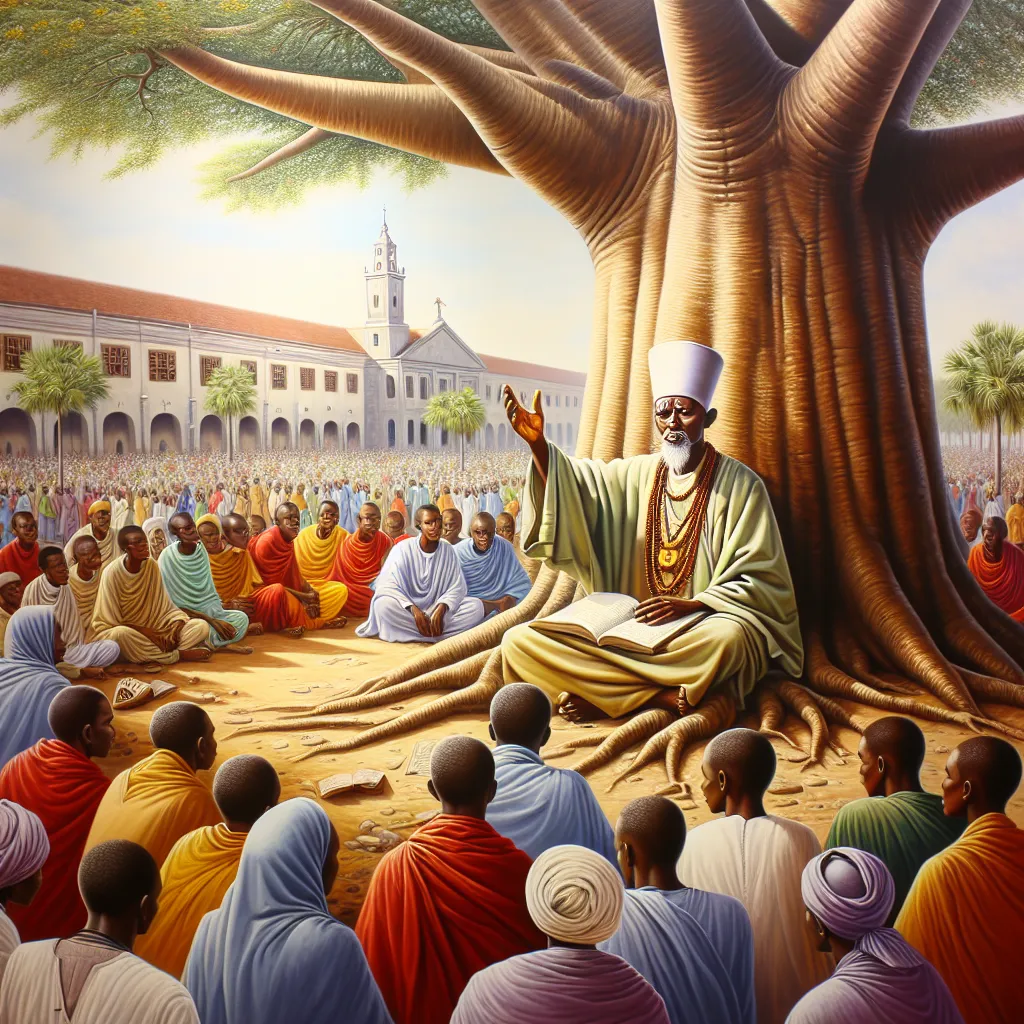
Bamba’s story begins in Senegal, where he was born in 1853 during unstable and conflict-ridden times. With the French encroaching upon Senegal and implementing policies that aimed to erase local traditions, various forms of resistance emerged. Among these responses was Ahmadu Bamba’s unique path. A religious scholar educated deeply in the Quran, Hadiths, and Islamic jurisprudence, Bamba chose to lead through spirituality and pacifism rather than armed conflict.
Senegal’s demographic leans overwhelmingly Muslim, with a large percentage aligned with Sufi brotherhoods. Among the prominent orders is the Muridiyya, founded by Bamba. Bamba’s teachings emphasized non-violence, peace, education, and a strong work ethic, building a community that would resist colonial rule through personal and societal transformation rather than warfare.
Bamba’s spiritual journey deepened after his father’s death in 1883. Moving away from political ties, he pursued an intense path of Sufism while traveling across regions like Mauritania to further his studies. By the time he returned, he had become a revered Sufi teacher with a growing following.
His peaceful resistance, based on a concept of jihad of the pen and soul, set him apart. Jihad doesn’t only mean war; it implies any form of struggle, including inner spiritual struggles against negative inclinations. Bamba embodied this broader and often misunderstood interpretation.
Despite his peaceful approach, the French colonial authorities saw him as a threat due to his growing influence and following. They arrested and exiled him, but even in exile, Bamba’s spiritual practices and writings continued to inspire and attract followers. His resilience only bolstered his status, and upon returning, Bamba’s movement had only grown stronger.
Ahmadu Bamba’s teachings bore fruit not only in spiritual and ethical practices but also in society’s education and economic activities. The Muridiyya order became an established force, and Bamba’s emphasis on non-violent resistance and education left an indelible mark. Today, his legacy lives on through the Murids, whose practices, poetry recitals, and devotion to a strong work ethic remain central to their culture.
Bamba passed away in 1927, but his influence persists. His city of Tuba and its grand mosque are important religious and cultural centers in Senegal. The annual pilgrimage to Tuba, known as the Grand Magal, draws millions, a testament to Bamba’s lasting impact.
Ahmadu Bamba’s legacy is profound, not just for Sufi followers but for anyone inspired by non-violent resistance and spiritual dedication. His path of peaceful struggle shows how deeply entrenched and effective non-violence can be when rooted in strong ethical and spiritual beliefs.