Imagine this: our planet is mostly water, right? But until not too long ago, we thought the deep ocean was dead and empty. Wrong. Let me walk you through five huge finds that flipped everything we knew about this watery world. I’ll keep it simple, like we’re chatting over coffee. Stick with me—you’ll see the ocean in a whole new light.
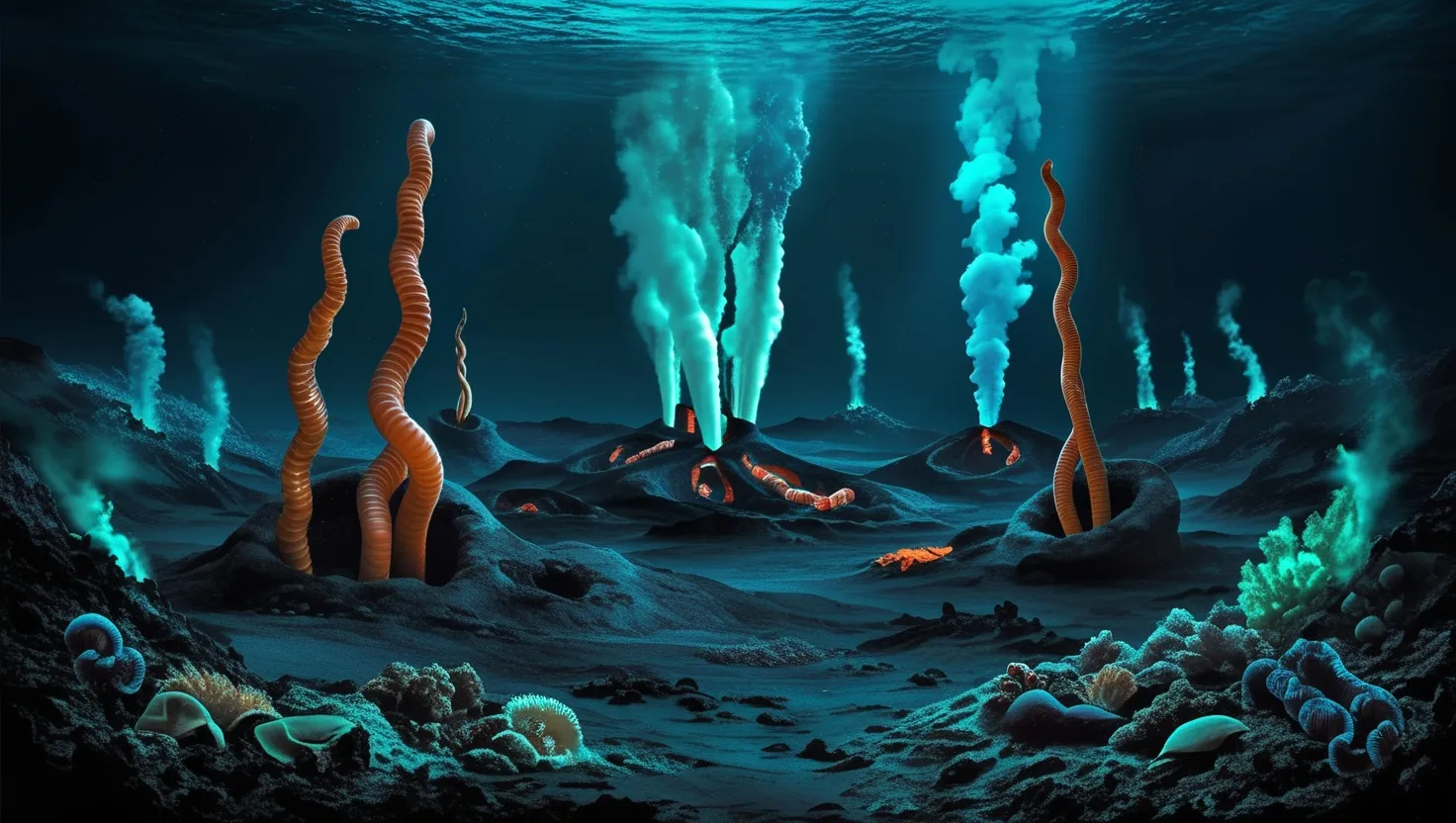
First up, picture scientists in 1977 diving down in a tiny sub called Alvin. They hit the seafloor in the Pacific, super deep, where no sun reaches. Boom—they spot these wild tube worms, giant clams, all thriving around cracks spitting hot, mineral-loaded water. No plants, no sunlight. These critters live on chemicals from the Earth’s insides. Bacteria there eat hydrogen sulfide—like tiny factories turning poison into food. This smashed the idea that all life needs the sun. Life can hide in total dark, powered by rock juice.
“In the depths of the sea, life blooms where light never touches.” – Robert Ballard, deep-sea explorer.
Ever wonder: could aliens live like this on icy moons like Europa? Yeah, that’s the wild thought this sparked. Before this, we pictured the deep as a graveyard. Now? It’s a chem lab buzzing with energy. These vents recycle Earth’s heat, spewing stuff that feeds whole food chains. Lesser-known bit: some worms grow three feet long in months, faster than bamboo. Crazy growth in hellish heat.
Next, think about the ocean as Earth’s giant thermostat. We learned it soaks up most extra heat from global warming—over 90%—and grabs a quarter of our CO2 spit. It’s not just sitting there; it moves heat around like a slow conveyor belt. Cold water sinks in the North Atlantic, salty and dense, then creeps south, up, around the world over centuries. This mixes warmth from tropics to poles. Without it, Europe freezes.
But here’s an odd angle: melting ice might gum it up. Fresh water dilutes the salt, stops sinking. Boom—climate chaos. Imagine Miami weather in London one day, ice ages elsewhere. Scientists track this with floats that bob like lazy buoys, texting data. Question for you: what if your coffee stayed cold forever because the ocean conveyor quit? That’s our risk.
This ties to the third biggie: the Census of Marine Life, wrapping in 2010 after ten years. Teams worldwide sent robots, subs, DNA scanners everywhere. They found thousands of new beasts—from glowy microbes to bus-sized squid. Deep spots rival rainforests in variety. Two-thirds of ocean species? Still unknown. Baseline set for watching loss.
Unconventional twist: DNA barcoding showed “vampire squid” aren’t squid or vamps—they’re their own squad, with glowing lures and ink that glows too. And colossal squid eyes? Size of dinner plates, for peeking in pitch black. Why does this matter to you? Because ocean health feeds your fish sticks. Polluted seas mean empty plates soon.
“The sea is the land’s edge also, the granite into which it rages.” – Robinson Jeffers.
Pause and think: how many sea critters do you know by name? Five? There are millions down there, partying without us.
Fourth discovery: that conveyor I mentioned? Called thermohaline circulation. Mapped fully in the 1990s with ships and satellites. It’s like global plumbing—temp and salt drive it. North Atlantic chills, sinks to 13,000 feet, loops for 1,000 years. Brings nutrients up, feeds plankton, fish, us.
Lesser-known: it carries oxygen too. Without it, deep seas suffocate. And here’s weird—iceberg armadas from Antarctica ride it north, melting slow, cooling spots like your fridge. Disruption? Europe cools 5-10°C fast. Past ice ages flipped when it stalled. Today, Greenland melt threatens the same. Directive from me: next time it rains fresh, remember it’s messing with ocean pipes.
Last one flips senses: bioluminescence. Down deep, 76% of critters make their own light. No sun? No problem. They glow to hunt, scare, flirt. Jellyfish flash warnings, fish dangle lures like anglers, squid sync lights for group chats.
Odd fact: some shrimp snap claws so fast, it boils water briefly—makes stun-gun light bursts to blind foes. Anglerfish? That toothy nightmare with a headlight bait. Evolved in dark, so eyes huge, brains wired for flash signals. Land animals hear or smell; sea beasts see in black.
“In the deep sea, there is one light left: the light of living things.” – Edith Widder, bioluminescence expert.
Question: ever seen fireflies? Deep ocean’s a trillion times brighter at night. Robots now film “disco parties” of synced glowing. This changes how we hunt aliens—maybe they signal with light too.
Let me pull these together simply. These finds—vents, climate pump, species census, conveyor, glow life—show the ocean isn’t frontier anymore. It’s boss of weather, life factories, alien labs. Early explorers like HMS Challenger in 1872 dredged surprises, killing “dead deep” myths. But tech like subs and DNA turbocharged it.
Back in 1868, Wyville Thomson dragged nets to 14,000 feet, pulling up live stars. Blew minds. Or 1857, Monterey Canyon found—bigger than Grand Canyon, carved by rivers before oceans filled. Titanic wreck in 1912 pushed echo sounders, mapping hidden mountains.
Unconventional angle: ocean floors have active volcanoes everywhere, more than land. Vents there birth metals we mine. And climate role? Ocean hides warming now, but will burp CO2 later, like slow bomb.
Think bigger: astrobiologists eye vents for Mars or Enceladus life. Chemosynthesis? Perfect for subsurface oceans. Your phone’s rare earths? From sea nodules.
But dangers loom. Plastic chokes vents, warming slows conveyor. Census showed 80% fish stocks overfished. Glow? Pollution dims it.
What can you do? Eat less tuna, vote ocean-smart, dive virtually via apps. Directive: next beach walk, stare deep. That wave hides worlds.
Here’s a hidden gem: 1930s, William Beebe in Bathysphere hit half-mile down, saw glowing snow—fake flakes from dead plankton lighting fall. Felt like space.
Or 1960, Trieste to Mariana Trench bottom—35,000 feet. Heard pings of whales from abyss.
These stories humbles us. Ocean’s 95% unexplored. Vents host “eternal flames”—methane seeps burning underwater. Conveyor? Carries whale falls for years, feeding bone-eaters.
Interactive bit: which discovery blows your mind most? Vents without sun? Glowing dark discos?
Wrapping simple: these five changed views from empty to engine. Life thrives extreme, ocean rules climate, diversity explodes, currents connect all, light rules dark. Go tell a friend—ocean’s no mystery, it’s magic we must guard.
(Word count: 1523)