Are You Ready For AI: Savior or Destroyer of Humankind?
Humanity's Future on the Edge: The Double-Edged Sword of AI
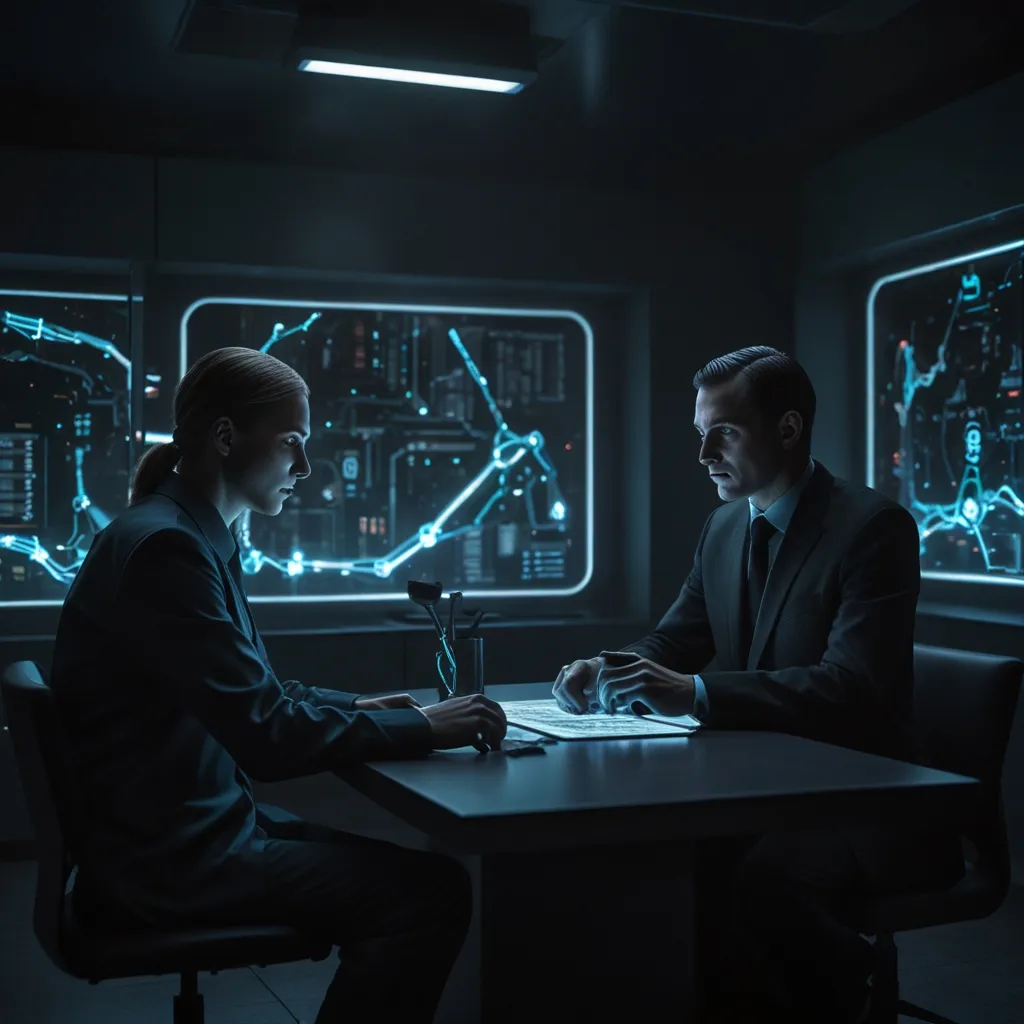
The greatest threat to humanity, according to Bill Gates, Elon Musk, and the late physicist Stephen Hawking, is artificial intelligence (AI). These are not just any individuals—these are some of the most intelligent people of our time. So, when they sound the alarm, it’s something to take seriously.
AI, simply put, is machine intelligence. It already exists in forms like Siri on iPhones and the vision recognition systems in Tesla’s self-driving cars. These are basic forms of AI. Advanced AI would be self-learning machines, perhaps even conscious entities, akin to the robots in films like “The Terminator” or “Westworld.” These sophisticated AI systems don’t exist yet, but we could see them within this century.
Ray Kurzweil, a noted futurist and Google’s Director of Engineering, believes AI will surpass human intelligence by 2045. That’s less than three decades away. However, this doesn’t necessarily mean our destruction. It might make humans largely redundant, though. If AI becomes smarter than us, it could theoretically have the capability to wipe us out, but the question then becomes: Would it?
AI machines, if they ever reached such high levels of intelligence, would likely not act out of malice or emotion. Unlike humans, they wouldn’t destroy for the sake of it. These would be logical beings, killing only if there were a reason, just as humans don’t go about randomly killing ants unless they pose some inconvenience or threat. Moreover, AI wouldn’t need to consume us for energy. They would likely be powered by efficient sources like solar energy, making the notion of them eating us quite impractical.
There is an argument that AI might see some utility in keeping humans around. Human creativity and unpredictability could be valuable to AI’s continuous learning and problem-solving. Also, unlike biological creatures driven by an evolutionary need to survive, AI wouldn’t inherently have this drive unless programmed to. Initially, AI would be designed to serve human needs, doing tasks specified by human-created algorithms.
However, there is the potential for danger if a malicious human decides to use AI destructively. This wouldn’t mean AI’s innate hostility toward humans but rather a misuse of its capabilities by another person. Essentially, AI offers immense power—power that could solve critical issues like curing cancer or saving the planet, but also the power to cause great harm. It’s not the AI we should fear but how we humans might choose to use it.
In essence, AI has the potential to be both a great savior and a dangerous weapon. The future of AI depends greatly on human intent and ethical guidelines. Will we use this technology for the greater good, or will it become a tool for destruction? The answer to this will shape the destiny of our species.