Grammatical tense is how languages talk about time by modifying verbs, letting us know when actions occur without naming specific time periods. In English, you might think there are just past, present, and future tenses. But thanks to something called grammatical aspect, those time periods split further.
There are four types of aspects. The continuous or progressive aspect shows actions still happening at the time of reference. The perfect aspect describes actions that are finished. The perfect progressive aspect is a mix, describing a completed part of an ongoing action. Finally, there’s the simple aspect, the basic past, present, and future tense, where an action isn’t marked as continuous or discrete.
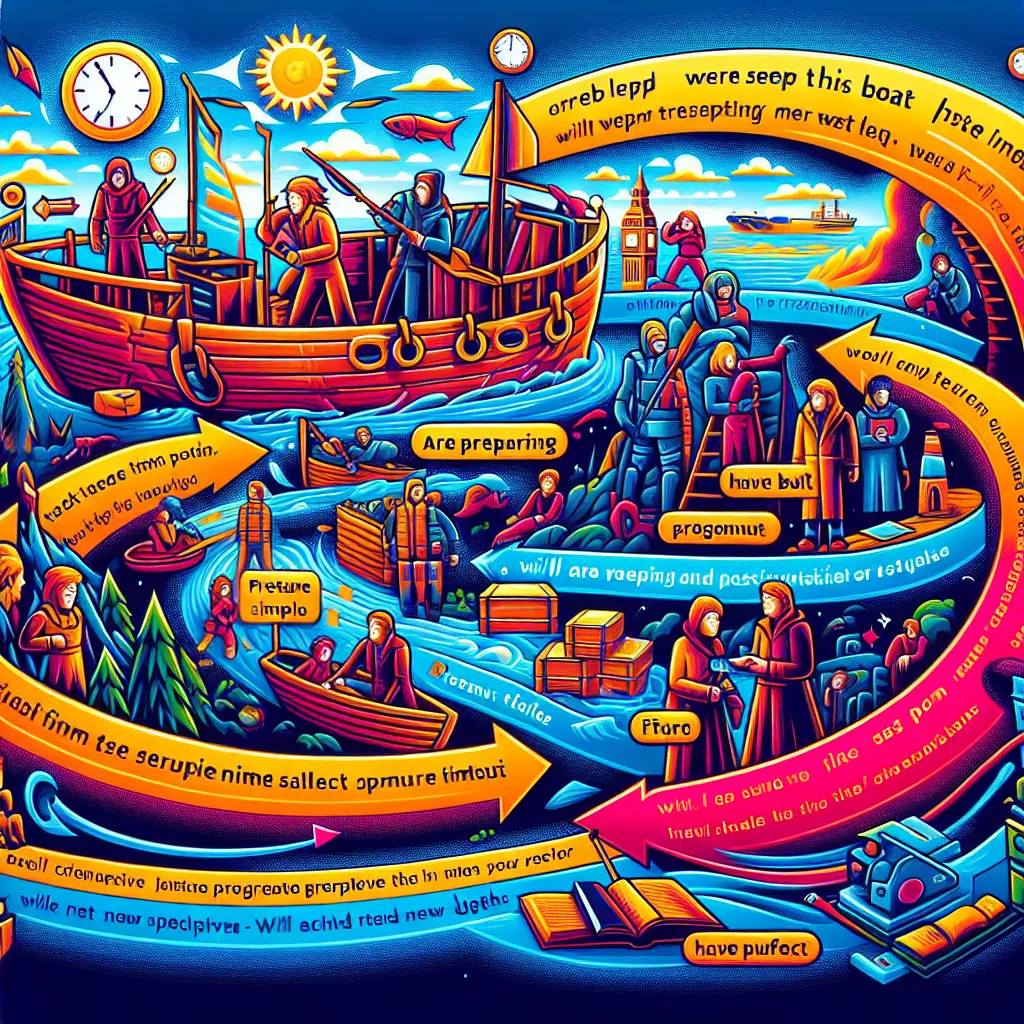
Let’s see how it plays out with an example. Suppose your friends talk about a naval mission hunting for a sea creature. The story is set in the past. They might say, “A creature attacked their boat,” which is past simple. They might add, ” They were sleeping when it happened,” indicating a continuous past action. They could also say, “They had departed from Nantucket,” showing an action completed earlier, which is past perfect. Maybe they had been sailing for weeks, an ongoing action up until that point, making it past perfect progressive.
Now, in the present, they tell you they still search for the creature. That’s present simple. They are preparing for the next mission continuously, indicating a present progressive action. They have built a submarine, marking a completed achievement, which is present perfect. If they have been researching sightings, and still are, that’s present perfect progressive.
Looking ahead, the future tense. They will depart next week. Simple. They will be searching for the creature, a continuous future task. By a month from now, their submarine will have reached new depths, a future perfect scenario. At that point, they will have been voyaging for three weeks, making it future perfect progressive.
All these different tenses and aspects show that each sentence marks a specific moment, past, present, or future, and the status of the action during that time. English gives us twelve possibilities in total.
Other languages handle tense differently. Some, like French or Russian, approach time similarly to English. Languages like Japanese only distinguish past from non-past, while Mandarin Chinese focuses solely on aspect. Some languages, like Yagwa, divide past tense further, describing whether something happened hours, weeks, or years ago.
Tenses can get tangled up with moods, expressing urgency or probability. Translating these ideas can be tough but not impossible. Most languages can convey the same ideas using auxiliary words like “would” or “did,” or by specifying the time they mean.
Do these variations in language mean different ways of describing the same reality? Or do they reflect diverse ways of thinking about the world and time? If so, what other ways of conceiving time might exist?