Can Life Actually Defy the Laws of Physics?
Life as a Master of Cosmic Chaos: The Dance of Entropy and Order
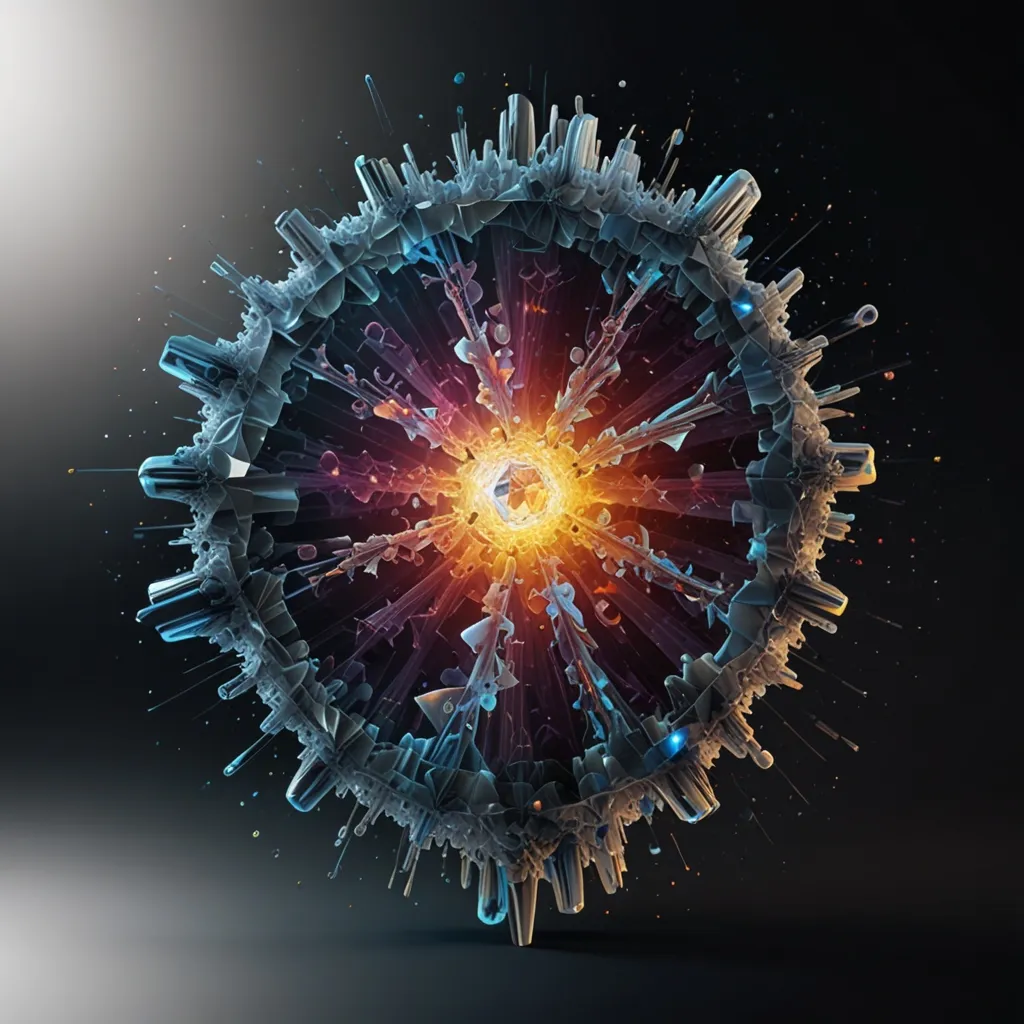
The second law of thermodynamics states that the overall entropy, or disorder, of any isolated system always increases over time. Entropy is essentially a measure of randomness. For instance, a crystal, which is highly ordered, has low entropy, whereas a gas, which is largely random, has high entropy. This law might suggest that living organisms, characterized by high levels of organization and complexity, defy this rule since they seem to maintain or even decrease their internal entropy.
So, how do living things thrive and even come into existence in a universe where everything tends towards disorder? Let’s break it down.
First, it’s important to understand what the second law of thermodynamics truly states: the total entropy of an isolated system can never decrease. An isolated system is one in which neither energy nor mass can enter or exit. This concept is critical because perfectly isolated systems are hard to find in reality but are useful for understanding entropy.
Living organisms are not isolated systems. Take humans, for instance: we consume food (low entropy) and convert it into waste (high entropy) in the form of heat and waste products. Although human bodies become more ordered through processes like cell production, this is balanced by the release of even greater entropy into the environment, such as heat energy. Plants work similarly, using sunlight to produce sugars through photosynthesis and releasing heat in the process.
This means that living organisms thrive without violating the second law of thermodynamics by decreasing entropy locally within their own systems but increasing it in their surroundings, resulting in a net increase in total entropy.
The controversy about evolution is similar. Evolution seems to create more complex and ordered organisms over time—think of mammals compared to single-celled organisms. However, Earth is not an isolated system; it continuously receives energy from the Sun, driving evolution. The Sun itself compensates for this order by increasing its entropy massively as it converts matter into energy.
The formation of life, from simple molecules to more complex systems, also doesn’t violate the second law of thermodynamics. Organic molecules that are more complex form spontaneously and increase entropy in their surroundings to compensate. The process is driven by energy sources like the Sun’s radiation or lightning on early Earth.
In essence, living things are extremely good at generating disorder around them, contributing to the overall increase in entropy. Some theories, like American physicist Jeremy England’s hypothesis, suggest that life may have originated through processes where molecules self-organize to absorb and dissipate energy more efficiently. This idea links the laws of thermodynamics directly to the formation of life, suggesting that energy absorption and dissipation drive the creation and evolution of living things.
Although science hasn’t yet definitively answered how life began, we know that life, in some way, leverages the laws of thermodynamics to exist and thrive. It’s fascinating to think that maybe the story of life on Earth is one of a planet learning to capture solar energy in the most efficient way, using it to drive the complexity we see today.