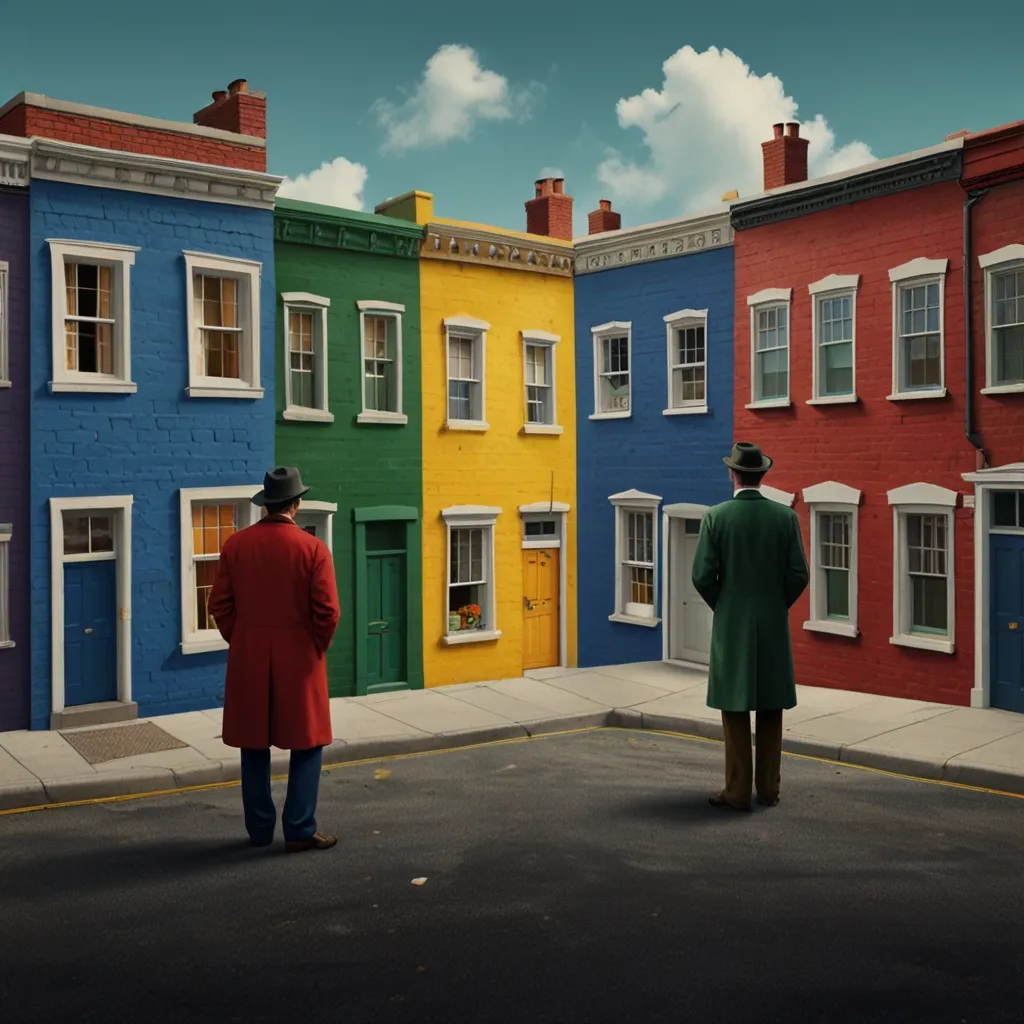
Before Albert Einstein revolutionized physics, a young Einstein allegedly showcased his brilliance by creating a complex riddle. This brain teaser involves a series of clues that can stump even the cleverest minds. The story goes like this: the rarest fish in the world has been stolen from the city aquarium, and the police have traced it to a street with five identical houses. To avoid alerting the thief, they can only search one house at a time. That’s where you, the city’s best detective, come in.
Upon arriving, the police inform you that each house is owned by a person of different nationality, who drinks a distinct beverage, and smokes a unique type of cigar. Beyond that, each house’s interior is painted a different color and contains a different animal, one of which is the stolen fish. Your detective work begins.
It might seem overwhelming, but solving this puzzle is like tackling Sudoku—you need logic, organization, and maybe a grid to sort out the clues. Once you start fitting in the information, patterns emerge.
For instance, you know the Norwegian lives at the end of the street next to the house with blue walls. The green-walled house’s owner drinks coffee and must reside next to the white-walled house. The Brit lives in the house with red walls, and the first house, painted yellow, is home to the Dunhill smoker. Piece by piece, sorting through nationalities, beverages, and cigars, you narrow down the suspects.
Soon, it’s evident that the fourth house with green walls belongs to a coffee-drinking German who smokes Prince. The Brit in the red-walled house smokes Pall Mall, and the Swede in the white-walled house has a dog. The Norwegian in the first house drinks water and owns a cat. Finally, you deduce the German is the thief in the green-walled house. You and the police bust in and catch the culprit red-handed.
Though the explanation might seem straightforward, solving these puzzles often involves trial and error. The key is to use the process of elimination and sharpen your intuition with practice. And while there’s no solid proof that young Einstein crafted this riddle, the logical thinking required mirrors the methods he used to solve complex equations about the universe.