Chaos in the Kitchen: Are Rotten Bananas and Exploding Ovens Secret Chemistry Lessons?
From Oven Explosions to Campfires: How Kitchen Disasters Teach Us About Energy and Chaos
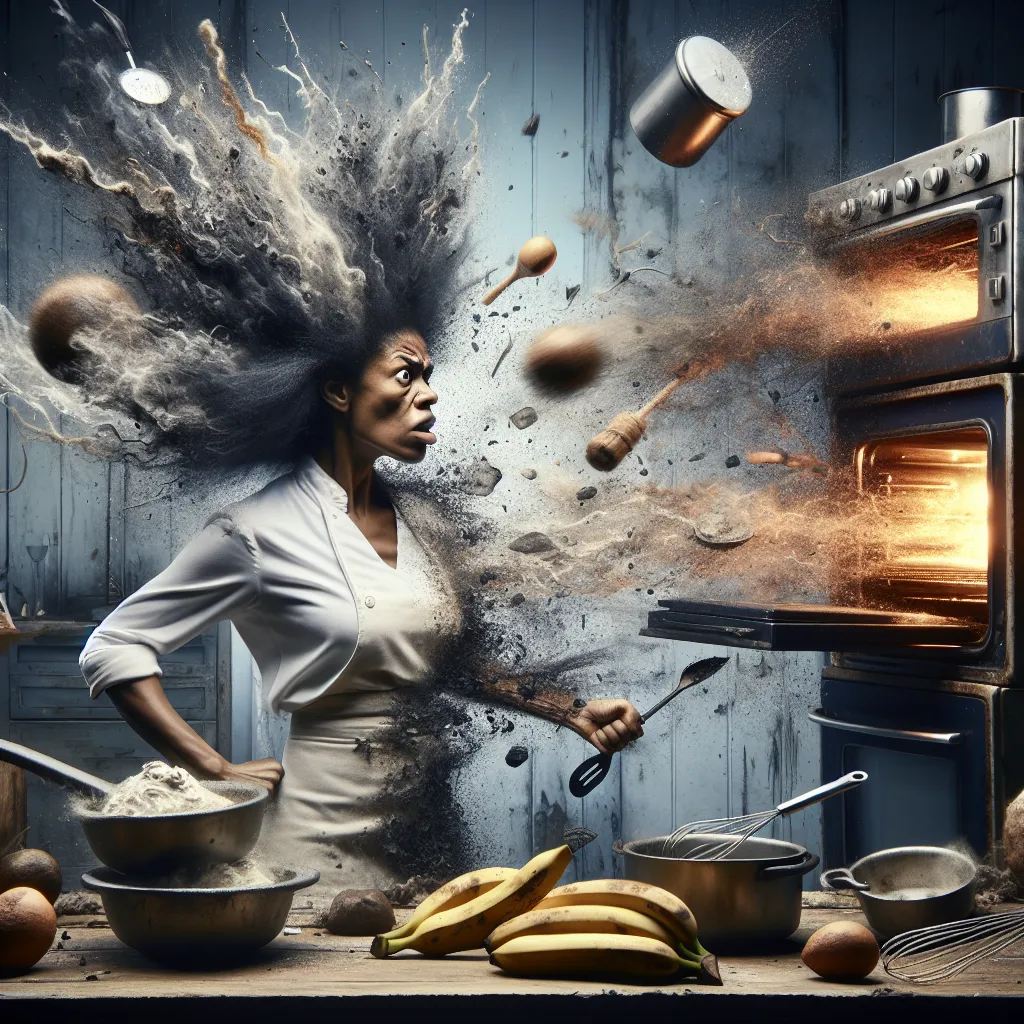
Ever tried baking a cake only to find your bananas are rotten, your utensils are rusted, and you accidentally mix up all your baking soda with vinegar? To top it all off, your oven explodes. Yeah, we’ve all been there, dealing with the wild forces of enthalpy and entropy. These aren’t just fancy words; they mess with your kitchen chemistry in every way possible.
First, let’s talk about enthalpy. It’s all about the energy changes in a chemical reaction. Every molecule stores energy in the bonds between its atoms. Some chemicals are loaded with energy and are super unstable, itching to react. Imagine trying to play crazy golf with a golf ball as a molecule. You need to get the ball up a hill (adding energy) and then let it roll down a steep slope (releasing energy). The end of this game, where the ball sits in the hole, is your product. When your oven exploded, it was an exothermic reaction—energy released into the environment as light and heat.
On the flip side, there are endothermic reactions, where the final energy is higher than the starting energy. Think about baking that cake again. You add heat from the oven to alter the proteins in eggs and compounds in butter. This reaction takes in energy to work.
Exothermic reactions happen more easily than endothermic ones because they require less energy. But entropy, or a measure of disorder, also plays a role in making reactions happen. Visualize a huge, organized pyramid of golf balls. When it collapses, it becomes chaos, with balls bouncing everywhere. This chaos, or higher entropy, can actually help reactions occur.
Both enthalpy and entropy are in action when you light a campfire to cook your dinner. Lighting the match starts an exothermic reaction—burning wood releases energy as heat. The orderly log of wood turns into random, moving molecules of water vapor and carbon dioxide. This disorder, or increased entropy, helps the reaction along, providing the energy needed to cook dinner.
So, next time something goes awry in the kitchen, just remember you’re at the mercy of enthalpy and entropy. Who knew baking a cake could be a lesson in chemistry? Bon appétit!