The Dark Legacy of Nuclear Weapons
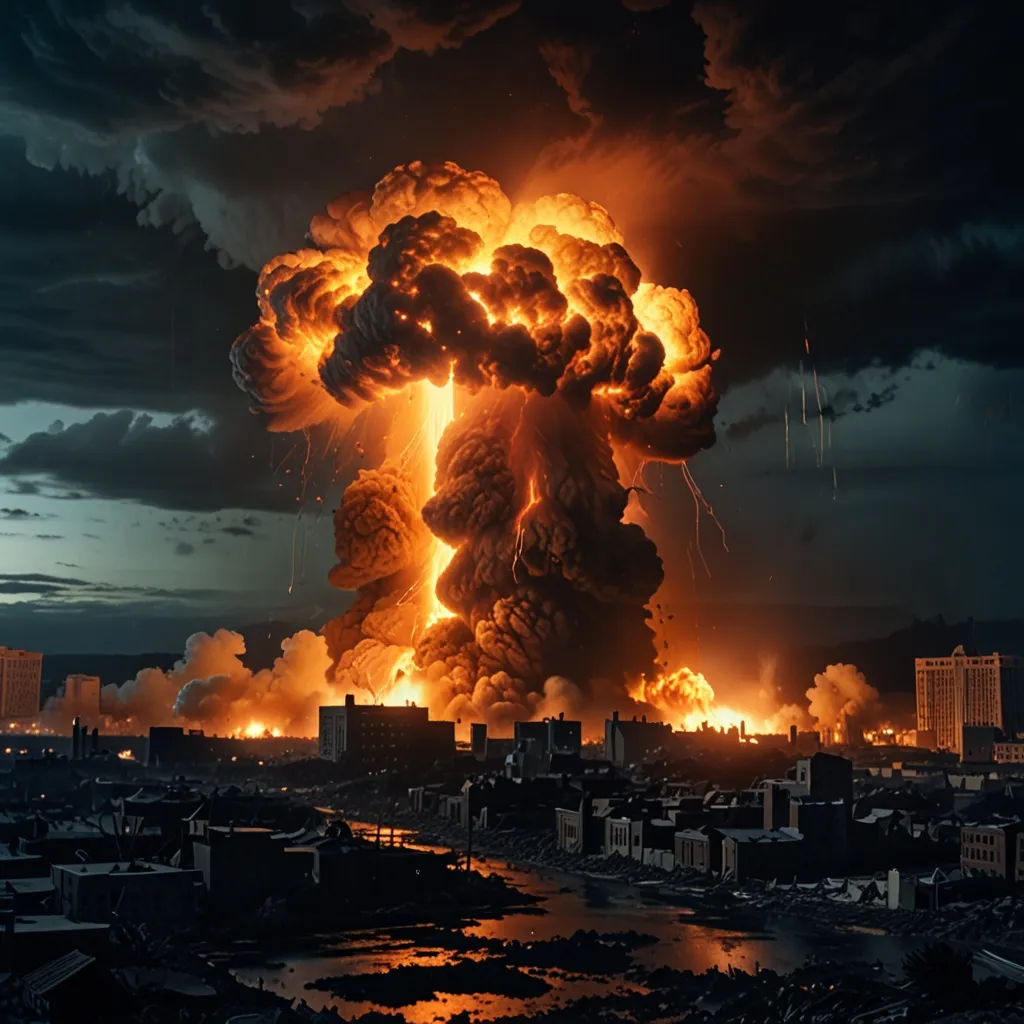
The world witnessed an unprecedented event on August 6, 1945, when the first atomic bomb was dropped on Hiroshima, Japan. This explosion resulted in a flash of blinding light followed by devastating darkness and destruction. The bomb’s shockwave obliterated everything within a one-mile radius, killing an estimated 140,000 people. As catastrophic as this event was, it marked only the beginning.
Following Hiroshima, humanity continued to develop even more destructive weapons. Enter the thermonuclear weapon, commonly known as the hydrogen bomb. Compared to the atomic bomb, the hydrogen bomb is hundreds to thousands of times more powerful. If a hydrogen bomb were dropped on a major city like New York, the destruction radius would expand to ten miles, turning the entire area to rubble and resulting in unimaginable loss.
So, what makes these weapons so powerful? The answer lies in the principles of nuclear physics. The Hiroshima bomb worked on the concept of nuclear fission, the splitting of atoms, releasing energy equivalent to 15,000 tons of TNT. In contrast, the first hydrogen bomb released energy equivalent to 10 million tons of TNT, utilizing nuclear fusion—combining atomic nuclei—instead of fission. Fusion is a process that generates energy by merging two isotopes of hydrogen—deuterium and tritium—to form helium, releasing a massive amount of energy in the process, much like the core reactions in the Sun.
Developing the hydrogen bomb was technologically challenging, especially obtaining the critical component, tritium. Scientists discovered they could produce tritium in situ within the bomb using a compound called Lithium Deuteride. The bomb involves a multi-stage process, initiated by a fission reaction triggered by conventional explosives, which then sets off the fusion reaction.
Reaching the extreme temperatures required for fusion, around 100 million degrees Celsius, is where the fission bomb plays a crucial role. The initial atomic explosion produces high-energy gamma rays and X-rays, superheating a surrounding layer of styrofoam into plasma. This plasma then compresses the fusion fuel, triggering a series of reactions that culminate in a massive explosion.
The technical marvel of this process is terrifyingly efficient. All the reactions take place within a matter of billionths of a second, creating an explosion with a 10-million-ton yield—700 times more powerful than the Hiroshima bomb. The energy release is a direct result of Einstein’s equation, E = mc^2, where a tiny amount of mass is converted into an enormous amount of energy.
Currently, six countries—China, France, India, Russia, the United Kingdom, and the United States—possess these formidable weapons. The fact that these hydrogen bombs are smaller and lighter than their atomic predecessors makes them more suitable for deployment via intercontinental ballistic missiles, raising the stakes of global security.
The evolution of nuclear weapons showcases humanity’s capacity for both innovation and destruction. While these tools of annihilation reflect our technical prowess, they also pose grave ethical and existential questions about the future of warfare and our planet.