Did the Moon Goddess Find True Light by Leaving the Sun God?
Lunar Love, Spider Silk, and Starry Escapes in Mayan Mysticism
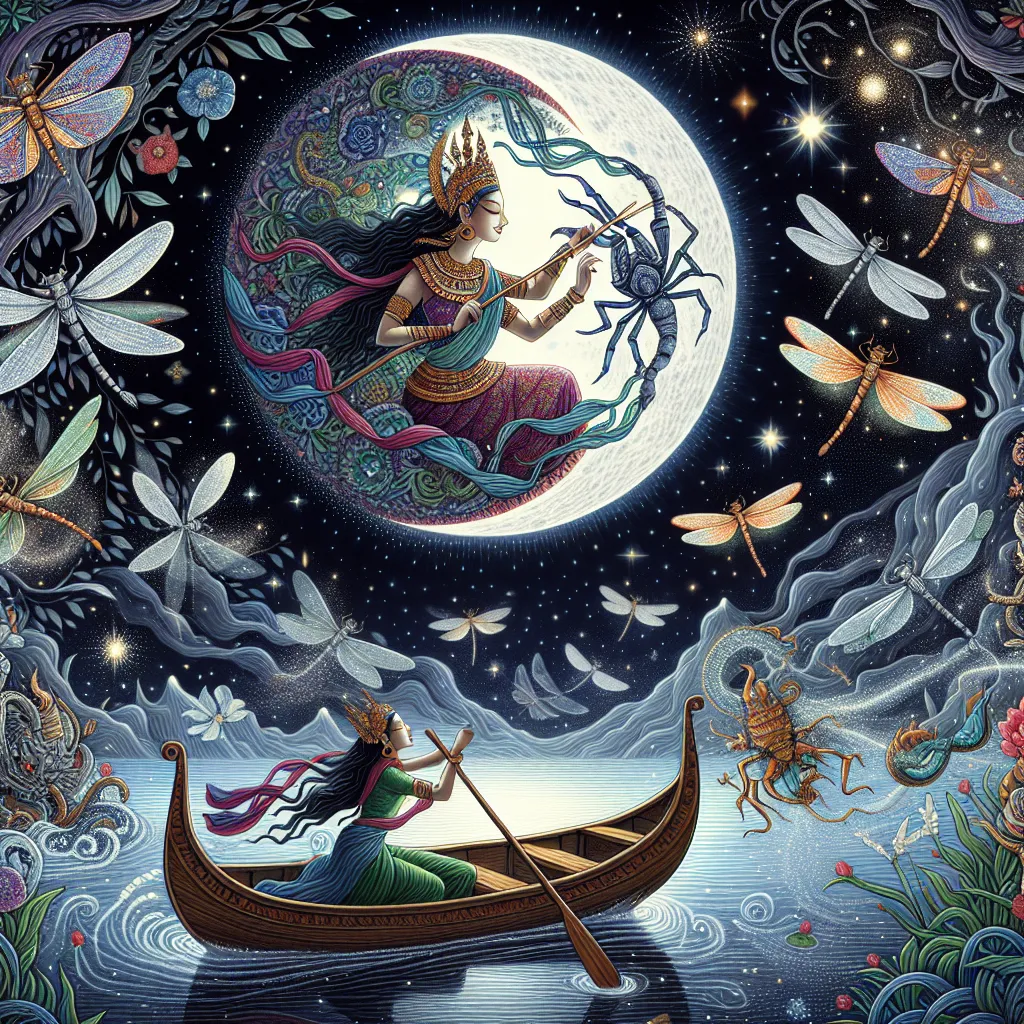
Once upon a time, the moon goddess, Ix Chel, was deeply engrossed in watching a spider weave its intricate web. She thought she could learn a thing or two from it. After a lot of careful observation and imitation, Ix Chel became an amazing weaver. The sun god, Kinich Ahau, was impressed by her work and admired her from afar. But her grandfather was incredibly possessive and wouldn’t let Kinich Ahau get close to her.
Determined, the sun god disguised himself as a hummingbird to get past the watchful grandfather. He swooped down to sip honey from a tobacco flower, hoping to catch the moon goddess’s eye. She spotted him and convinced her grandfather to capture the bird for her. The grandfather shot Kinich Ahau with a blow dart, stunning him. Ix Chel, unaware of his true identity, nursed the “bird” back to health. When he was strong enough to fly, he transformed back into the sun god and invited her to elope with him.
They fled in a canoe, but her grandfather wasn’t willing to let them go that easily. He called upon the storm god for assistance. Ix Chel sensed danger and leaped into the water, transforming herself into a crab. Sadly, the storm god had already unleashed a bolt of lightning that struck Ix Chel, piercing her heart and killing her.
But the story didn’t end there. Hundreds of dragonflies gathered and formed a magical cloud over her body. For thirteen days, the dragonflies worked tirelessly, crafting thirteen logs. On the thirteenth night, the logs cracked open and Ix Chel emerged, alive and more radiant than ever. The sun god immediately proposed, and the moon goddess happily accepted. United, they lit up the sky with their dazzling rays.
However, their happiness was short-lived. Kinich Ahau’s brother frequently visited, and sensing he had feelings for Ix Chel, the sun god grew jealous and began mistreating her. One day, furious, Ix Chel sat by the riverbank. A huge bird appeared, offering her an escape to the high mountain peaks. She agreed and met the vulture king there. He was kind and fun, a welcome change from her violent husband.
When the sun god found out, he was devastated. Desperate, he hid in a deer carcass until a vulture came, then rode it to the mountain where Ix Chel was living happily. He begged her to return, and, being kind and forgiving, Ix Chel agreed. Sadly, Kinich Ahau quickly reverted to his abusive ways. He struck her, scarring her face and dimming her bright rays.
Heartbroken and determined never to be mistreated again, Ix Chel fled into the darkness, vowing to only appear at night. She befriended the stars, combining her pale blue rays with their light to guide nighttime travelers. Using her healing gifts, she helped cure the sick, becoming a symbol of Maya culture.
Although archaeological evidence suggests that Ix Chel and the moon goddess might have been distinct deities for the ancient Maya, their stories have merged over time. Today, Ix Chel’s tale stands as a powerful myth, reflecting the values and self-perceptions of the people who tell it. Her legend, much like all myths, evolves and expands, capturing the essence of human nature through the ages.