Do Animals Lie Too? Uncovering Nature's Top Tricksters
Nature's Intriguing Dance of Deception: Survival Through Trickery and Bluff
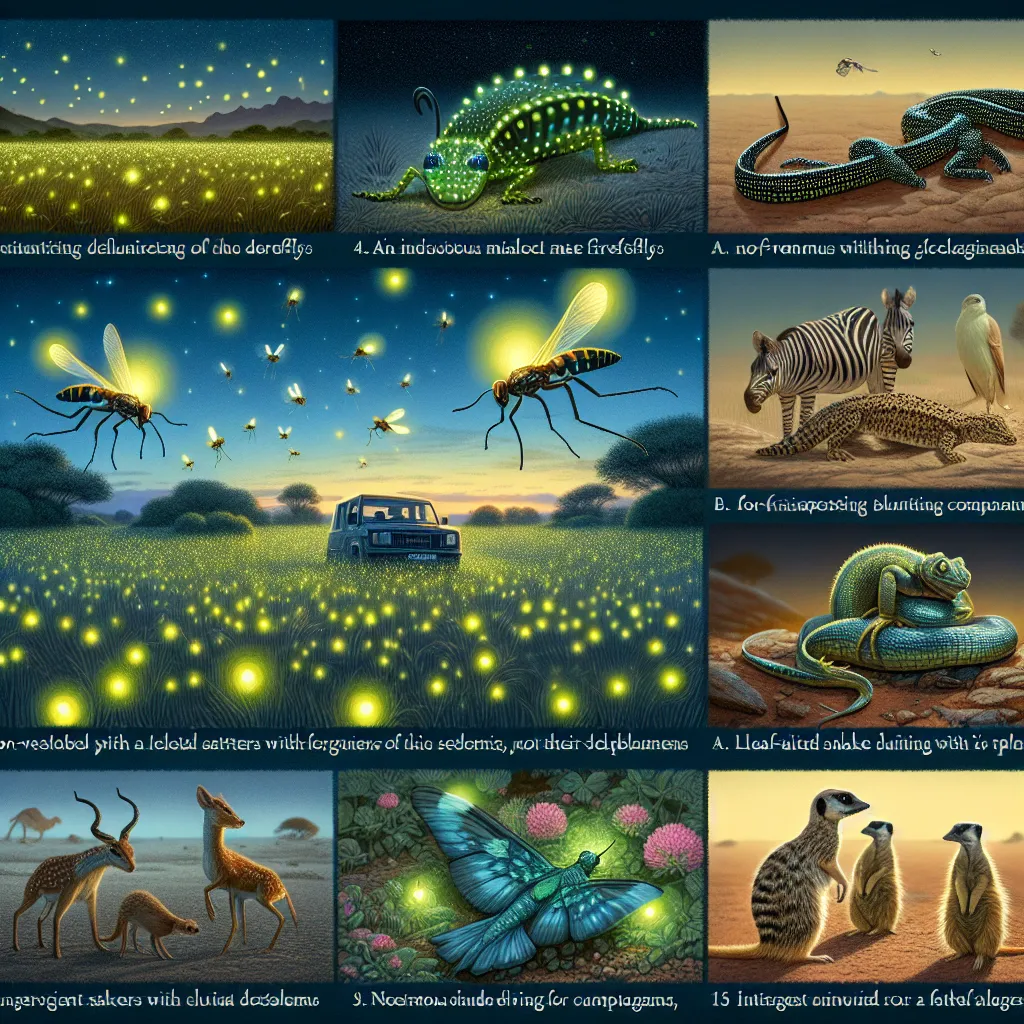
On a warm summer night, a male firefly lights up the field with hopeful flashes, hoping to attract a female for mating. But nature has its tricks; a female from another species mimics his light patterns, luring him in not for love, but for lunch. He’s been deceived.
Behavioral biologists say animal deception must mislead the receiver, benefit the deceiver, and can’t be a mere accident. Here, the predatory firefly’s trickery is no accident as she cleverly adjusts her patterns to match different male fireflies.
Camouflage is one of the best-known examples of such deception. The leaf-tailed gecko and the octopus blend seamlessly into their surroundings. Other creatures use mimicry to shield themselves from danger. Take the harmless scarlet kingsnake; it sports the same red, yellow, and black patterns as the venomous eastern coral snake, warding off potential threats.
Even plants get in on the act. Certain orchids look and smell like female wasps, fooling male wasps into pollinating them. Some animals have evolved fixed traits perfect for their environment, but others, like the octopus or dwarf chameleons, adapt on the fly. For instance, the dwarf chameleon changes its color more precisely when it senses a bird, since birds have better color vision than snakes.
One of the most intriguing cases comes from the fork-tailed drongo in the Kalahari Desert. This bird sounds alarm calls when predators approach, sending meerkats and other animals rushing for cover. But it also sounds false alarms to steal their captured prey. Remarkably, it works about half the time, providing a steady food source for the drongo.
Deception isn’t limited to different species. The mantis shrimp, after molting and becoming vulnerable, bluffs to protect its home. Despite its soft body, it boldly threatens intruders, often successfully. Intriguingly, it seems to bluff more often against smaller rivals, showing an ability to gauge situations and predict responses.
But can animals deceive with intent? That’s the tough part. We can’t peek into their minds, but by observing behavior and outcomes, we know that animals — whether dealing with predators, prey, or rivals — can pull off some surprisingly complex deception.