Is Doctor Strange's Time Stone Closer to Reality Than We Think?
Marvel's Eye of Agamotto and the Science of Time Crystals

If you’re a Marvel movie fan, you probably know Doctor Strange, the brilliant neurosurgeon who turned into a superhero after a car accident led him to seek mystical powers. One of his most powerful tools is the Eye of Agamotto, a magical amulet housing the Time Stone. This glowing green gem allows its possessor to manipulate time itself. In the movie, Doctor Strange uses it to save Earth from the demon Dormammu by trapping him in a time loop. The Time Stone is one of the six Infinity Stones crucial to the Marvel Cinematic Universe’s plots.
While this might seem like pure fantasy, there’s a surprising amount of real science behind it. Marvel’s stories often push the limits of real physics. So how does the concept of the Time Stone relate to real-world science? Recently, physicists have created what’s known as a “time crystal,” which somewhat resembles what we see in the movies.
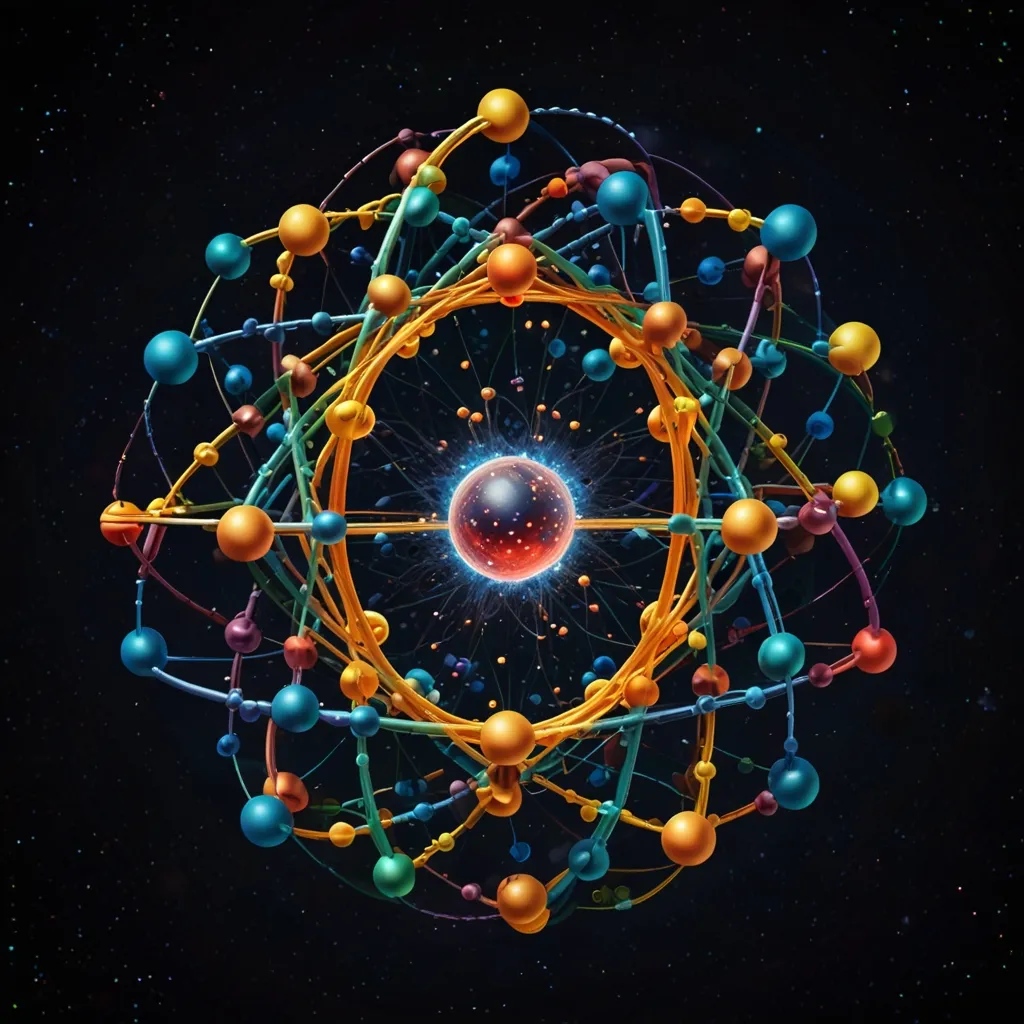
A time crystal is not just science fiction anymore; it’s a concept physicists have explored and even realized. Unlike ordinary crystals, where atoms are arranged in a repeating pattern in space, time crystals have particles that rearrange themselves in repeated intervals over time. This creates a system that returns to its original state periodically, like a clock that ticks at a rhythm it sets itself.
The concept originated from Frank Wilczek, a Nobel Prize-winning physicist, who in 2012 pondered if crystals could be symmetrical in time. The idea is that the particles within time crystals could rearrange themselves periodically without consuming or producing energy, surviving like a perpetual clock. Though initially this seemed like breaking the laws of thermodynamics, physicists figured out a way to sustain these oscillations by periodically adding energy, much like pushing a child on a swing.
In 2017, the first experimental time crystals were created inside quantum computers using rows of atoms acting like magnets with spinning particles. These particles flipped states in periodic cycles. By 2021, scientists successfully created time crystals capable of sustaining constant oscillations within quantum computers.
While these real-world time crystals can’t manipulate time like the ones in Doctor Strange, they do create their own quantum dynamics, aligning somewhat with the fictional device that rewires reality to control time.
The movie’s idea draws on another speculative yet plausible scientific theory, the holographic universe principle. This principle suggests that the information inside a volume of space, like our universe, can be encoded on its boundary, theoretically at infinity. If true, it would mean our entire reality is like a 3D hologram projected from a 2D surface.
No scientist genuinely believes we can entirely control or manipulate time using time crystals, at least not yet. However, the concept does root itself in real scientific principles, which adds a layer of credibility to the fantastical elements in Marvel’s storytelling. So, while Doctor Strange’s Time Stone remains a figment of Hollywood’s imagination, it’s fascinating to see how close it gets to tapping into real scientific theories.