Is Energy Conservation Just an Earthly Illusion?
Bending Reality: Energy Conservation and the Mysteries of Our Expanding Universe
The concept of energy conservation is one of the fundamental principles taught in science from an early age. We’re all familiar with the idea that energy cannot be created or destroyed, only transformed from one form to another. Think of a car’s kinetic energy converting to heat when it brakes or a pendulum’s energy shifting between potential and kinetic forms. But what if this principle doesn’t hold on a cosmic scale?
In science, an isolated system is one where neither matter nor energy can enter or leave. In such systems, energy remains constant, merely changing form. Everyday examples include the kinetic energy of a braking car turning into heat or a pendulum’s swinging motion gradually slowing down due to friction, yet conserving the overall energy.
Where things get complicated is at the universal scale. Is the universe an isolated system? The answer isn’t straightforward. To truly grasp this, we need to dive into quantum mechanics for the very small and general relativity for the very large.
Quantum mechanics tells us that energy is conserved at the micro level. Take the Schrödinger equation, for example, which defines energy conservation precisely. On the macro scale, general relativity—best shown through Einstein’s field equations—tells a different story. Here, energy and momentum are lumped together, meaning the conservation laws change, especially as space-time itself curves and evolves.
Einstein’s breakthrough equations suggest that if space-time were static, energy would be conserved. But as space-time expands, it drags momentum along, changing the overall energy framework. This discovery implies that on a cosmic scale, energy isn’t conserved in the way we understand it on Earth.
Evidence supports this notion. Observations have shown that the universe is not only expanding but accelerating, driven by something mysterious called dark energy. If space is expanding, and empty space itself has energy, that means as the volume of the universe increases, so does the total energy. This directly challenges the conservation principle.
Moreover, light from distant galaxies redshifts as it travels through expanding space-time. As wavelengths stretch out, their energy decreases, posing another puzzle for energy conservation. One quick fix is to theorize that lost energy might turn into dark energy, but the scale difference between observable light energy and dark energy makes this an impractical solution.
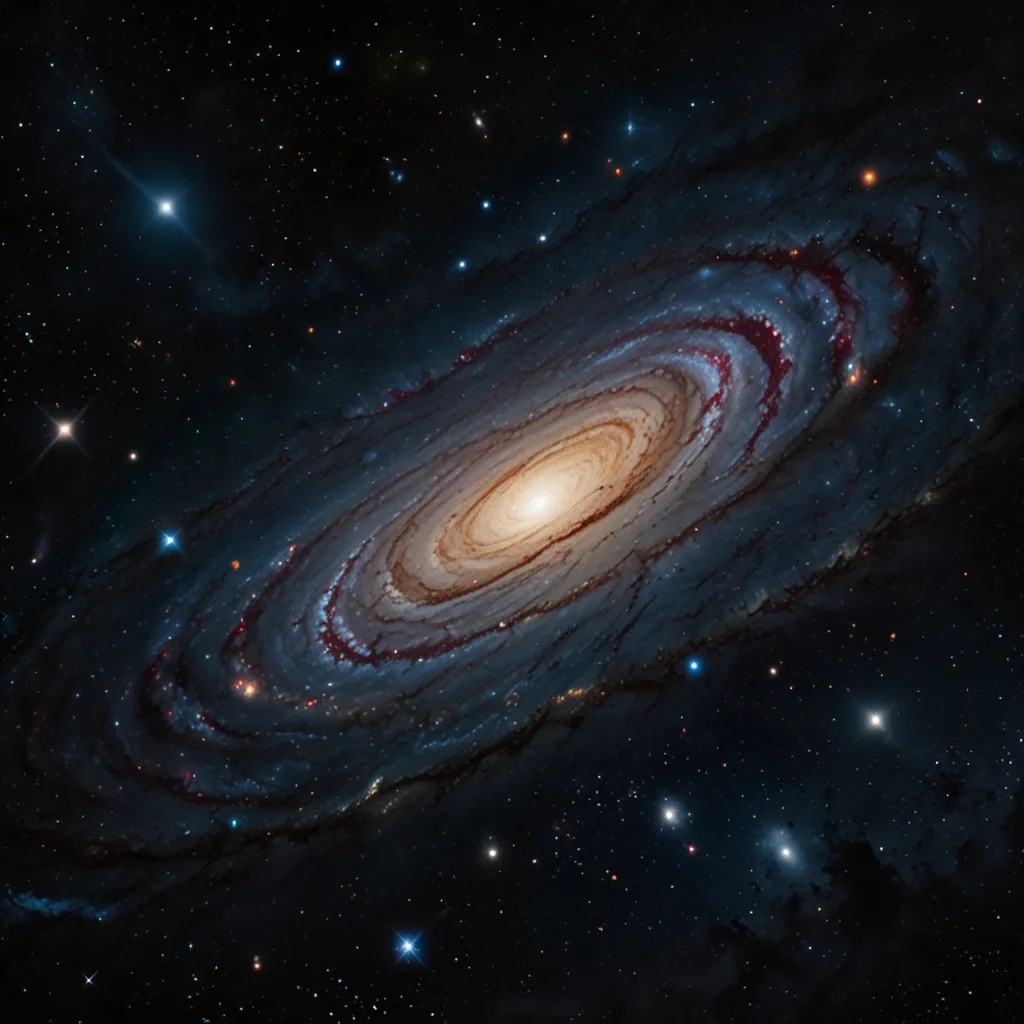
The observable universe, about 94 billion light-years across, continues to expand. Some galaxies are crossing a cosmic event horizon, moving away from us so fast that their light will never reach us. What happens to their energy and matter? These questions complicate the idea of treating the universe as an isolated system and conserving energy within it.
Some experts propose that dark energy is balanced by what is termed “negative gravitational energy.” This theory, supported by none other than Stephen Hawking, suggests that as objects separate, requiring positive energy to overcome gravitational pull, this separation creates negative gravitational energy. However, this is hard to quantify universally due to the complex and uneven distribution of mass and energy in space.
Despite these mind-bending complexities, our day-to-day energy conservation laws largely hold up. For all practical purposes, the principles we rely on remain valid at human scales. The universe may not strictly adhere to these rules, but that doesn’t mean we should discard our trusty physics textbooks just yet.