What Ancient Secret Did Egypt Use to Predict Pregnancy?
From Ancient Egypt's Wheat and Barley to Modern HCG Tests: The Evolution of Pregnancy Detection
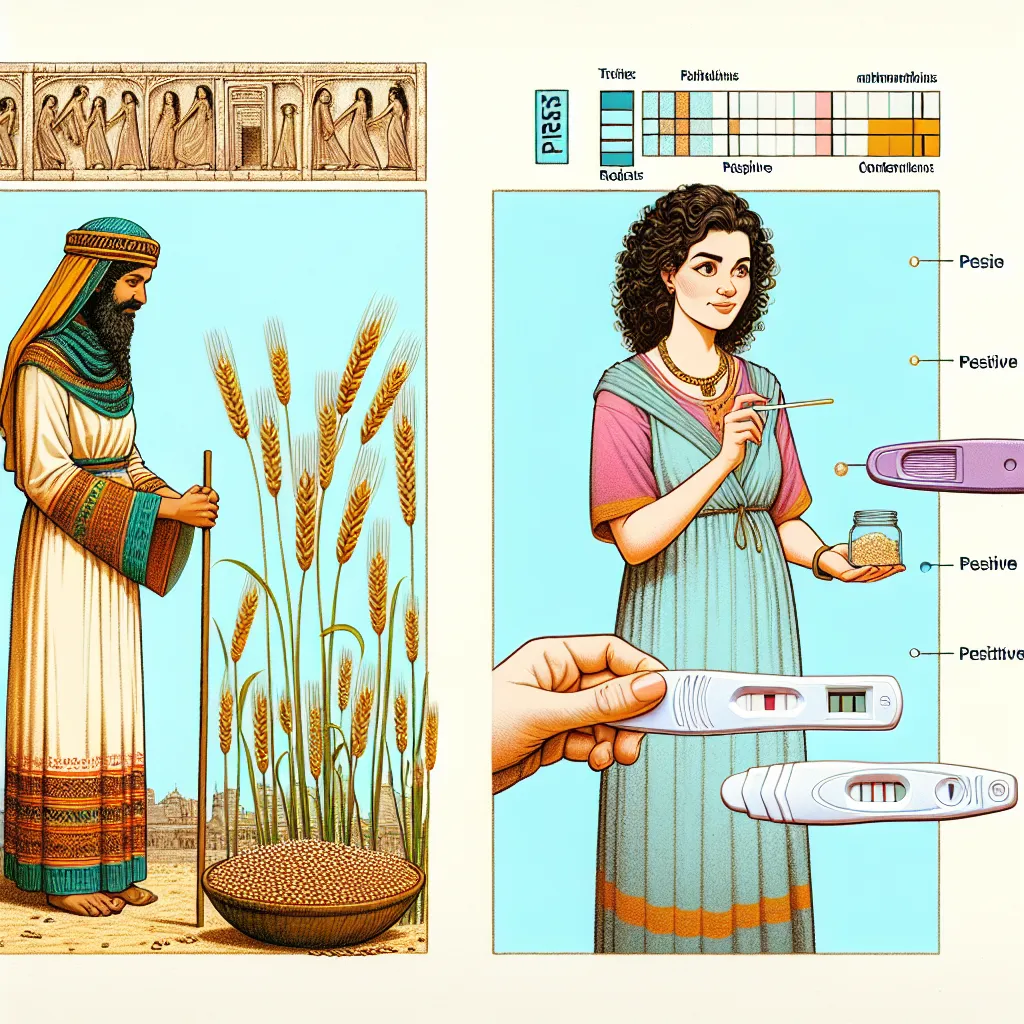
Back in 1350 BC in Ancient Egypt, the first recorded pregnancy test involved a unique method: peeing on wheat and barley seeds. If the seeds sprouted, you were pregnant. Wheat sprouting meant it was a girl, and barley a boy. Fast forward to 1963, scientists tried this ancient method and found it was about 70% accurate in detecting pregnancy, though not reliable for determining the baby’s sex. They believed it worked because pregnant women have higher estrogen levels, which could boost seed growth.
Nowadays, pregnancy tests are far more advanced and give quick, accurate results. These over-the-counter tests identify a hormone called HCG, which is produced early in pregnancy. HCG signals the body to retain the uterus lining, later helping form the placenta to nourish the fetus.
Here’s how modern tests work: You apply urine to a test strip which has three key zones. First, there’s the reaction zone. Here, antibodies in the strip latch onto any HCG present. These antibodies have enzymes that can activate dye. The urine then carries these enzymes to the test zone. If HCG is detected, it gets “sandwiched” between two sets of antibodies, letting the dye show a visible pattern indicating pregnancy.
The final stop is the control zone. This confirms the test’s accuracy. If everything goes as planned, dye will appear here too. If not, it means the test might be faulty.
While these tests are reliable, they can sometimes fail. False negatives might happen if HCG levels are too low to detect, often because the test was taken too early. That’s why it’s best to test in the morning when HCG concentration is highest. False positives can occur due to other sources of HCG, like certain medications or medical conditions such as ectopic pregnancies or specific cancers.
For a definitive answer, visiting a doctor is best. Medical professionals can perform more sensitive tests that measure the exact levels of HCG in the blood.
Waiting for a pregnancy test result can feel like an eternity, but it’s a great example of the scientific method in action. Just think, within minutes, you’re conducting a controlled experiment and analyzing your results—all thanks to modern science. And the best part? No more waiting until the next harvest season for an answer.