What Hidden Treasure Did Miners Pull from the Madness of Lunatic Hill?
From Mundane Waters to Magical Masterpieces: The 100-Million-Year Journey of Opals
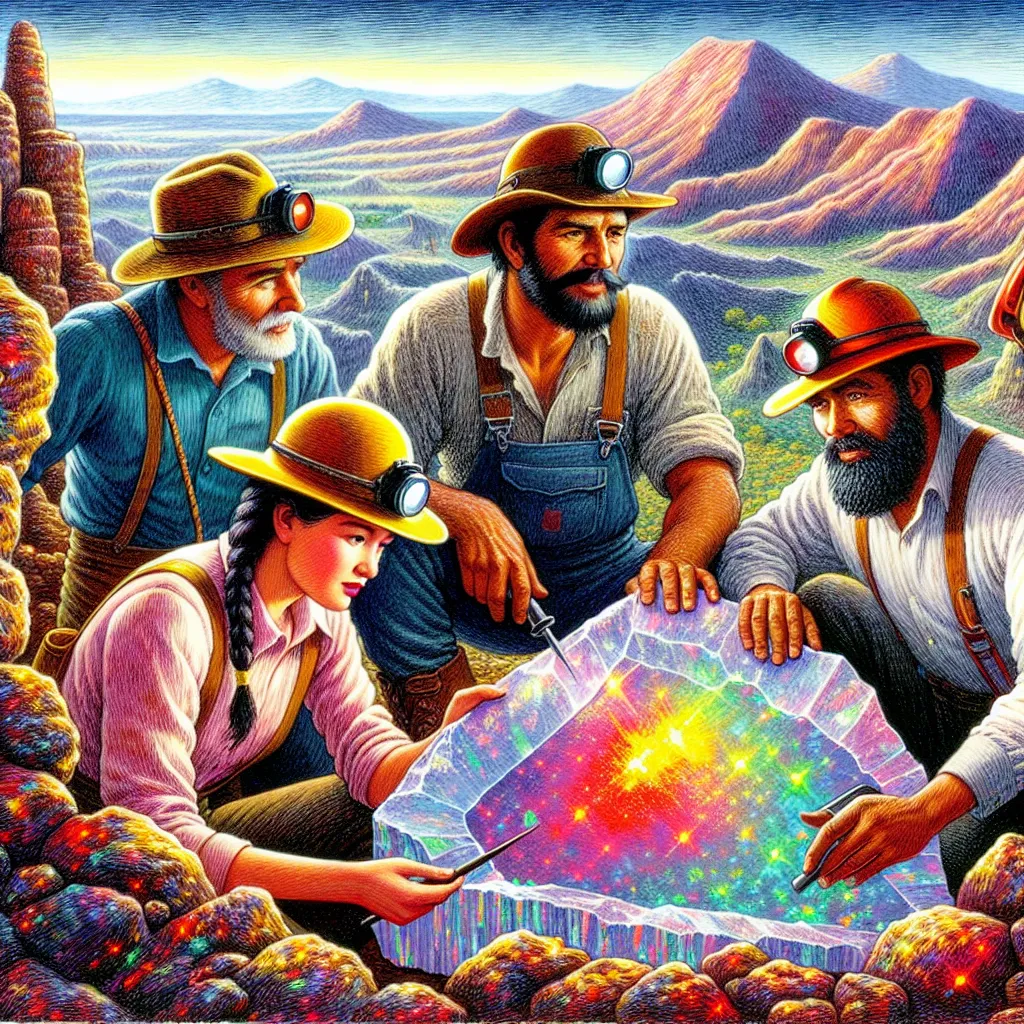
Back in November 1986, five Australian miners made their way up Lunatic Hill—a fitting name given the madness of digging there. While other miners searched for opals just a few meters below the surface, this brave group drilled down 20 meters. Their gutsy move uncovered a fist-sized, record-breaking opal they called Halley’s Comet, after the comet passing Earth at the time.
Opals, especially ones like Halley’s Comet, are unique. Unlike diamonds or rubies, no two opals look the same, thanks to a feature known as “play of color.” This dazzling show of light is a magical mix of chemistry, geology, and optics.
An opal’s journey starts as something mundane—water. This water seeps through soil and rock, picking up tiny particles of silicon dioxide along the way. This silica-rich water then enters empty spaces in rocks, river beds, wood, and even ancient bones. Over time, the water evaporates, and the silica particles settle, forming a gel. This gel hardens into a glass-like material with millions of tiny silica spheres that stack up in layers.
Usually, these layers are randomly arranged, resulting in common opals. But sometimes, silica spheres of similar size line up perfectly, creating precious opals. The vibrant colors in these opals come down to wave physics and interference. When light hits a precious opal, it scatters. At specific angles, the light waves reinforce each other, making the colors glow brightly—this is called constructive interference. Shift your view a bit, and you might see the colors fade or change, known as destructive interference.
Different colors in an opal are due to varying silica bead sizes affecting the light wavelength. Blue light comes from smaller beads, while red light, with its longer wavelengths, needs larger beads, making red the rarest opal color.
These perfect conditions for forming precious opals are rare, occurring mainly in Australia, accounting for about 95% of the world’s supply. It’s in this unique setting that Halley’s Comet opal formed around 100 million years ago.
Imagine what the future holds. In the next 100 million years, what new opal wonders might form from the remnants of our civilization? The thought of brilliant colors emerging from today’s forgotten artifacts is a poetic testament to time and nature’s artistry.