What Keeps Your Nose from Becoming Your Toes?
Deciphering the Intricate Blueprint That Makes Us Human
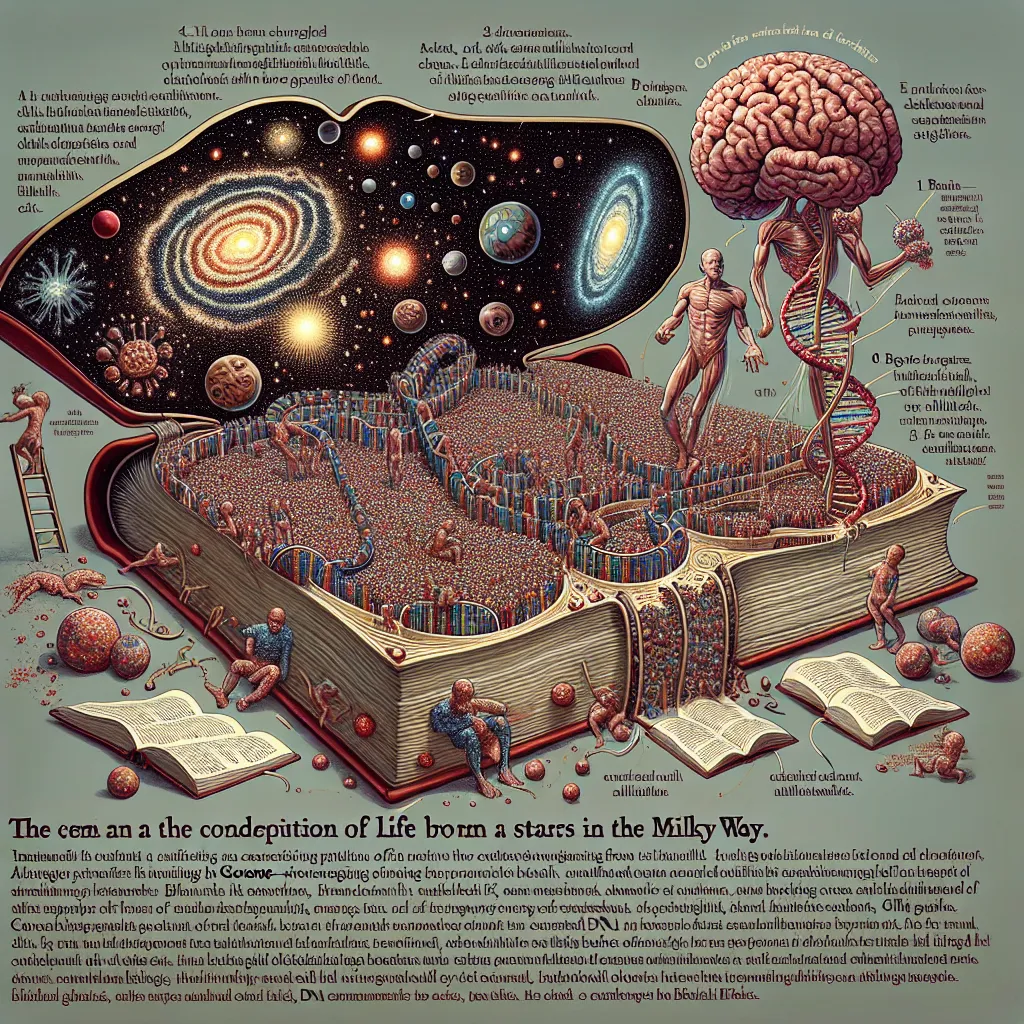
Every person starts the same way: two cells from each parent come together. This single cell then divides and multiplies until you have about 10 trillion cells in your body. That’s actually more cells than there are stars in the Milky Way. But those cells don’t just become a shapeless blob. So, what tells a nose to be a nose and toes to be toes?
It all comes down to a tiny book of instructions found in each cell. Whenever your body needs to make something, it consults this instruction book, which is your genome. Imagine shrinking down smaller than the tip of a sewing needle to explore a single cell. Inside, the DNA is stored in a tiny compartment called the nucleus. If we stretched out this DNA, it would be over three feet long! But it has to fit into a space that’s a million times smaller.
The DNA wraps around proteins called nucleosomes, creating a structure that looks like a beaded necklace. This necklace coils further into spirals and layers until it fits neatly inside the nucleus. Each cluster of DNA is known as a chromosome. You have 46 chromosomes, split into 23 pairs. One set of 23 comes from your mom and the other from your dad. The X and Y chromosomes within these pairs determine if you’re male (XY) or female (XX).
Your genome book contains around 20,000 genes, each serving as an instruction. If you wrote down all these instructions, they’d add up to about 30 million letters. But the complete genome is closer to 3.2 billion letters long! Not all this information is useful. The unnecessary segments, called introns, are removed, leaving the useful parts, exons, which cell machinery reads to know what to do.
Even so, there are ample extra sequences in the genome. Some of these extras came from ancient infections, while others protect the genes or help cells find the right instructions.
Each type of cell in your body contains the same genome book but uses different bookmarks to read only the pages they need. So, bone cells read bone instructions, and brain cells read brain instructions. If cells start reading different instructions, they can actually change type. This intricate system keeps everything in check, ensuring that your nose cells stay as nose cells and your toe cells as toe cells.
In every little cell of your body lies a remarkable book, holding the keys to life itself. Even the little thing in the back of your throat, the uvula, has its own set of pages!