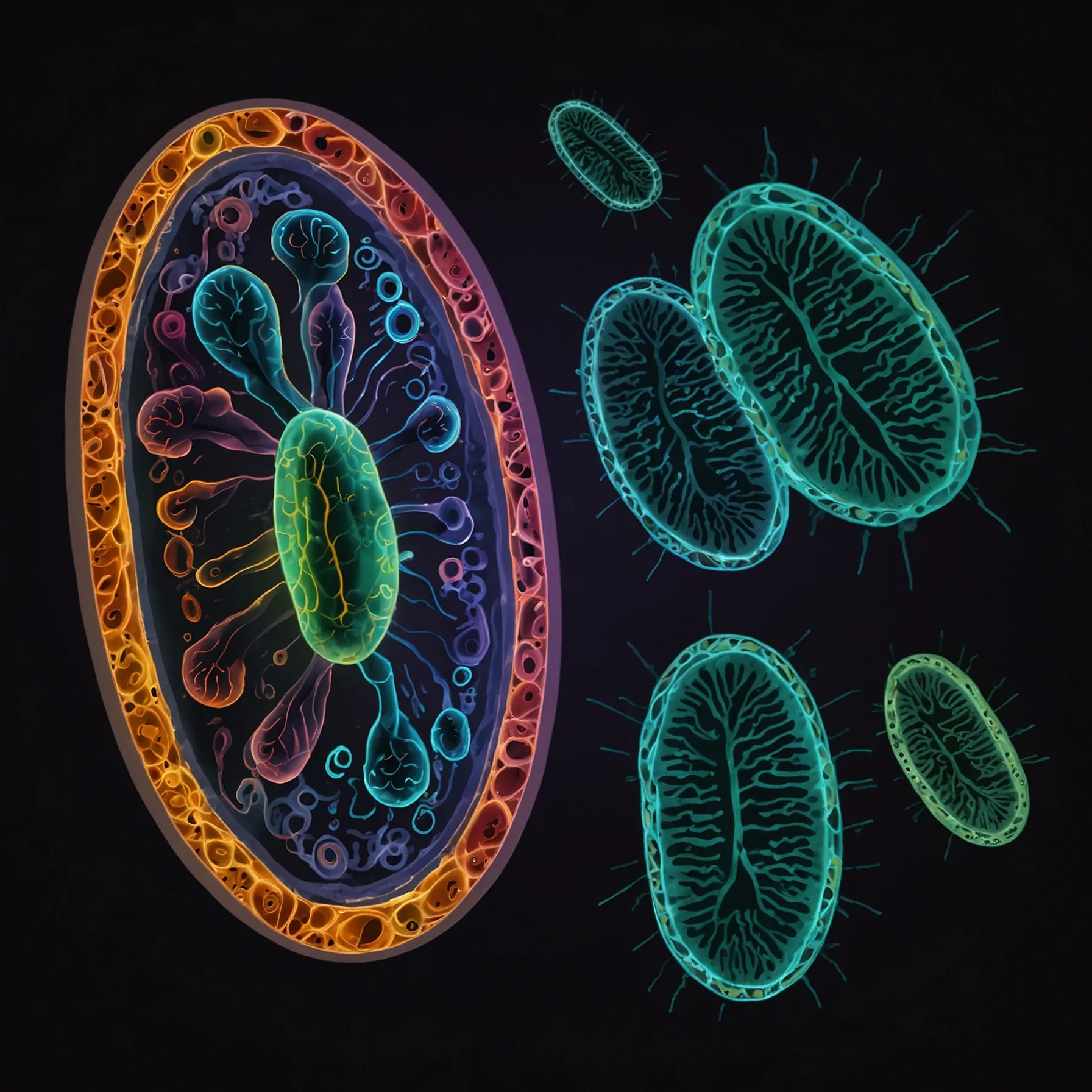
Inside each of our cells, we all carry a second set of genes that’s totally separate from the 23 pairs of chromosomes we get from our parents. This isn’t just a quirk of humans—every animal, plant, and fungus, basically, every multicellular organism has it. This second genome belongs to our mitochondria, a special organelle inside our cells. They’re a strange mix of being part of us but still independent to an extent.
About 1.5 billion years ago, it’s believed that a single-celled organism swallowed up the mitochondria’s ancestor, setting the stage for all multicellular life. Mitochondria play a crucial role: they turn the food we eat and the oxygen we breathe into ATP, which is the energy currency for our cells. Without ATP, our cells can’t survive.
Humans boast over 200 types of cells, and except for mature red blood cells, all have mitochondria. Red blood cells don’t need mitochondria because their sole job is to transport oxygen, which mitochondria would consume before delivery. Mitochondria use oxygen and nutrients to produce energy and carry their own DNA, which varies more between species than other DNA does. For example, mammalian mitochondria typically have 37 genes, while some plants like cucumbers have up to 65, and a few fungi have as few as one.
Interestingly, a few microbes in low-oxygen environments are evolving to lose their mitochondria. One such group, oxymonad monocercomonoides, has already ditched theirs. This variety in mitochondrial DNA exists because they evolve both with and separately from their host organisms.
Mitochondrial DNA gets passed down from one parent—in humans and most animals, it’s from the mother. Sperm carry about 50 to 75 mitochondria in their tails for swimming, which are shed along with the tail after fertilization. Meanwhile, an egg holds thousands of mitochondria, packing in multiple copies of mitochondrial DNA. This results in over 150,000 copies of mitochondrial DNA from the mother, each potentially a little different from the others.
As a fertilized egg divides and grows, these mitochondria get distributed into the developing cells. By the time organs and tissues form, mitochondrial DNA variations are scattered randomly throughout the body. Mitochondria replicate separately from our cells and have their own fusion and division cycles. They even manage the quality of their DNA by isolating faulty parts for removal. This means the initial selection of maternal mitochondrial DNA we get at birth can change throughout our lives and across different parts of our body.
Even though mitochondria are somewhat independent, they’re still influenced by their host environment—us. It’s believed some mitochondrial genes got transferred to the host’s genome over time. So today, mitochondria can’t function without instructions from our DNA, even though they have their own genome. Also, while mitochondrial DNA is inherited from one parent, the nuclear genes involved in building and regulating mitochondria come from both parents.
Mitochondria remain a fascinating enigma, both part of us and distinct. Their ongoing evolutionary story gives us tools to protect human health and offers insights into our own history.