When we chat, sometimes we say things straight-up, like, “I’m going to the store, be back in five.” Other times, we paint mini-scenes with our words, like saying, “It’s raining cats and dogs,” or “waiting for the other shoe to drop.” These are metaphors, describing one thing by talking about something else entirely. It might seem indirect, but it’s not. Our senses - sight, sound, taste - are how we first experience the world. Philosopher William James described a baby’s view of the world as a “buzzing and blooming confusion.” Abstract ideas just pale compared to our first sensory experiences.
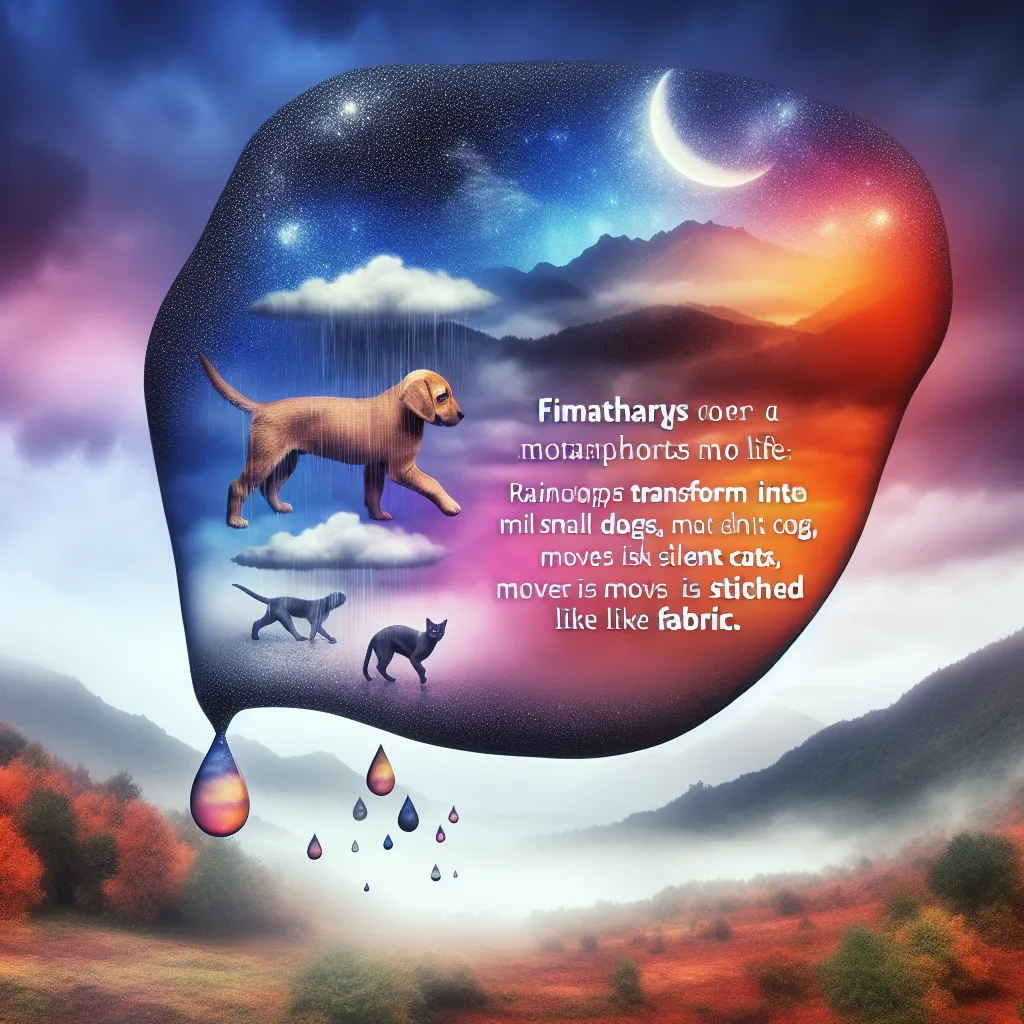
Metaphors think with the imagination and senses. They burst with vivid imagery like hot chili peppers on the tongue. They’re precise, even if we never actually stop to compare raindrops to dogs. If we did, we’d imagine a small dog like a beagle rather than a big one like a golden retriever.
Metaphors aren’t scientifically true or untrue. They are art. If a metaphor doesn’t work, it leaves you scratching your head. When someone says they feel like a “square wheel,” you get it. But “tired as a whale?” That leaves us puzzled.
There’s magic in how metaphors bypass logic and dive right into our subconscious. We’re wired to think in images, much like how we dream crazy, impossible things every night. Even after waking, this image-based thinking lingers in us, shaping how we engage with our day.
Some metaphors use “like” or “as” - these are similes. Phrases like “sweet as honey” or “strong as a tree” admit their comparisons. Similes make you think, while metaphors let you feel directly. Shakespeare’s “All the world’s a stage” packs more punch than if he’d said, “The world is like a stage.”
Metaphors aren’t just about nouns either. Emily Dickinson starts a poem with, “I saw no way — the heavens were stitched —” We instantly get a sense of the sky sewn up like fabric. They can inhabit adjectives too, like in “Still waters run deep,” where “deep” and “still” water tell you more about a person’s quiet depth.
Poems are loaded with great metaphors. An 18th-century Japanese poet Issa penned a haiku: “On a branch floating downriver, a cricket singing.” This tiny scene echoes our fleeting human existence, drifting and singing as we go. Langston Hughes, in his poem “Mother to Son,” compares life’s hardships to a ruined house, saying, “Life for me ain’t been no crystal stair. It’s had tacks in it, and splinters.” These splinters hurt more than just feet—they symbolize real-life struggles.
Sometimes, metaphors step outside human emotions. Carl Sandburg’s verse, “The fog comes on little cat feet,” describes fog like a silent cat padding through the city. This isn’t a hidden meaning; it’s a fresh way to see fog, and it sticks with you long after you hear it.
Metaphors let words exceed their meanings. They’re handles on doors to new worlds of imagination and understanding. Each unique handle opens a new door, revealing new realms. The truly astounding part? By crafting these handles, we build entire worlds.