Why Can't We Walk on Water Like Bugs? Unlocking the Secrets of Water's Magic
The Polar Dance of Water: Nature's Tug-of-War Game
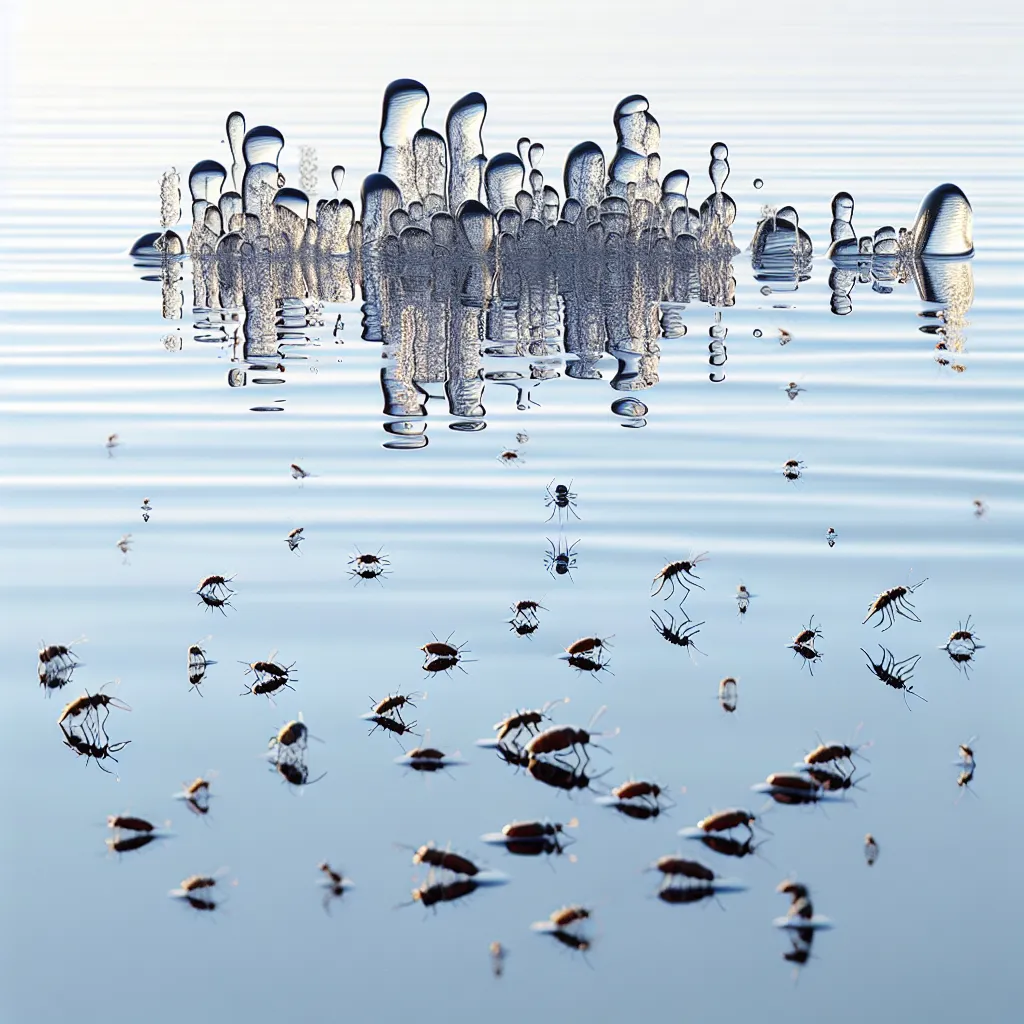
Have you ever wondered why some insects can walk on water while we humans sink like stones? Or why lakes freeze from the top down instead of the bottom up? The magic behind these phenomena lies in a simple concept: polarity.
Water, just H2O—two hydrogen atoms and one oxygen atom—might look uninteresting, but it’s a wonder molecule crucial to life, making up about 60% of the human body. The secret sauce here is how the electrons are shared unevenly among its atoms, giving water its unique traits.
Think of the oxygen atom as a big, strong athlete and the hydrogen atoms as small kids in a tug-of-war game. Oxygen, being larger with more positive charges (protons), draws the negatively charged electrons closer to itself, winning the tug-of-war. Hydrogen, the smaller and weaker player, ends up with fewer electrons. This makes oxygen slightly negative and hydrogen slightly positive, creating what we call polar covalent bonds within each water molecule.
These polar covalent bonds mean that water molecules aren’t just friends—they’re a tightly-knit gang. The oxygen of one water molecule attracts the hydrogen of another, forming hydrogen bonds. These bonds aren’t unique to water; they can form between water and other polar substances too.
Water’s “stickiness” comes in two flavors: cohesion and adhesion. Cohesion is water sticking to water, while adhesion is water sticking to other things.
Now, about those insects walking on water. They manage this trick because of surface tension, a result of hydrogen bonding. This tension creates a thin film sturdy enough to carry lightweight critters. Unfortunately, our heft breaks through, preventing us from walking on water like little bugs.
And ice on water? Most solids are denser than their liquid forms, but water is quirky. In ice, hydrogen bonds spread the molecules out more than in liquid form, making ice about 9% less dense. This density difference lets ice float, insulating the water beneath and allowing aquatic life to survive harsh winters.
In the end, it’s the polarity of water molecules and their hydrogen bonds that make water the incredible, life-supporting substance it is. From the cells in our bodies to the vast oceans, water’s unique properties stem from its simple, polar nature.