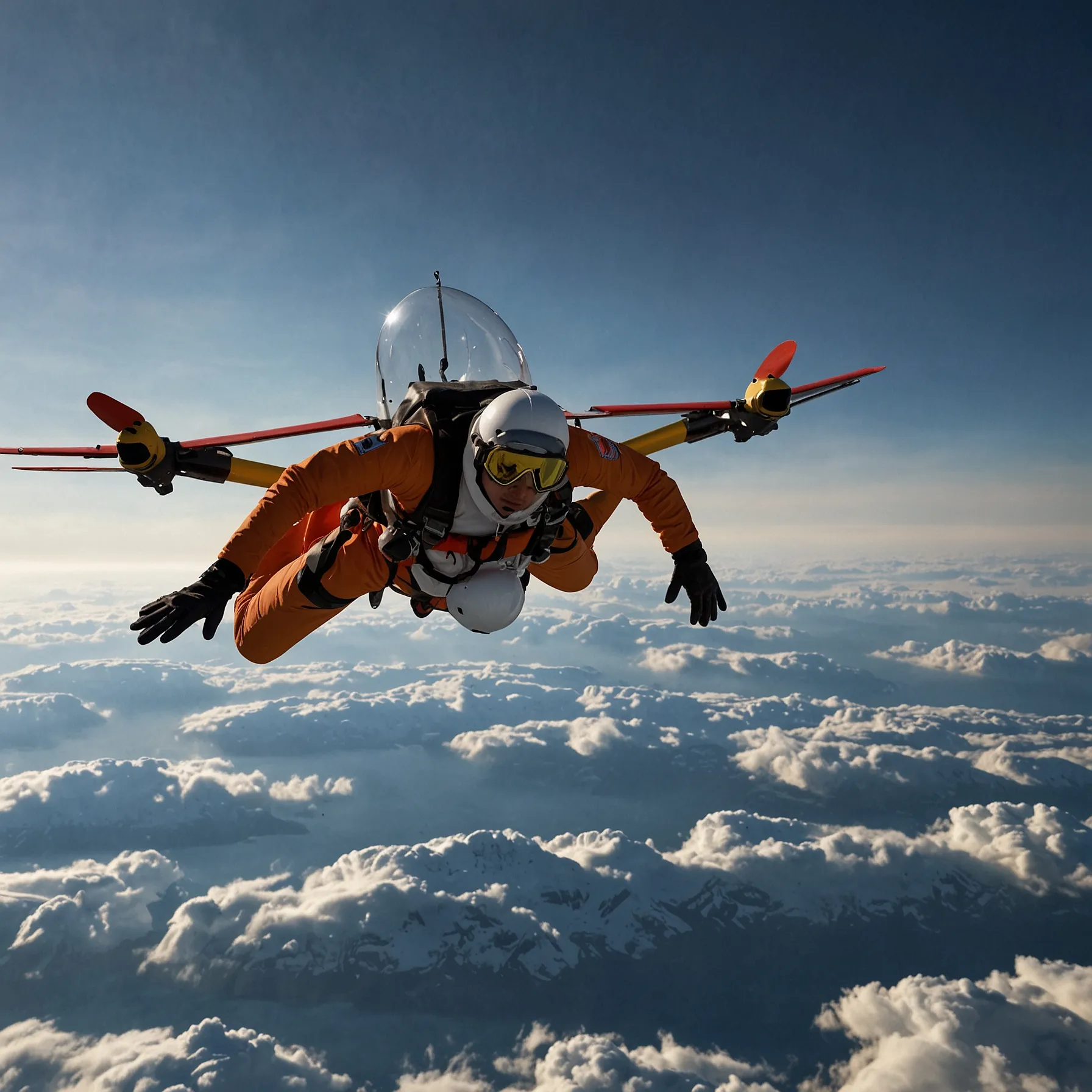
Ever wondered how fast humans could fly if we had wings? Let’s dive in! Our top sprint speed on land is around 27 mph, thanks to Newton’s Third Law of Motion, where every push of our legs against the ground gets a push back, propelling us forward.
Now, what if we were swimming? Superstar Michael Phelps, the fastest human swimmer, maxes out below 5 mph. Why so slow? Simple: water is a liquid. When we push off, water just slides around us, absorbing a lot of our energy. Imagine trying to fly and needing to push air, which is even more spaced out. More energy wasted, less speed.
Float like an astronaut? They zip around by grabbing handles in zero gravity. Picture yourself floating to the store. Swimming through the air wouldn’t get you far. Even with floating abilities, flying higher has challenges. According to the Ideal Gas Law, higher altitudes mean lower pressure and colder temperatures. You’d need to bundle up or risk hypothermia. Rise too quickly and boom, decompression sickness, known as “the bends.” Your blood could froth like soda, leading to serious harm.
Even flying close to the ground isn’t hassle-free. Goggles and helmets would be essential to dodge birds, insects, and other flyers. Collide and you could free fall. It’s risky business.
Still, the idea of floating a few feet above ground at a snail’s pace sounds thrilling. Imagine gliding smoothly through life, even at slow speeds. Which superpower will you ponder next? Super speed, strength, or maybe invisibility? So many cool choices await!