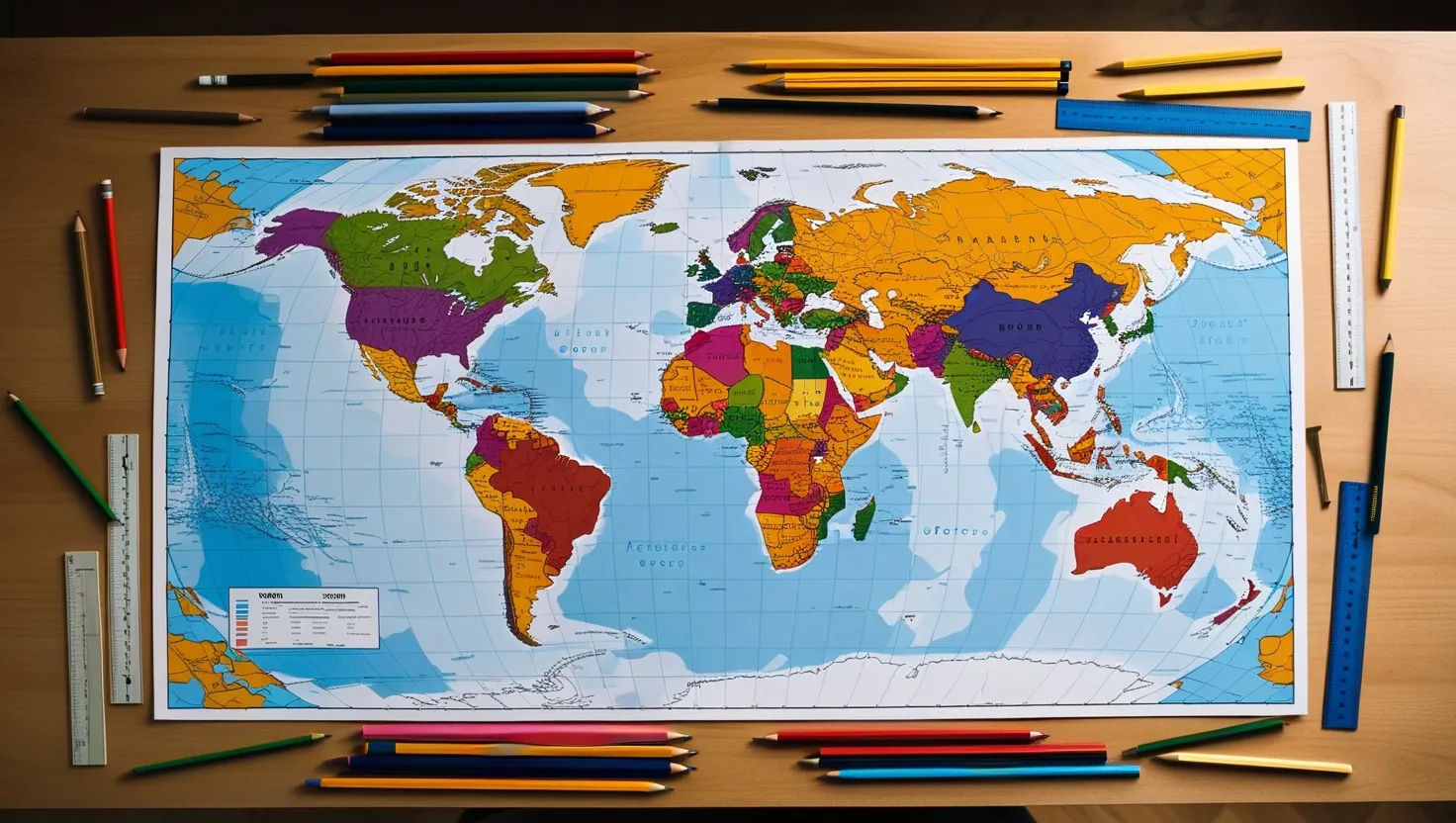
Imagine sitting with me right now, staring at a world map. Those thin lines between countries? They’re not just squiggles. They’re decisions made by people long ago—kings, lawyers, explorers—who grabbed pens and changed lives forever. Let’s walk through five borders that did just that. I’ll keep it simple, like we’re chatting over coffee. Think about this: what if one line on paper could split your family in half?
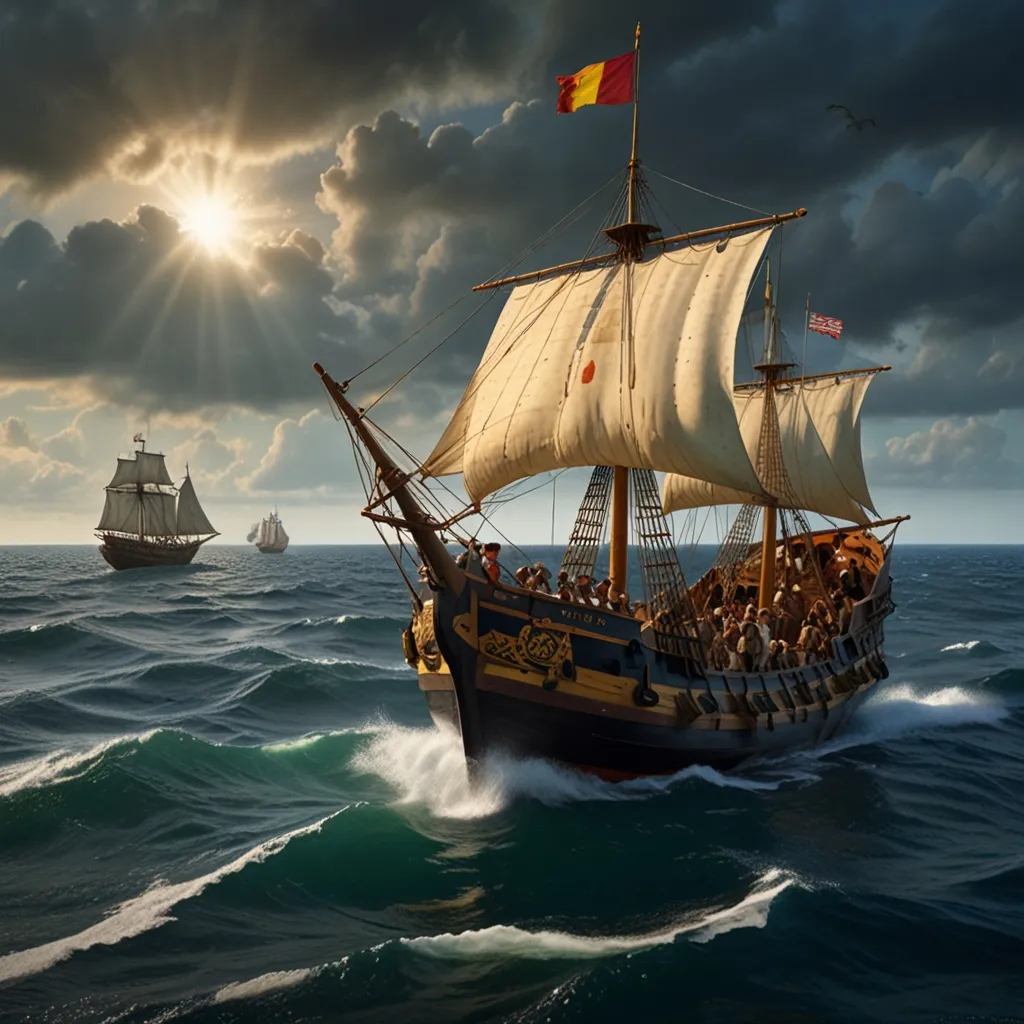
Start with the Treaty of Tordesillas in 1494. Two guys from Spain and Portugal sat in a room, drew a line down the Atlantic Ocean—about 370 leagues west of some islands—and split the whole New World. Spain got most of it. Portugal snagged Brazil. No one asked the millions already living there. Crazy, right? This line wasn’t based on rivers or mountains. It was pure deal-making to avoid fights between the two powers.
Here’s a kicker most folks miss: that meridian line ignored the curve of the Earth back then. Sailors using old tools ended up way off course. Portugal’s ships hugged the African coast, claiming Brazil by accident almost. Today, drive through Brazil and hear Portuguese spoken amid Spanish everywhere else. That one line made languages stick like glue. Ask yourself: if explorers drew lines today without GPS, where would your hometown end up?
Pope Alexander VI blessed this split, saying it was God’s will. But locals? They got conquered, converted, or killed. Silver from Spanish lands funded wars in Europe. Brazilian sugar fed empires. One forgotten fact: the line shifted fights from Europe to the seas, birthing modern navies. Picture it—your morning coffee traces back to that hasty stroke.
“The division of the world between two nations was an act of such audacity that it still echoes in every map we see.” – A cartographer’s reflection on old treaties.
Now, jump to 1947 and the Radcliffe Line. British India was breaking apart into India and Pakistan. Cyril Radcliffe, a London lawyer who’d never set foot in India, got five weeks to draw the border. He used crappy maps from the 1800s and spotty population counts. Boom—15 million people fled across the line. Trains full of bodies arrived at stations. Rivers got chopped in half, splitting farms and villages.
Lesser-known twist: Radcliffe picked Punjab’s split by eyeing train lines, thinking it’d be fair for goods to move. But he ignored the Sikhs, jamming them between Muslims and Hindus. Violence exploded—over a million dead. Today, that line sparks wars over Kashmir. Families still swap photos across checkpoints. Ever wonder: could one guy’s rushed pencil sketch cause nukes to fly someday?
I tell you, visit the Wagah border ceremony. Soldiers stomp like madmen at sunset. It’s theater hiding deep hate. Unconventional angle: this border boosted Bollywood. Partition stories sell tickets. Pain turned profit.
Shift to the Berlin Wall, built in 1961 overnight. East Germany threw up concrete to stop brain drain—3 million had fled to the West. It wasn’t a normal border. No land grab. Just a cage for their own people. Barbed wire, watchtowers, dogs, landmines. Families waved from windows across no-man’s-land.
Dig deeper: kids born on one side never met cousins on the other. Escape tales are wild—hot air balloons, tunnels under bakeries, even a guy in a submarine. One lady sewed herself into a car seat. By 1989, crowds hammered it down with pickaxes. Joy everywhere. But scars? East Germans whisper about “Ostalgie”—missing the old days’ safety net.
“Mr. Gorbachev, tear down this wall!” – Ronald Reagan, 1987.
Question for you: if a wall keeps your neighbor from leaving, is it a border or a prison? Remnants stand in Berlin, painted with graffiti. Tourists snap pics, forgetting the suicides.
Africa’s straight-line borders? Blame the 1884 Berlin Conference. Europeans—mostly Belgians, Brits, French—sliced the continent like cake. No Africans invited. They drew rulers on maps, ignoring tribes, languages, deserts. Congo got curved funny to fit King Leopold’s greed. Straight lines everywhere else.
Hidden gem: these lines bundled enemies together. Rwanda’s Hutus and Tutsis? Same pot, boiling over in genocide. Nigeria’s oil fights? Tribes split by a pencil. Independence came, but leaders kept the lines to dodge chaos. Result? Coups, civil wars. Today, cell phones ignore borders—smugglers text across lines.
Think unconventional: nomads like Tuaregs roam Sahara, laughing at flags. Their camels cross “borders” drawn by folks who’d never seen sand. What if Africa redrew maps by DNA tests? Would nations fit better?
Finally, the U.S.-Canada 49th parallel. Rare good story. 1818 treaty said, “Let’s extend this line west from the Great Lakes.” No war. Surveyors with chains and stars trudged through forests, swamps, Rockies. Took decades. Disputes? Solved by commissions, handshakes.
Cool fact: it skips islands for fishing rights. Longest undefended border—5,500 miles. Trucks zip across without stops. Economies blend: same Tim Hortons, hockey fights. Lesser-known: during World War II, they shared radar secrets. Peace bred trust.
“Good fences make good neighbors.” – Robert Frost, pondering boundaries.
But wait—is it too friendly? Drugs sneak through. Spies swap tales. Still, model for tomorrow. Imagine no walls, just shared power grids.
These five—arbitrary meridian, rushed Radcliffe, imprisoning Berlin, geometric Africa, surveyed 49th—show borders as human scribbles. They trap trade, spark fights, or glue friends. Tordesillas echoes in samba beats. Radcliffe bleeds in headlines. Berlin inspires rappers. Africa’s lines fuel migrants. Canada’s seam powers Netflix binges.
Now, your turn: which border bugs you most? Climate change melts ice, floods islands—old lines flood too. Digital borders? Firewalls block ideas. Nationalism rises, walls grow. But history whispers: lines move. People hammer them down.
Let me paint Tordesillas closer. Sailors from Portugal hit Brazil’s coast, stunned by green giants. “Ours!” they yelled, per the Pope’s line. Spain raged but grabbed Mexico’s gold. Natives? Smallpox wiped villages before boots landed. That line seeded mestizo cultures—Spanish words, African beats, Indigenous corn.
Radcliffe’s rush? He burned his maps after, ashamed. Punjab’s canals split—India got headwaters, Pakistan dry fields. Trains today halt at midnight, lights blazing. Smugglers burrow under. One angle: it birthed Bangladesh in 1971, another split.
Berlin’s fall? I urge you—watch old footage. Hammers chip, tears flow. East kids tasted bananas first time. But jobs vanished; West boomed ahead. Reunification cost trillions. Walls inside heads linger—East salaries lag.
Africa’s conference? King Leopold rubber-flogged Congo for bikes. Straight lines hid horrors. Today, Ebola jumps borders drawn blind. Gold smugglers mine “no-man’s” zones. Flip it: borders forced unity. Kenya’s tribes feud less than expected.
Canada’s survey? Men froze measuring prairies. One team vanished—grizzlies? Line bent for Vancouver Island, saving rainforests. Trade? $2 billion daily crosses. No passports for pets.
Intertwine them: Tordesillas previewed Berlin—powers divide worlds afar. Radcliffe mirrored Africa—ignore locals, reap wars. Canada contrasts all—heal slow, win big.
Famous escapes? Berlin’s balloon family fled with chicken for ballast. Radcliffe refugees swam bloody rivers. African rebels trek lines nightly.
Future? Drones patrol. Sea levels rise—Bangladesh shrinks. Borders adapt or break.
What line shapes your life? Grocery imports? Phone apps? These five prove: maps lie. They’re stories. Rewrite wisely.
(Word count: 1523)