How Ancient Infrastructure Changed the World: Roads, Canals, and Engineering That Shaped Civilizations
Discover how ancient infrastructure like Roman roads, China's Grand Canal, and Inca rope bridges shaped civilizations and still influence modern engineering today.
I often think about how the largest changes in history didn’t always come from dramatic wars or the rise and fall of kings. Sometimes, the world changed because someone decided to build a road, dig a tunnel, or weave a bridge out of grass. The infrastructure of ancient civilizations, long before steel and skyscrapers, shaped entire societies and still shapes us today.
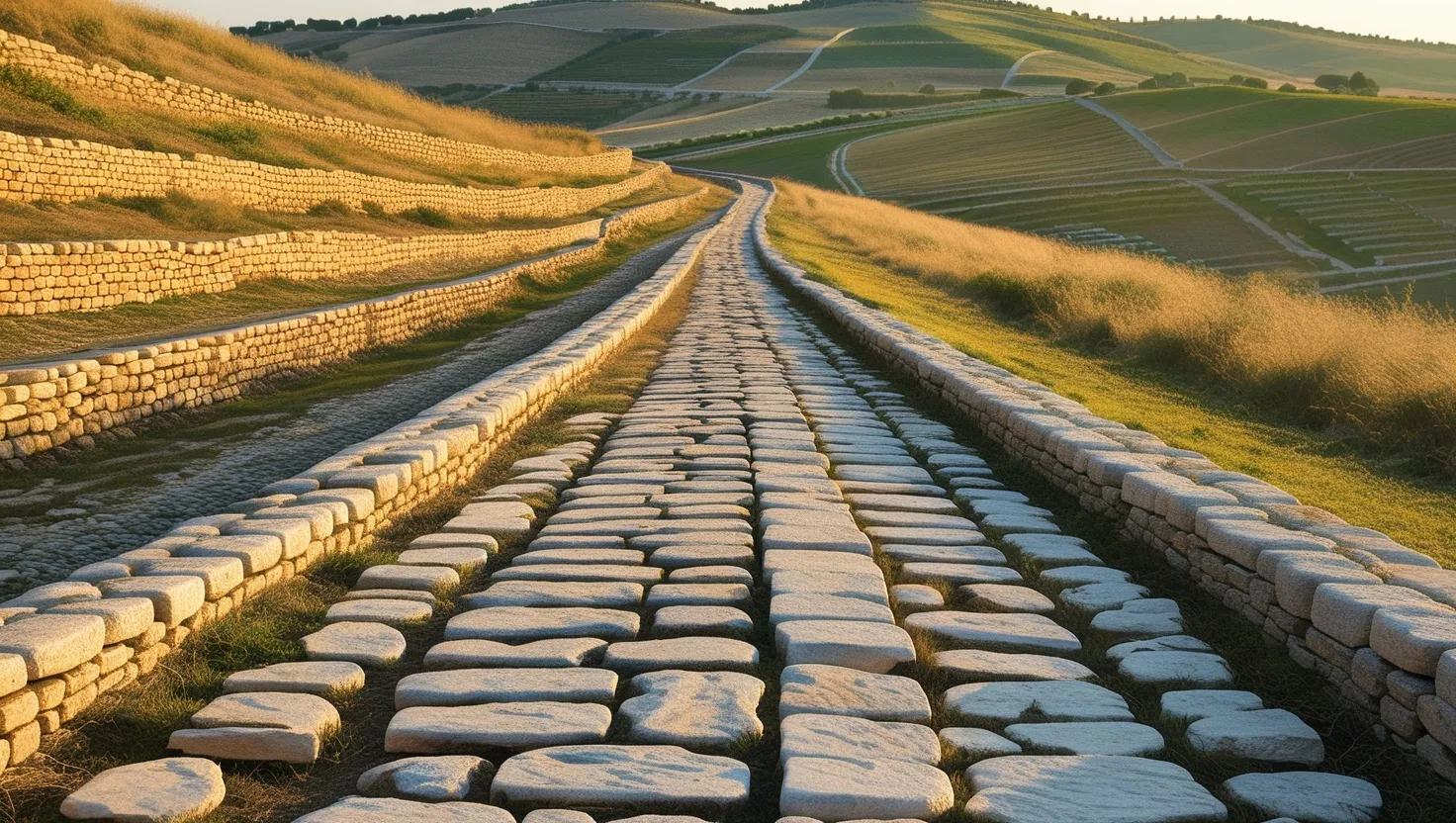
Let’s consider the scale and ambition of what our ancestors accomplished. When I imagine the Roman Empire, the first thing that comes to mind isn’t just togas or Colosseums. It’s the roads—stretching like veins across continents. They covered over 250,000 miles, not just as paths from one city to another but as connections binding the fragments of an empire together. These weren’t just dirt tracks: each road was layered with stones, tightly fitted, with ditches for drainage and milestones marking distance. Roads like the famed Via Appia allowed armies to move quickly and trade to flourish, but they also carried ideas, stories, and even diseases. Isn’t it striking how trade and travel shaped the Roman sense of unity and identity, much as the internet shapes ours? I often wonder: would Rome have lasted as long as it did without this web of stone underfoot?
“All roads lead to Rome.” This phrase captures not just a geographical truth but a social and political strategy. Roads weren’t only about speed; they were about control. Imagine being a merchant, a soldier, or a messenger, relying on a highway system that felt almost modern in its efficiency. Even today, road layouts and drainage systems draw upon the lessons learned by Roman engineers. The next time you take a highway exit, think about those surveyors, measuring in straight lines under a Mediterranean sun.
Now, let’s shift eastward to China and stand on the banks of its Grand Canal. By the 7th century, this ribbon of water stretched more than 1,100 miles, connecting the country’s two great rivers. Picture thousands of workers digging, building locks, and dredging channels—all without modern machinery. The Grand Canal wasn’t just a feat of engineering; it was the lifeblood of China’s economy and stability. Through it, grain from the fertile south fed the hungry, populous north. Prices stabilized, markets integrated, and governments could feed their capitals and armies. In many ways, the canal was a silent force, holding the country together when droughts or floods might have torn it apart.
Have you ever wondered how much work it took to keep a civilization’s heart beating? The Grand Canal answered that question every day, for centuries, becoming a template for later infrastructure that fed and united whole nations. And unlike many great works that fell into ruin, the canal still serves millions today—a rare continuity that even modern megaprojects can envy.
Water, in fact, is often the boundary between a thriving society and one that withers. In the arid lands of ancient Persia, the solution was as clever as it was humble: the qanat. Imagine a hand-dug tunnel, stretching underground for miles, fed by mountain aquifers and guided only by gravity. These channels allowed settlements to bloom in places where the land above was dry and unforgiving. The qanats protected precious water from evaporation and contamination. I’m fascinated by how these systems expanded across empires, even influencing regions as far away as Spain. Sometimes the simplest solutions—digging horizontally instead of vertically—can make life possible where it was thought to be impossible.
“Thousands have lived without love, not one without water.” — W. H. Auden
What’s striking is not just the technical ingenuity of qanats, but their social dimension. Communities had to cooperate, maintain, and share these water sources, turning engineering into a practice of diplomacy and trust. Even today, in parts of Iran and North Africa, these ancient tunnels still provide water, a testament to design that lasts when natural resources are scarce.
Traveling up into the Andes, you’ll find another kind of ingenuity—one that’s as breathtaking in its vulnerability as in its strength: the Inca rope bridges. These aren’t the stone arches and pillars of Rome, but bridges made from woven grass, spanning canyons where stone or timber would be impossible. The Q’eswachaka bridge, for example, has been rebuilt annually for centuries, with entire villages coming together for the task. Imagine stepping onto a bridge that sways with the wind, feeling, beneath your feet, the product of communal effort and trust.
Why choose grass over stone? For the Incas, local materials and collective labor turned logistical obstacles into opportunities for social bonding. The bridges weren’t just transport links; they were symbols of cooperation. Llama caravans, messengers, and even armies could cross ravines otherwise impassable. It’s a lesson in resourcefulness and in thinking differently about what strength means—sometimes, resilience comes from flexibility and renewal, not permanence.
“It is not the strongest of the species that survive, nor the most intelligent, but the one most responsive to change.” — Charles Darwin
In the heart of ancient Rome, a different problem loomed—how to manage waste and stormwater in a growing city surrounded by marshes. Enter the Cloaca Maxima, an engineering marvel evolving over centuries from an open ditch to a complex sewer system. It did more than just drain the muddy Roman Forum; it made dense urban living possible by carrying away waste, reducing disease, and clearing space for temples and markets.
Think about how rare it was, in the ancient world, for cities to grow without being crippled by poor sanitation. The Cloaca Maxima wasn’t glamorous, but its effects were profound. By making city living healthier and more sustainable, it set the groundwork for public health principles and city planning that future generations would use. Rome showed that infrastructure isn’t just about what’s visible above ground; what’s underground can be just as crucial.
“Civilization advances by extending the number of important operations which we can perform without thinking about them.” — Alfred North Whitehead
All these projects—roads, canals, qanats, rope bridges, sewers—share something unexpected: each one didn’t just serve its immediate function but created new possibilities. Infrastructure isn’t just bricks and mortar (or grass and water); it’s a framework for how people live, work, and dream. When we look at the past, I think it’s important to ask: What made these systems so durable? Was it their materials? Their scale? Or was it the ability of communities to adapt and maintain them over generations?
Another intriguing perspective is how these old systems echo into the present. Many cities still follow the footprints of Roman roads. Modern logistics and highway planning draw on principles first practiced by Roman engineers. The Grand Canal, though modernized, still ferries goods and people. Qanats continue to hydrate fields in places where surface water fails. Rope bridges inspire architects looking for sustainable, local solutions. And every modern sewer owes a quiet debt to the Cloaca Maxima, which proved that clean cities are possible.
Here’s a question I often ask myself: What current projects will shape our world for centuries to come? High-speed railways, desalination plants, spaceports—will they endure, adapt, and continue to serve, or will they vanish like so many ancient wonders?
“Infrastructure is much more than steel, glass, and concrete. It’s about connectivity, opportunity, and legacy.”
What binds these ancient feats together is not just their technical complexity, but their vision. Each one solved a local problem—moving armies, feeding cities, bringing water, crossing mountains, cleaning waste—but also set the stage for cultural and political change. Through infrastructure, rivalries became alliances, markets grew, borders blurred, and societies matured.
If there’s one lesson I take from these stories, it’s that the most powerful changes often start quietly—with the digging of a ditch, the laying of a stone, the weaving of a rope. When we build to last, we build not just for ourselves, but for generations to come.
So the next time you cross a bridge, drive a highway, turn on a tap, or walk in a city, pause and wonder: What forgotten hands and minds made this possible? And what responsibilities do we have, now, to dream and build as boldly as they once did?