What Adventures Await Your Plastic Bottles?
Plastic Paths: Three Bottles, One Planet, Endless Ripple Effects
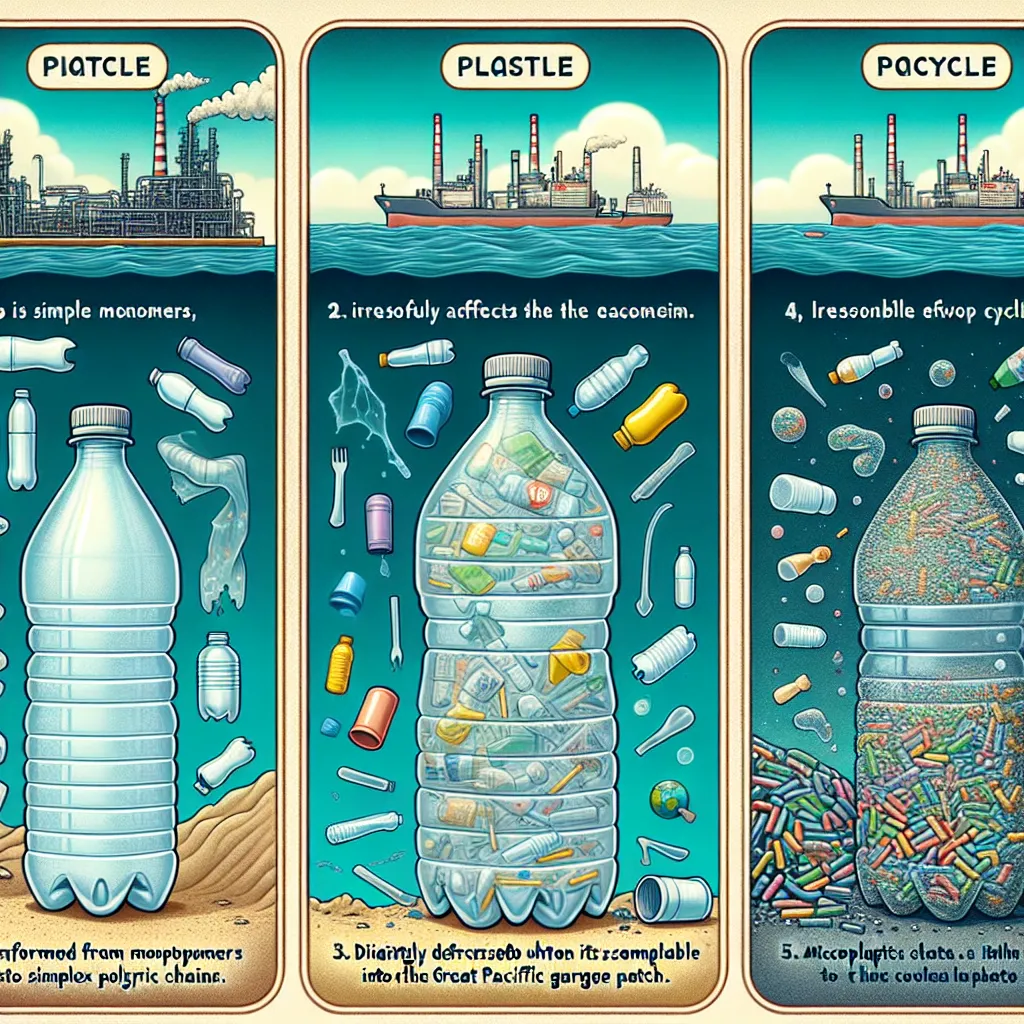
Once upon a time, there were three plastic bottles, each empty and discarded, yet their fates would ripple out in ways that could change the planet. But before they ended up at the edge of their adventures, their story began in an oil refinery. Here, oil and gas molecules were chemically bonded to create monomers, which were then linked into long polymer chains. These chains formed plastic pellets, later melted and molded into resilient bottles.
These bottles were filled with bubbly drinks, wrapped, shipped, bought, opened, consumed, and finally thrown away without much thought. Now, on the brink of their unknown futures, their paths split in dramatically different directions.
The first bottle ends up in a landfill, buried among mountains of other waste. Rainwater trickles through the layers of trash, mixing with water-soluble compounds and forming toxic leachate. This poisonous brew can seep into groundwater, soil, and streams, endangering ecosystems and wildlife. This bottle will sit here for up to 1,000 years, slowly decomposing and contributing to environmental harm.
The second bottle’s fate is no less grim. It finds its way into a stream, flows into a river, and eventually drifts into the ocean. After months adrift, it’s sucked into the Great Pacific Garbage Patch, a swirling vortex of trash. This gyre traps millions of plastic pieces, turning the ocean into a plastic soup. Sea creatures get entangled or ingest the brightly colored plastic, mistaking it for food. They feel full but starve, passing toxins up the food chain, eventually reaching humans. Over time, the bottle breaks down into microplastics, destined to float in the sea forever.
Yet, the third bottle’s story takes a different turn. Collected by a truck, it’s transported to a recycling plant. Crushed into a block, it seems a grim fate, but there’s hope. The block is shredded, washed, and melted down. Reborn, the bottle’s material becomes the raw ingredients for something new. The sky’s the limit for this piece of plastic with such humble beginnings. It’s transformed into a fresh product, its story starting anew.
And so, these three bottles remind us of the choices we make and their profound impact on our world.