Can Silicon Really Replace Carbon in Molecules?
Elemental Showdown: The Quirky Chemistry Between Carbon and Silicon and their Bonding Mysteries
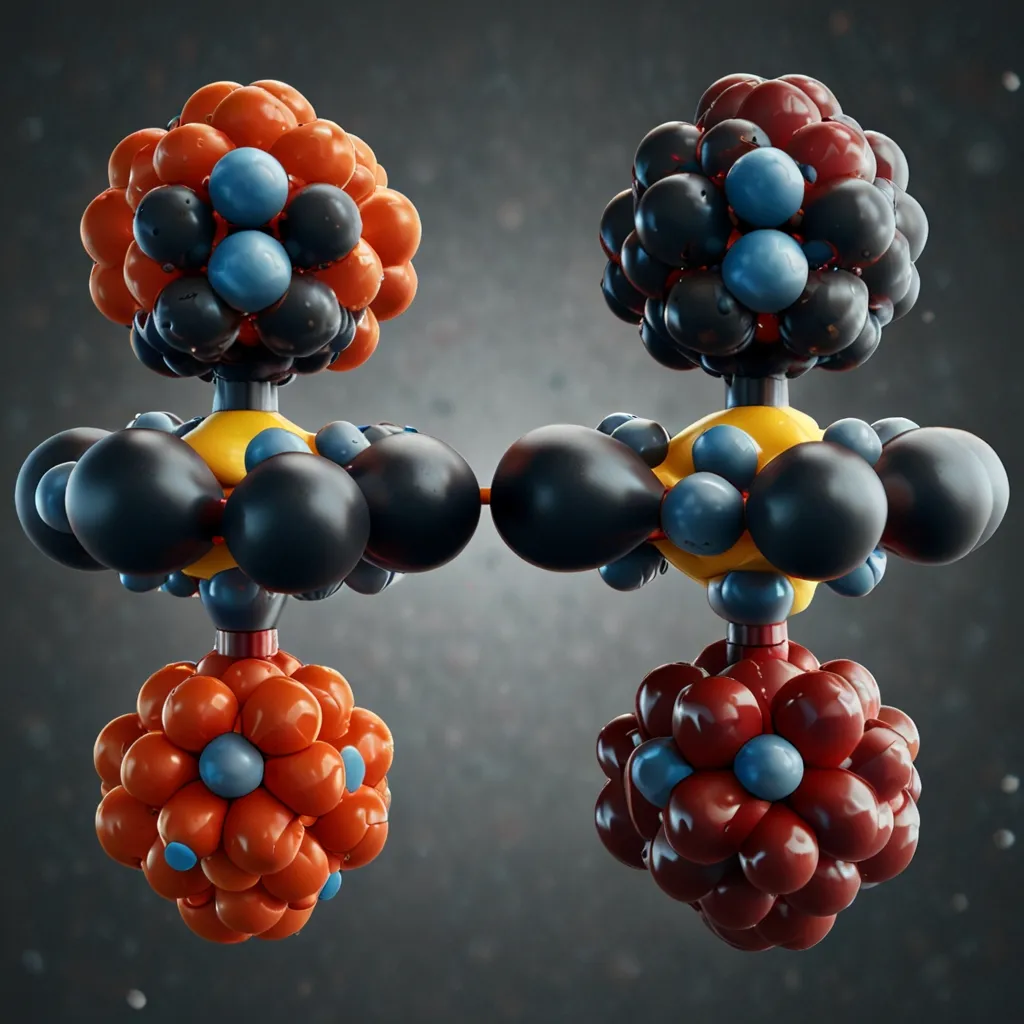
Carbon is the lightest element in its group, specifically group 14 or 4. This group also includes Silicon and Germanium, sharing similar chemical properties. Silicon, the next lightest element in this column, has a notable position on the periodic table, indicating it has four valence electrons, just like carbon. This equivalence allows silicon to form four covalent bonds, similar to carbon. For every carbon-based molecule, there can be a similar molecule where silicon replaces carbon.
Silicon has an abundant presence on Earth, actually more prevalent than carbon, although it’s primarily found in rocks. Chemically speaking, silicon and carbon each have four unpaired electrons in their outer orbitals. The key difference lies in their electron shells. Silicon’s unpaired electrons are located farther from its nucleus in the third shell, while carbon’s electrons occupy the second shell, much closer to the nucleus. This distance makes silicon’s electrons more weakly linked to its nucleus compared to carbon’s electrons.
This weak bonding means that when silicon bonds with other atoms, including other silicon atoms, the resulting bonds are weaker and less stable than those formed by carbon. This fundamental difference in bonding strength between silicon and carbon significantly impacts their chemical behavior and stability.