Could Victorian Women Defy Society and Explore the World?
Courageous Victorian Women Who Redefined Exploration Despite Societal Constraints
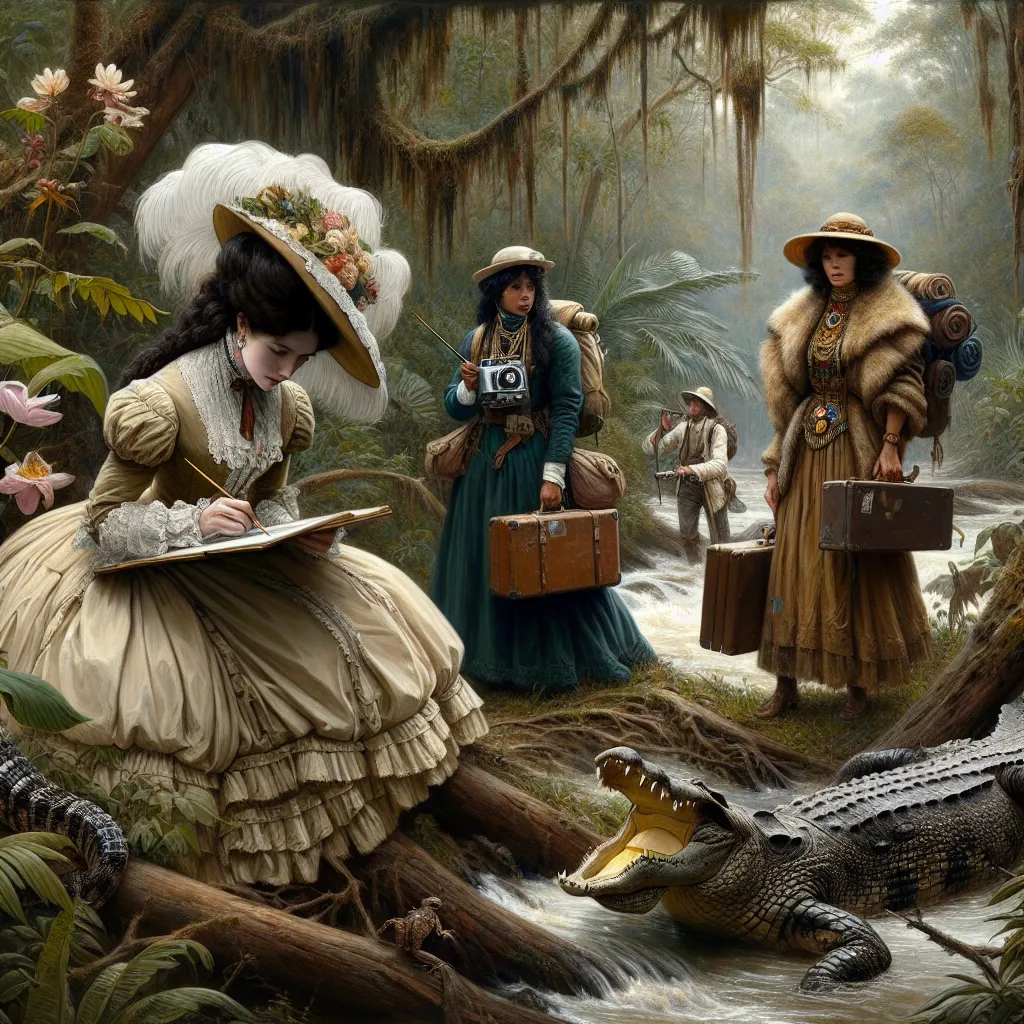
Curiosity often seems like a given these days. We dream of visiting the pyramids, discovering new species, or even venturing to the moon if we just work hard enough. But back in the 18th and 19th centuries, most women couldn’t imagine exploring the world beyond their windows. Their lives were mostly filled with house chores and social gossip. Yet, a select few Victorian women defied these norms, fueled by privilege, endurance, and sheer determination.
In 1860, Marianne North, an amateur gardener and painter, crossed the Atlantic to America with a passion for flowers and some helpful letters of introduction. She didn’t stop there; her journeys took her to Jamaica, Peru, Japan, India, and Australia, among other places. The only continent she skipped was Antarctica. In her pursuit of new flowers to paint, Marianne faced tough terrains, riding donkeys, scaling cliffs, and trudging through swamps—all while donning the floor-length gowns of her era. Her paintings provided European botanists their first glimpses of rare plants like the giant pitcher plant of Borneo and the African torch lily.
While Marianne was discovering new flora, Mary Kingsley was embarking on her own adventure. The daughter of a traveling doctor, Mary was captivated by her father’s stories of Africa. After her father’s death, she decided to travel there herself to finish his work. Despite warnings about tropical diseases, she landed in Sierra Leone in 1896 with just two suitcases and a phrase book. In the jungle, she confirmed the existence of the gorilla, battled crocodiles, survived a tornado, and even tickled a hippo with her umbrella. Falling into a spiky pit, her thick petticoat saved her from harm. “A good snake properly cooked is one of the best meals one gets out here,” she once wrote.
But when it comes to breaking rules, Alexandra David-Neel was perhaps the boldest. A French scholar of Eastern religions, Alexandra wanted to prove herself to the male-dominated academic circles. Envisioning herself in the legendary city of Lhasa in Tibet, she disguised herself as a Tibetan man to cross the border. Dressed in yak fur and a necklace of carved skulls, she trekked through the Himalayas to Lhasa, where she was arrested. Yet, she learned the value of a challenging journey and went on to write influential books on Tibetan religion.
These remarkable women showed that curiosity and the desire to see the world firsthand could change not just human knowledge but also the limits of what’s possible. Their adventures, driven by an insatiable quest to understand other cultures, offered them more than just worldly insights—they found a profound sense of self.