Did Moby Dick Predict the Future or Is Your Mind Playing Tricks?
The Cosmic Coincidence: Unraveling Hidden Patterns in Classic Literature and the Universe
Have you ever taken a closer look at classic novels like “Moby Dick” and noticed some uncanny predictions? Some people see references to events like Martin Luther King Jr.’s assassination or Princess Diana’s tragic death. But was Herman Melville a secret prophet? Spoiler alert: He wasn’t. This all makes sense when you dive into the world of Ramsey theory.
Ramsey theory is a fascinating mathematical principle that proves patterns will inevitably emerge in large sets. It’s why we see shapes in the stars, why at least two people in London likely have the same number of hairs on their heads, and even why some people think they find prophecies in song lyrics.
Let’s break down the basics with the Party Problem, a classic example of Ramsey theory. Imagine you’re at a party with at least six people. Without any extra info, you can bet there will be a group of three people who either all know each other or are total strangers. You can map this out with points representing people and lines showing if they know each other. The magic number here is six, making sure this pattern appears no matter what.
Ramsey theory reassures us that such minimum numbers exist for certain patterns in any large group. However, finding these numbers isn’t always a straightforward task. Picture trying to determine the smallest party size where five people all know each other or don’t. Even though five is tiny, the math goes wild quickly. For a party of 48 guests, there are more possible configurations than there are atoms in the universe! Computers can only narrow the answer down to somewhere between 43 and 49 guests.
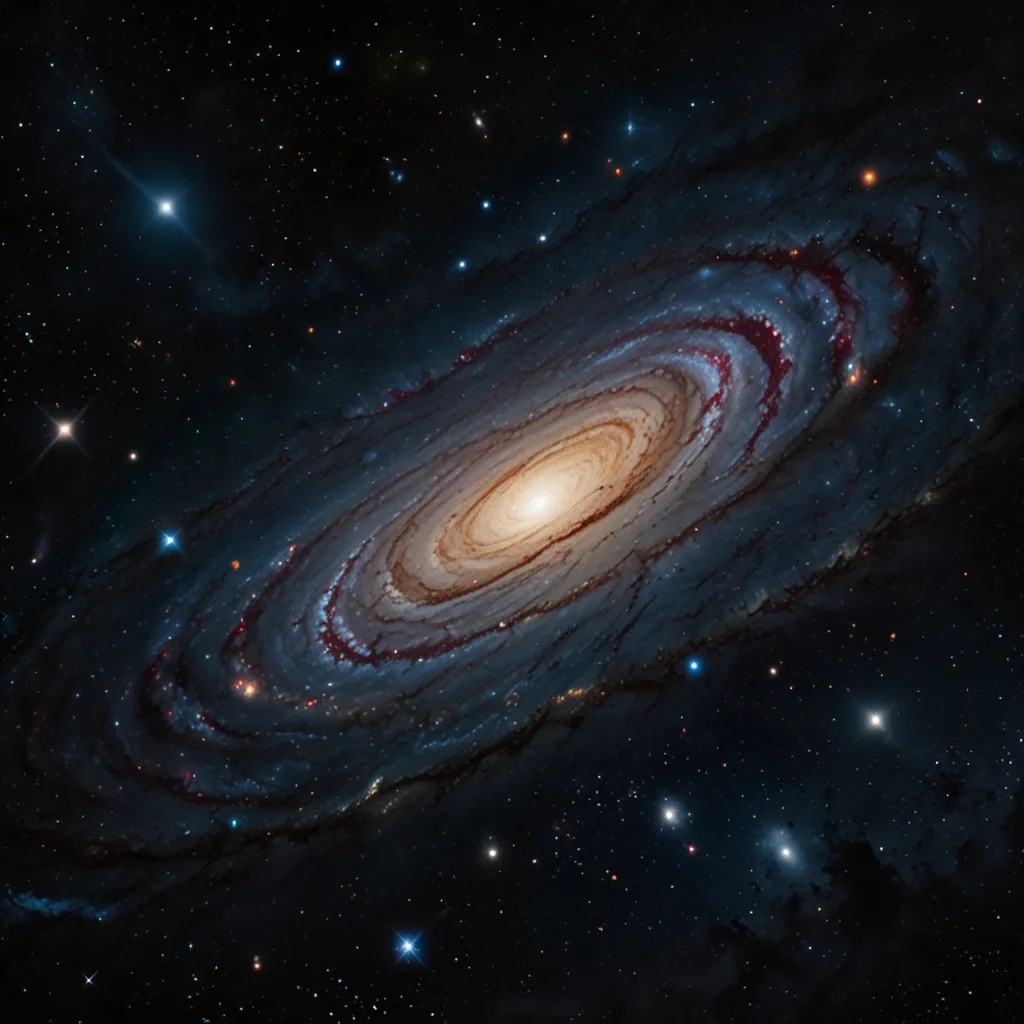
This theory shows us that even from small groups, we get specific patterns. Increase the group size, and the potential patterns multiply incredibly. Look up at the stars, and any four that aren’t aligned will form some quadrilateral. Expand this to thousands of stars, and it’s no wonder we see familiar shapes and even mythical creatures.
So, could a text really hide a prophecy? Given the sheer number of letters, possible related words, abbreviations, and alternate spellings, the chances are pretty high. You can try it yourself. Take your favorite book, lay out the letters in a grid, and see what you uncover.
The mathematician T.S. Motzkin once noted that while total disorder is highly probable, complete disorder is impossible. The vastness of the universe means some random elements will naturally fall into specific patterns. Humans are wired to notice these patterns and often see intentional messages in what could just be coincidence. So, whether it’s a surprising passage in a novel, shapes in the clouds, or faces on burnt toast, remember: our minds might be the real creators of these hidden messages.