How Animals Navigate Without GPS: Nature's Most Advanced Navigation Systems Revealed
Discover how animals navigate vast distances using magnetic fields, star patterns, and hidden senses that outperform human technology. Learn nature's secrets today.
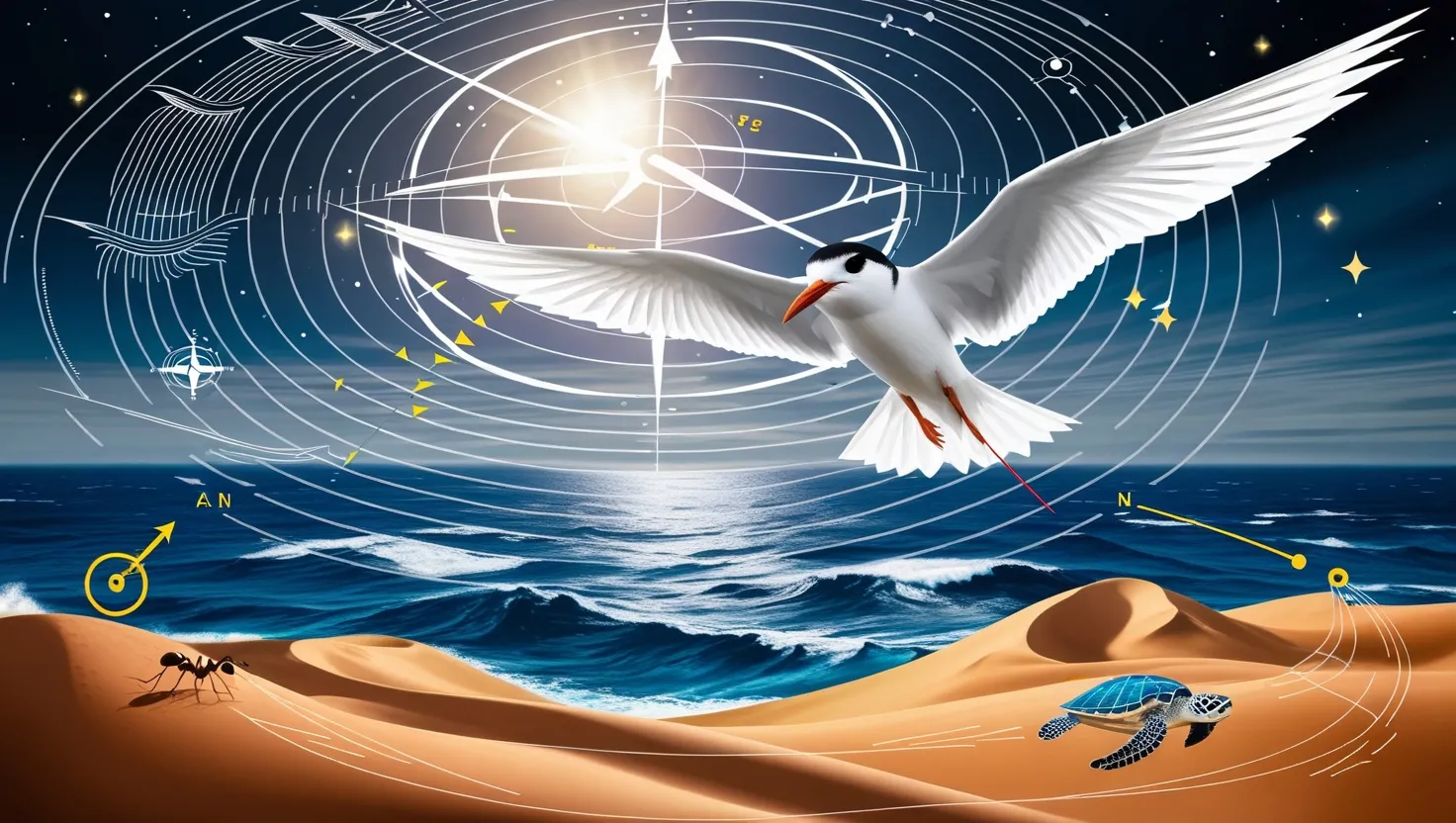
Imagine setting out on a journey across a featureless wasteland or a boundless ocean with no smartphone, no GPS, and not a single signpost. Now imagine doing it with nothing but your own senses, over and over again, for decades, with astonishing precision. This is everyday reality for some animals, whose navigational achievements don’t just match the best human technology of earlier eras—they often put it to shame. Let’s walk through the world of nature’s master travelers and see what we can learn from the original pioneers of long-distance travel.
I’m often struck by how the everyday miracles in nature hide in plain sight. The Arctic Tern, for instance, isn’t just a long-distance flier; it’s in a league of its own. Every year, this bird embarks on a roundtrip migration of over 70,000 kilometers, charting a course from Arctic breeding grounds to the Antarctic and back. That’s roughly equivalent to circling the globe twice, and it does this every year, living for decades. What’s more, it experiences two summers annually, chasing continuous daylight. What drives this unwavering precision? Arctic Terns steer by the sun, adjust to the shifting night sky, and fine-tune their route using Earth’s magnetic field—picking up on cues we can barely detect, let alone interpret. Imagine embarking on such a journey with nothing more than intuition and the environment itself as your guide.
“Not all those who wander are lost.” — J.R.R. Tolkien
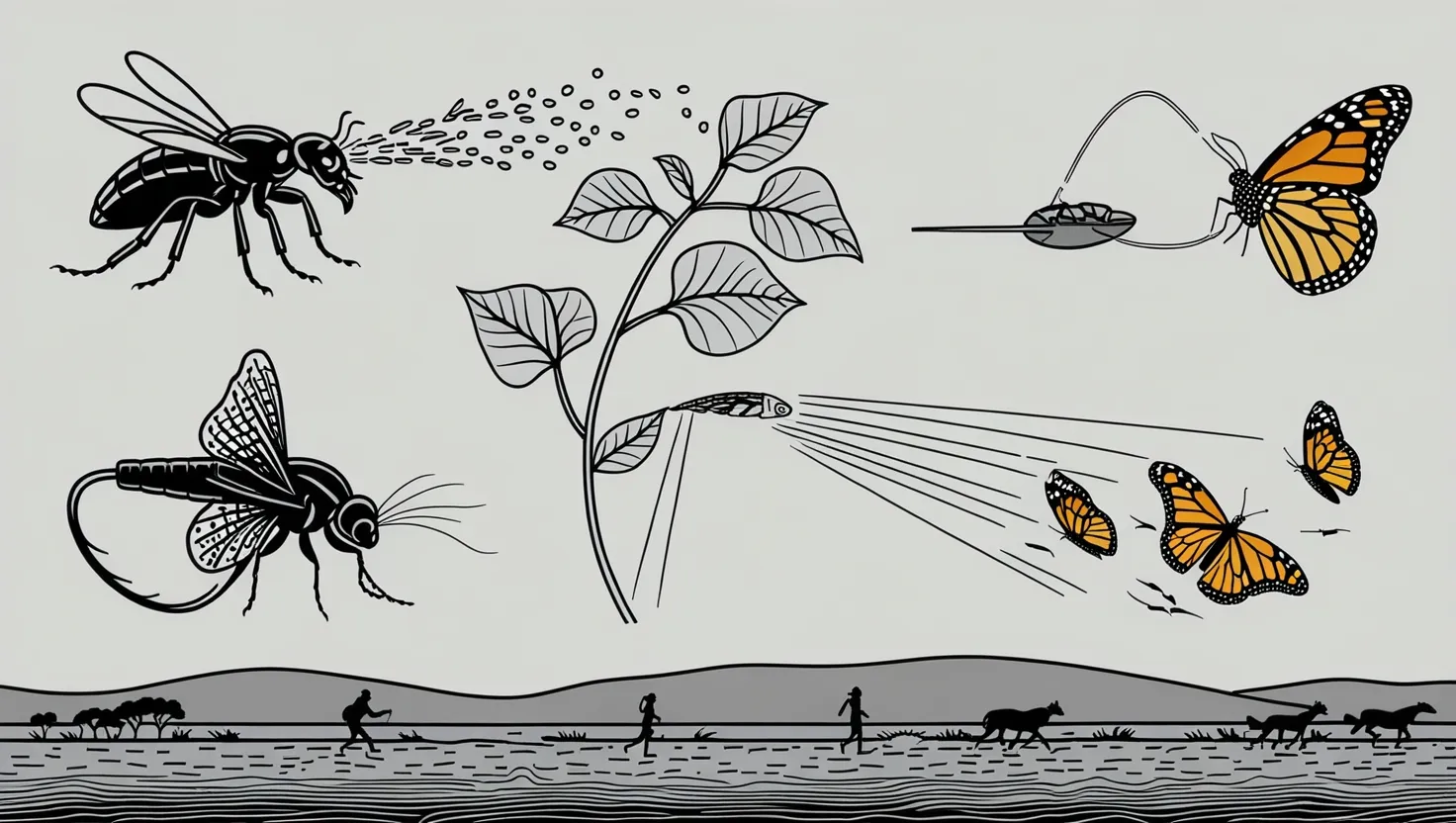
But it’s not just birds skimming over oceans that hold secrets. Step into the Saharan desert, a place of searing heat and endless sand, and you’ll find the tiny desert ant taking on a navigational puzzle that’s stumped many explorers. When a foraging ant leaves its nest, it wanders in search of food, sometimes venturing hundreds of meters away. Yet, after all that meandering, it returns home in a straight line, as if guided by an invisible thread. How? It’s thought these ants keep track of each step they take—a process called path integration—essentially counting their own footsteps like a living pedometer. But there’s more: these ants use the position of the sun, and, through specialized eyes, can detect patterns of polarized light in the sky, invisible to human eyesight. This means even on cloudy days or under blazing sun, they have a roadmap written in the light above. Their approach, a blend of internal and external cues, rivals the dead-reckoning techniques sailors once relied on—and often beats them for reliability.
Have you ever considered how important it is to know not just where you are, but also which way you’re facing? For many animals, orientation is everything. Dung beetles, while often the butt of jokes, offer perhaps the most cosmic perspective in animal navigation. After collecting a ball of dung (their prize possession), these beetles need to roll it away from competition as quickly as possible. The catch? They must move in a perfectly straight line, regardless of obstacles. On clear, moonless nights, some species manage this by orienting themselves to the faint glow of the Milky Way. This isn’t just poetic; it’s the only known case of an insect using our galaxy for guidance. Think about that—the smallest of beetles has a built-in ability to read the night sky in ways our ancestors only dreamed of before the telescope.
“Nature does nothing uselessly.” — Aristotle
Questions naturally arise: What other creatures are tracking celestial patterns we simply can’t see? What if there’s a whole range of environmental cues, right under our noses, being used every day by wild animals?
Another case that amazes me is the homing pigeon. Long before the days of digital connectivity, pigeons carried messages across vast distances, reliably finding their way home even if released a thousand kilometers away in unfamiliar terrain. The typical explanation is magnetoreception—the ability to sense Earth’s magnetic field through iron-rich particles in their beaks. But recent findings point to an even richer toolkit. Some pigeons pick up on infrasound—very low-frequency sound waves produced by natural landscape features like mountain ranges or coastlines. This dual sensory system means that changes invisible and inaudible to us help guide them home. For centuries, their achievements outpaced the best postal systems and even military couriers, prompting us to ask: Are there navigational senses in the animal world we still haven’t discovered?
Sometimes, simple questions lead to remarkable discoveries. Consider the journey of the leatherback sea turtle. These ancient mariners hatch on tropical beaches and immediately scurry to the sea, where they disappear into the vast blue for decades before returning to the same stretch of sand to lay their own eggs. How do they find this pinpoint location across an entire ocean? Leatherbacks rely on a kind of internal map, sensitive to both the intensity and the angle of Earth’s magnetic field. Research even suggests hatchlings are born with a template for this magnetic map, allowing them to navigate routes that have been passed down for millennia. It’s a feat of memory and physiology that makes GPS satellites look like clumsy newcomers.
“To live is to travel, to travel is to become a part of the world.” — Anonymous
Digging deeper, I find that animals rarely depend on just one sense or method—instead, they combine information, cross-reference it, and, crucially, adapt when conditions change. For example, when magnetic cues prove unreliable, pigeons may switch to olfactory or visual signals. Ants may use landmarks when available but revert to sun and step-counting in barren terrain. Each species builds a custom navigation toolbox, storing tricks and solutions that have been pressure-tested by evolution.
There’s a striking pattern: while human innovation has produced compasses, sextants, and, eventually, satellites, animals have developed their own “biological machinery” that often matches or surpasses our technology, especially in unpredictable or featureless environments. It’s humbling to realize that, even in an age of digital navigation, the wild remains full of navigators who can outperform us with nothing but built-in senses and a brain tuned by generations of selection.
Why haven’t we fully matched nature’s solutions? The answer might be as much about biology as about engineering. Many animals inherit at least part of their navigational skill—a template encoded in their genes, refined by experience. Some birds flying their first migration have never seen their wintering grounds but head there anyway. This mix of instinct and learning is something we’re only beginning to replicate in machine learning and robotics. In fact, engineers now look to animal navigation for inspiration, seeking to design machines that can self-correct, adapt, and find their way when GPS fails.
What would it mean for us to truly understand and harness these natural abilities? Could we build rescue drones that mimic ant navigation, or ships that steer across open water like turtles? The future of technology may lie in learning not just from nature’s successes, but also its failures and adaptations—the little adjustments creatures make when confronted by storms, changing climates, or shifting landscapes.
As I reflect on these stories, I’m reminded of how much remains to be discovered. Animal navigation is not a solved puzzle, but an ongoing experiment, one that continues to challenge and surprise even the experts. Every time I see a flock of birds wheeling through the sky or an ant hurrying home across empty ground, I’m aware that I’m witnessing a kind of living knowledge—one that predates our maps, compasses, and satellites by millions of years.
Nature’s navigators invite us to look closer, ask better questions, and rethink what’s possible when we blend observation, curiosity, and respect for the hidden talents around us. In a world increasingly managed by technology, these animal journeys offer a humbling reminder: sometimes, the most advanced solutions are already out there, soaring, crawling, and swimming right past us.