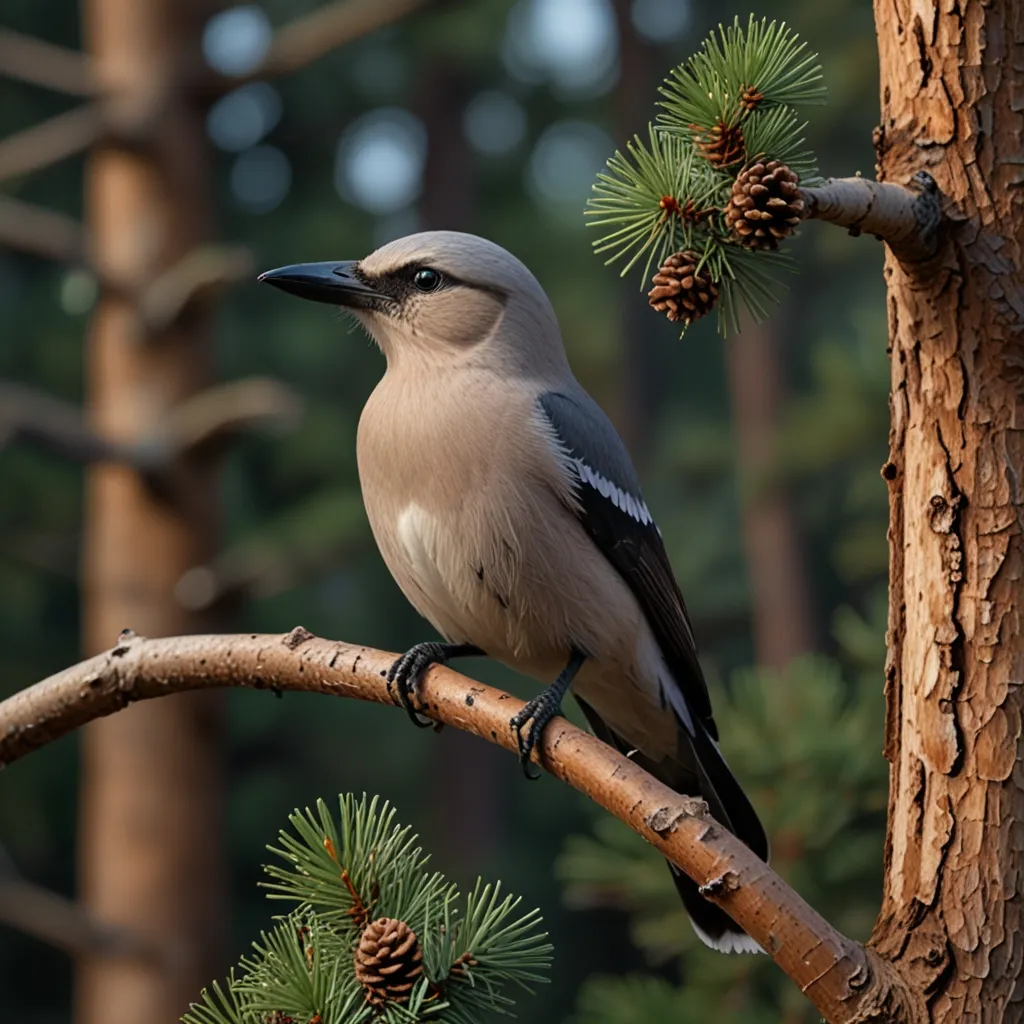
Ever heard of the term symbiosis? It’s when two different species team up and rely on each other to survive. A great example of this is the relationship between the Clark’s nutcracker and the whitebark pine tree.
Whitebark pines thrive in the mountainous regions of places like Wyoming and Montana. These trees are like the lifeblood of the forest. They not only provide shelter with their huge canopies and needle-covered branches but also feed the forest with their protein-packed cones. Squirrels are quick to harvest these cones, causing them to tumble to the ground. They then bury them, hoping for a future feast. But bears – both grizzlies and black bears – often beat them to it, digging up these hidden treasures.
But the real magic of this symbiosis lies in the Clark’s nutcracker. This bird doesn’t just eat the seeds; it helps the trees reproduce. Using its sharp beak, the nutcracker drills into the cone, extracting the seeds and storing up to 80 of them in a special throat pouch. Then, the bird flies around, hiding piles of seeds just under the soil. Each autumn, nutcrackers can gather a staggering 90,000 seeds, which they revisit during winter and spring. Impressively, these birds remember exactly where they’ve hidden the seeds, even identifying landmarks like trees and rocks to locate their caches buried under snow.
Not all seeds are retrieved, though. Those forgotten seeds sprout into new whitebark pines. Over time, these species have evolved to support each other better. Nutcrackers have grown long, sturdy beaks to access the seeds, while whitebark pines have developed upward-sweeping branches that present their cones to the birds.
This partnership is a classic symbiosis: two species working together, to the benefit of both.