How Five Scientific Breakthroughs Cracked Open the Mystery of the Human Brain
Explore the discoveries that cracked open the brain's mysteries — from Broca's area to fMRI. Learn how science revealed the organ behind every thought you've ever had.
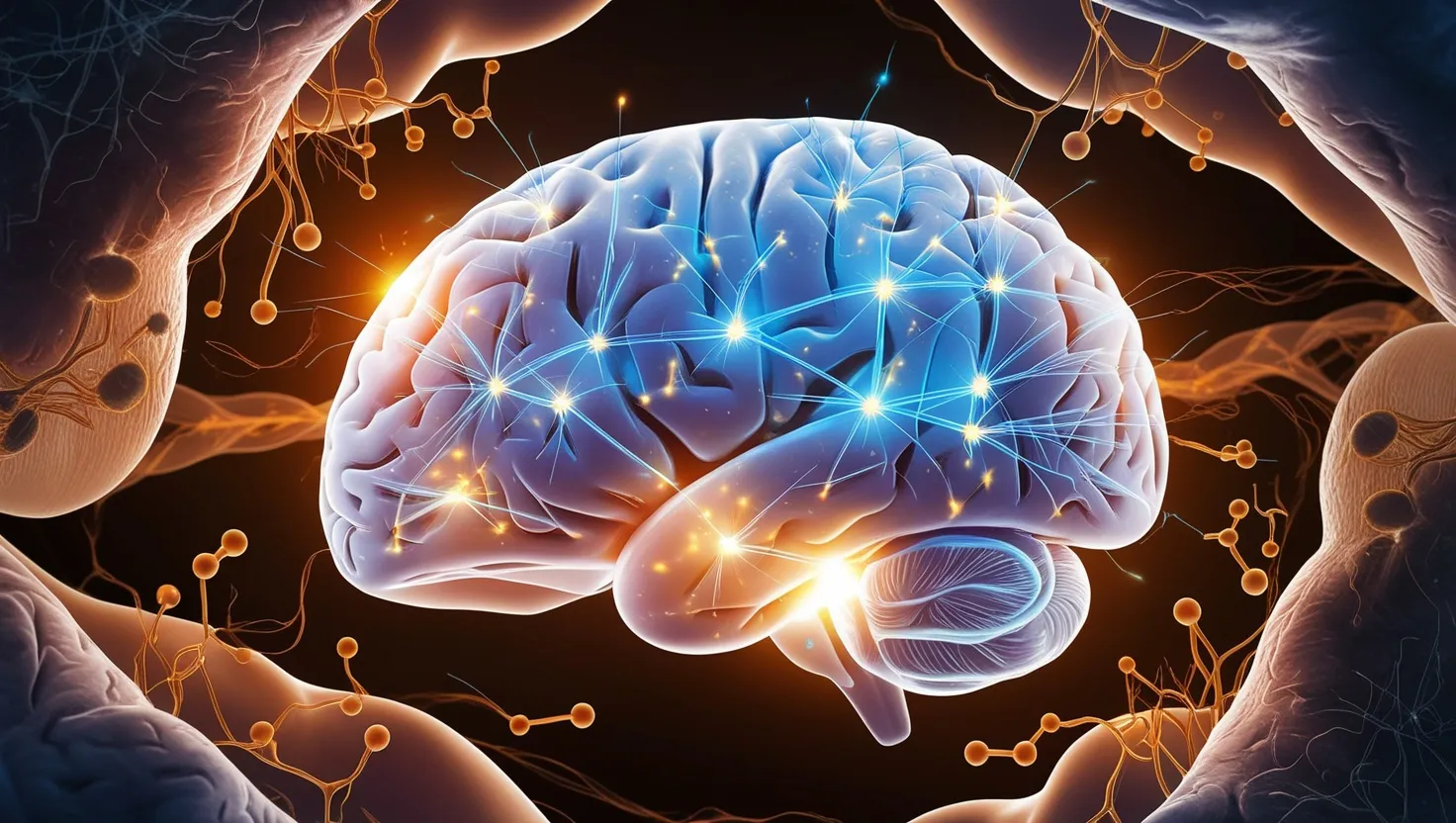
The brain sat at the center of human curiosity for thousands of years, yet remained stubbornly silent about its own workings. Ancient Egyptians thought so little of it that they scooped it out through the nose during mummification, saving the heart instead. Aristotle believed the heart was the seat of intelligence and that the brain simply cooled the blood. Even centuries later, when physicians began cutting into skulls, they found a grey, wrinkled mass that gave away almost nothing. It looked like a sponge. It behaved like a mystery.
That mystery began cracking open not through philosophy, but through a series of specific, sometimes accidental, scientific moments that changed everything we thought we knew about who we are.
Think about this for a second: every thought you’ve ever had, every fear, every memory of a childhood birthday — all of it happened inside about three pounds of soft tissue sitting in your skull. How does something that looks like a grey walnut produce the experience of being you? That question drove some of the most important scientific discoveries in history.
The story worth starting with is a man named Leborgne. He arrived at Paul Broca’s hospital in Paris in 1861, unable to speak a single complete word. He could understand everything said to him, could gesture, could express frustration and joy — but the only syllable that came out of his mouth was “tan.” People actually called him Tan. When he died, Broca examined his brain and found a damaged patch in the left frontal lobe. That small, specific injury in that specific spot had stolen this man’s ability to produce speech while leaving everything else intact.
That finding shattered a belief that had been held for centuries — that the brain worked as one unified organ, like a heart or a kidney, doing its single job as a whole. Broca’s finding said something completely different: different mental functions live in different zip codes inside your brain. That region is now called Broca’s area, and it was the first time anyone had drawn a map between a physical location in the brain and a specific human ability.
“The brain is wider than the sky.” — Emily Dickinson
The part people rarely talk about is how controversial this was. Physicians at the time found it deeply uncomfortable to suggest that something as human as language could be pinned down to a lump of tissue. It felt reductive. It felt like it diminished the soul. What Broca actually did was open a door that nobody wanted to walk through — and once it opened, science never looked back.
So if different brain regions do different things, how do they actually talk to each other? That question took a completely different kind of scientist to answer.
In the 1920s, a British physiologist named Edgar Adrian did something that sounds almost comically simple: he stuck tiny electrodes onto individual nerve fibers and listened. What he heard changed neuroscience permanently. Neurons don’t send smooth, gradual signals. They fire in sharp, all-or-nothing electrical spikes. Either a neuron fires completely, or it doesn’t fire at all. There’s no half-measure. No dimmer switch.
What does change is the speed of those spikes — how many times per second a neuron fires. A gentle touch on your skin produces slow, infrequent spikes. A sharp jab produces fast, rapid ones. The brain doesn’t measure the world in volumes; it measures it in frequency. Think of it like Morse code. The dots and dashes aren’t louder or softer — they’re faster or slower, and that rhythm carries the message.
This gave scientists something they had never had before: a way to actually measure brain activity. It turned the brain from a philosophical concept into an electrical system you could study with instruments.
Ask yourself this: why does a cup of coffee change how you feel? Why does a single pill alter your mood within hours? The answer came in the middle of the 20th century, and it arrived from an unexpected direction.
Otto Loewi famously dreamed the experiment that proved chemical signaling existed in the nervous system — he woke up at 3am, scribbled notes, went back to sleep, and then panicked in the morning because he couldn’t read his own handwriting. He repeated the experiment the next night, ran to his lab, and confirmed it. Neurons don’t just send electrical signals; they release chemicals across the tiny gaps between them, called synapses.
What followed was a cascade of discoveries. Julius Axelrod, Bernard Katz, and others identified the specific molecules carrying these messages — dopamine, serotonin, acetylcholine. Each one turned out to do something remarkably specific. Dopamine doesn’t just make you feel good; it’s deeply tied to anticipation, to the wanting of things before you get them. Serotonin influences mood stability. Acetylcholine plays a role in attention and memory.
“We are chemistry.” — Maggie Nelson
What this meant practically was enormous. Suddenly, mental illness had a biological explanation. Depression wasn’t a character flaw — it was, at least in part, a chemistry problem. Schizophrenia, Parkinson’s disease, anxiety — all of them could be traced, at least partially, to specific molecules misfiring. And if you could identify the molecule, you could design a drug to adjust it. Psychiatry stopped being purely interpretive and became, for better or worse, pharmaceutical.
Here’s a question that genuinely puzzled scientists for most of history: where does a memory actually live? Is it scattered through the whole brain? Is it stored like a file in a specific spot? The answer, when it came in 1973, was more elegant than anyone expected.
Two researchers — Tim Bliss and Terje Lømo — were studying the hippocampus, a seahorse-shaped structure tucked deep in the brain known to be involved in memory. They sent brief bursts of rapid electrical stimulation down a neural pathway and then checked the connections between neurons afterward. What they found was that those synaptic connections had physically strengthened — and stayed that way. Not temporarily. Persistently. Hours, days, weeks later, those connections were still stronger than they’d been before.
They called it long-term potentiation, or LTP. The phrase sounds dry, but the implication was electric: the brain physically rewires itself when you learn something. Neurons that fire together, wire together — a phrase neuroscientist Donald Hebb had proposed theoretically decades earlier — turned out to be literally true at the cellular level.
This was the first time anyone had seen what a memory looks like inside a synapse. It’s not stored in a single neuron. It’s stored in the strength of the connection between neurons. Every time you practice a skill, review a fact, or replay an experience in your mind, you are physically changing the architecture of your brain. That’s not a metaphor. That’s biology.
“The more that you read, the more things you will know. The more that you learn, the more places you’ll go.” — Dr. Seuss
Now here’s a discovery that came much later but made all the others visible in a completely new way. Through most of the 20th century, everything scientists knew about the living human brain came from studying people with brain damage, or from animal experiments, or from electrodes. There was no way to watch a healthy human brain doing its job in real time without cutting someone open.
That changed in the 1990s when functional magnetic resonance imaging — fMRI — became widely available for brain research. The technology tracks blood flow. When a part of your brain becomes active, it demands more oxygen, and blood rushes to it. fMRI measures those tiny changes in blood flow and translates them into images. The result looks like a brain scan with glowing patches lighting up in different places depending on what you’re doing.
For the first time, researchers could ask a person to look at a face, make a moral decision, recall a memory, feel frightened — and watch which brain regions responded. This produced some unexpected findings. Pain, for example, doesn’t just light up the sensory regions you’d expect. Social rejection activates some of the same neural circuits as physical pain. Thinking about the future uses nearly identical brain regions as remembering the past. The brain that imagines and the brain that remembers are, to a remarkable degree, the same brain.
What fMRI also revealed is that the brain is almost never doing just one thing. Even when you’re sitting quietly doing nothing, a whole network of regions — called the default mode network — stays highly active. Your brain at rest is still processing, still consolidating, still working. Rest is not inactivity. It’s a different kind of activity.
“The human brain has 100 billion neurons, each neuron connected to 10 thousand other neurons. Sitting on your shoulders is the most complicated object in the known universe.” — Michio Kaku
Each of these discoveries came from a different angle — a dead man’s lesion, a frog’s heart, a laboratory electrode, a hippocampal synapse, a blood-flow scanner — and together they assembled a picture of the brain that no single experiment could have produced alone.
The brain is an electrical organ that speaks in chemical. It is divided into specialized regions that work in concert. It rewires itself based on what you do and what you experience. And somewhere in all of that — in the firing and the wiring and the blood flow and the chemistry — sits you. Thinking. Reading this. Wondering how it all works.
That question is still not fully answered. Which, honestly, makes it the most interesting question there is.