Is There a Piece of Earth's Core Floating Between Mars and Jupiter?
Unlocking Earth's Hidden Secrets by Exploring an Ancient Metal World
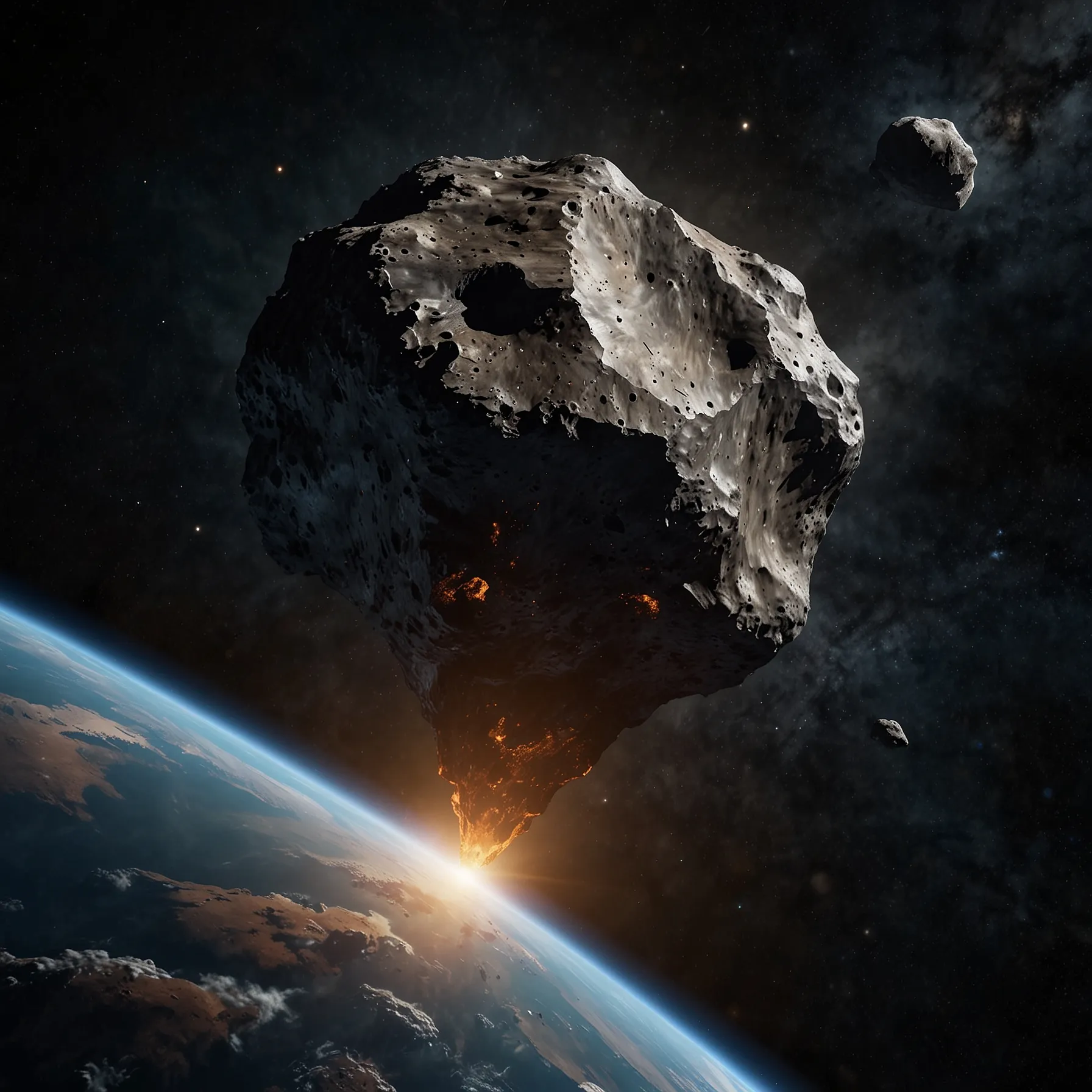
Floating somewhere between Mars and Jupiter, about 500 million kilometers from Earth, is a metallic wonder the size of Massachusetts known as 16 Psyche. Contrary to what you might expect, it’s not a moon but one of the most massive asteroids in our solar system. We’ve sent robotic spacecraft to many places, like the gas clouds of Saturn and Jupiter, icy Europa, and rocky Mars. But Psyche is different. It’s not just rock—it’s pure heavy metal, mainly nickel and iron, making it the largest known body with such a composition.
Currently, our best radar images of Psyche are just pixelated blurs. This will change in 2026 when a NASA spacecraft, part of the Discovery Program, reaches this metallic orb. So why is NASA so fascinated with Psyche? It’s not for mining metal or building space magnets. The real reason lies beneath our feet.
The Earth’s core is believed to be a solid nickel-iron center with a molten outer layer. However, it’s buried under 2,800 kilometers of solid rock, making direct study impossible. The deepest we’ve drilled is 12 kilometers, and even if we could go deeper, the core’s intense pressure and 5,000-degree Celsius temperature make it inaccessible. This makes a journey to the Earth’s center unlikely anytime soon.
Scientists have had to study the core indirectly, by measuring earthquake waves and examining minerals thought to have formed there. But what if we could learn about Earth’s core by going to space? We know planets formed from dust and gas orbiting the young Sun, gradually combining to form planetesimals. Some of these grew into planets, while others broke apart, becoming the asteroids we see today.
Psyche is special because it seems to be an early planetesimal with a rocky exterior and a metallic core. Its growth into a full-fledged planet was interrupted by collisions that stripped away its rocky layers, exposing its metal core. This makes Psyche a rare opportunity to study a metallic core directly.
NASA’s orbiter will bring advanced tools for this mission. A spectrometer will analyze gamma rays and neutrons from cosmic ray collisions to determine the elements on Psyche’s surface. A magnetometer will measure its magnetic field, offering insights into Earth’s magnetic field generation. High-resolution images will provide an unprecedented view of Psyche’s surface.
Exploring a new world is thrilling, but the Psyche mission also gives us a unique chance to uncover secrets about our own planet from afar.