Virtual Reality: More Than Just Fun and Games
Virtual reality (VR) has come a long way from being just a cool gaming technology. It’s now being used in some pretty mind-blowing ways, from therapy to robotics. I recently got to check out the immersive VR lab at University College London (UCL), and let me tell you, it was an eye-opener.
First up, they’ve got this thing called a “cave” - not the kind you find in mountains, but a high-tech room with screens all around. They handed me these special glasses that show different images to each eye, flipping between them super fast. It’s wild - you can’t even tell it’s happening, but suddenly everything looks 3D and real.
The coolest part? You can move around in this virtual world just by walking. There are trackers that figure out where you are and adjust the view accordingly. It’s like being inside a video game, but way more immersive.
But here’s where it gets really interesting - they’re not just using this tech for fun. They’re using it to help people overcome fears and phobias. Imagine being afraid of heights, but instead of having to go to an actual tall building, you can face your fear in a safe, controlled environment. They’ve even created a virtual “pit” with a 30-foot drop that gives people vertigo, even though they know they’re standing on solid ground. It’s crazy how our brains can be tricked like that!
The researchers say they’ve seen real progress with people using these virtual environments to face their fears. It’s like exposure therapy, but without the actual danger. Pretty neat, right?
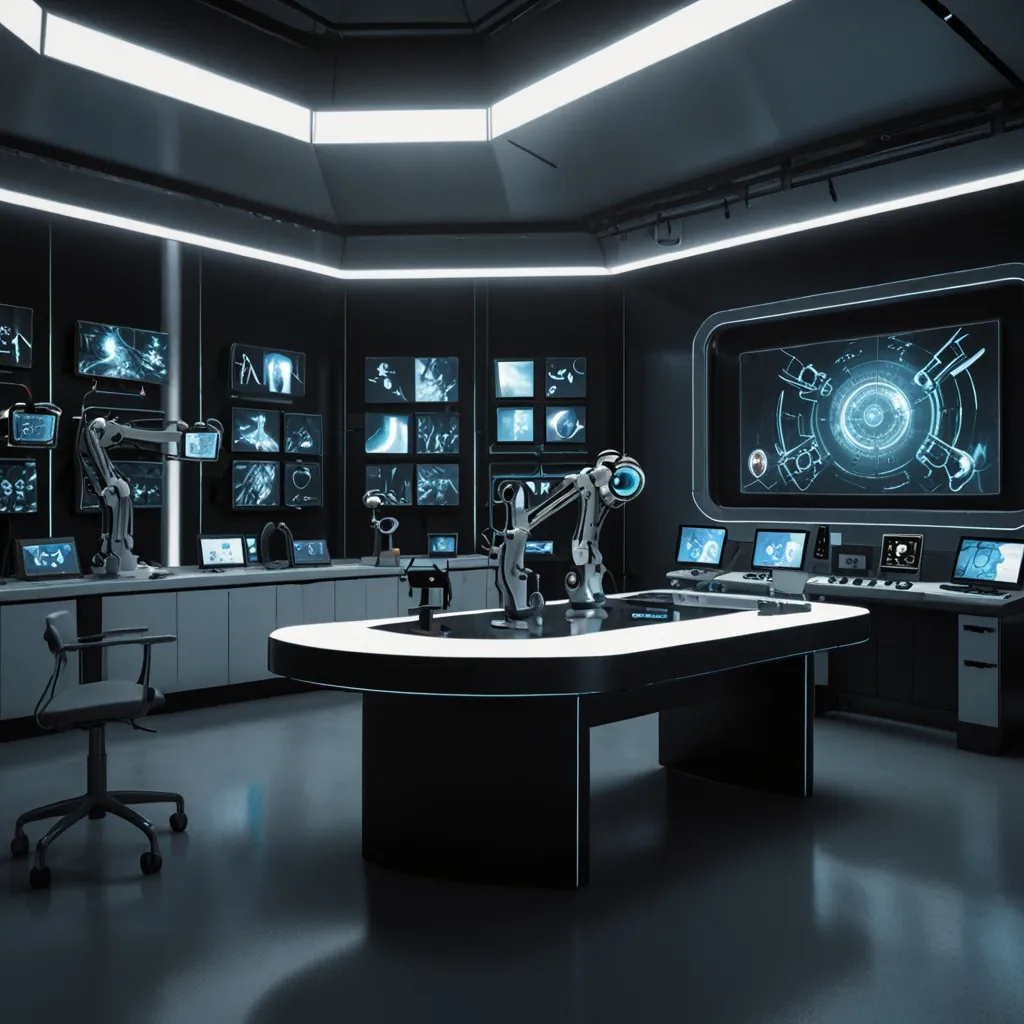
But wait, there’s more! VR isn’t just about what you see - it’s also about what you can do. They’ve got this setup where you can control a robot arm using VR. Imagine being able to operate machinery in dangerous places like nuclear sites or doing delicate surgeries from miles away. The possibilities are mind-boggling.
Speaking of robots, let me tell you about “Professor Tickle” - yes, that’s its actual name. It’s this massive snake-like robot arm with a super flexible hand. It can pick up all sorts of tools and mimic how a human hand works. The cool part? You can control it with an Xbox controller. It’s like playing a video game, but you’re actually moving a real robot.
But here’s the kicker - they’re working on making these robots autonomous. Imagine having a robot that can do your shopping for you while you Netflix and chill. (Though personally, I think I’d still want to pick out my own snacks!)
One of the most fascinating aspects of this tech is something called “haptics” - basically, the science of touch in virtual environments. They’ve got these sensors that can detect pressure and give feedback, so when the robot picks something up, you can actually feel it. It’s like having a super-advanced long-distance high-five.
The future of VR and robotics is looking pretty exciting. We’re talking about technology that can help people overcome fears, perform dangerous tasks safely, and maybe even do our chores for us. It’s not just about escaping into virtual worlds anymore - it’s about bringing those virtual capabilities into our real world in useful ways.
Of course, all this tech raises some interesting questions. How will it change the way we work and live? Will we become too dependent on virtual experiences? What about privacy concerns? These are all things we’ll need to grapple with as VR becomes more integrated into our daily lives.
But for now, I’m just blown away by the possibilities. From therapy to remote-controlled robots, VR is opening up a whole new world of opportunities. It’s like we’re living in a sci-fi movie, except it’s all real.
As we move forward, it’ll be fascinating to see how this technology develops and what new applications people come up with. Will we all have VR rooms in our homes someday? Will robot assistants become as common as smartphones? Only time will tell.
One thing’s for sure - the line between virtual and reality is getting blurrier by the day. And while that might sound a bit scary, it’s also incredibly exciting. We’re on the cusp of a technological revolution that could change the way we interact with the world around us in fundamental ways.
So next time you hear about VR, don’t just think about gaming. Think about all the amazing possibilities it holds - from helping people overcome their fears to revolutionizing industries like healthcare and manufacturing. The future is virtual, and it’s looking pretty darn cool.
Who knows? Maybe someday we’ll all have our own Professor Tickle to help us out around the house. Just remember to be nice to it - you never know when the robot uprising might start! (Just kidding… I hope.)