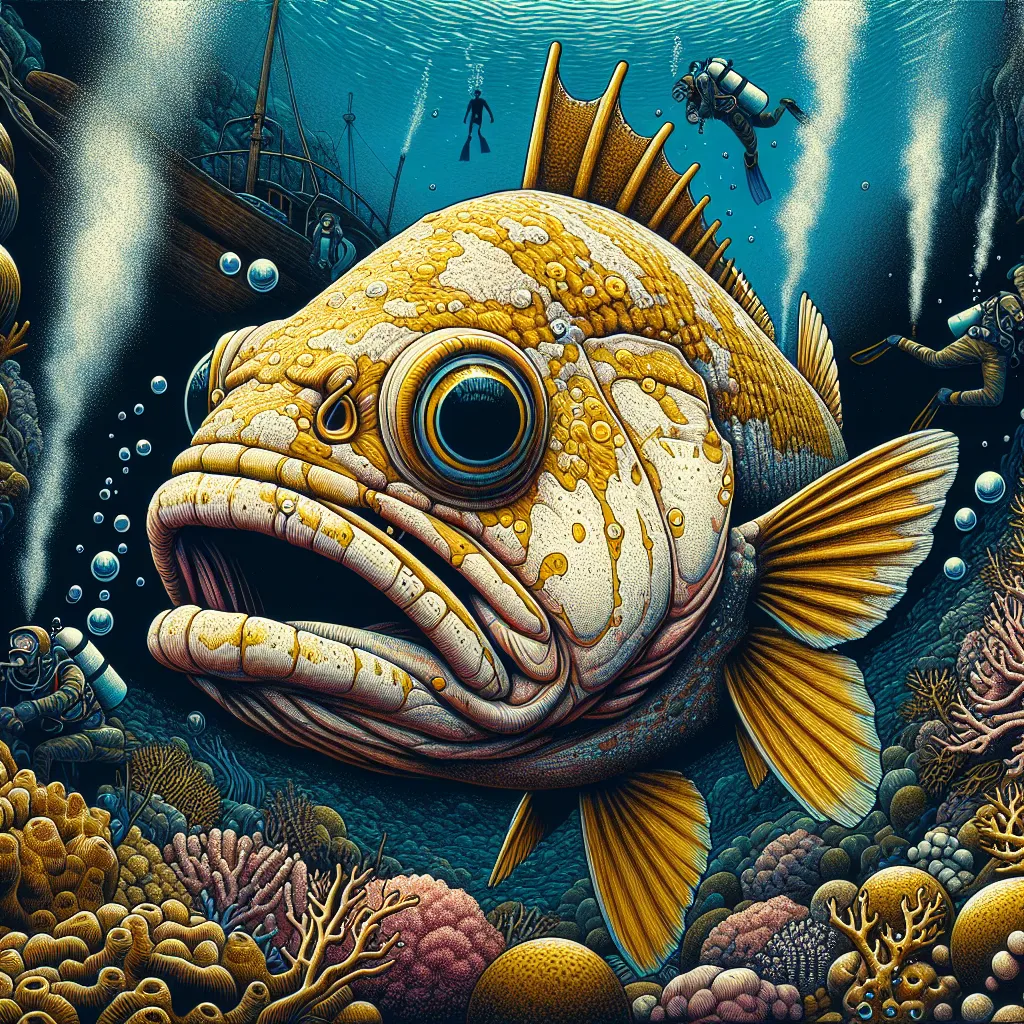
Ever wondered why sometimes when you reel a fish up from the depths, it looks like it’s been blown up like a balloon? Its eyes bulge out, and its stomach might even pop out of its mouth. This creepy sight is thanks to barotrauma, a condition caused by rapid pressure changes.
Underwater pressure is no joke. It goes up by 14.7 pounds per square inch for every 33 feet you dive. Let’s talk about our friend, the yelloweye rockfish. It can chill out as far down as 1800 feet, where the pressure is like a polar bear doing a handstand on a quarter - over 800 pounds per square inch.
So here’s the science bit: Boyle’s gas law. It tells us that gas volume decreases as pressure increases, and vice versa. This means that any air-filled spaces in our bodies (or a rockfish’s swim bladder) will shrink as we go deeper and expand when we rise. If a fish takes the bait and is pulled up quickly, the air in its swim bladder balloons up fast. This expansion can force its stomach out of its mouth, and its eyes might look like they’re ready to pop out. Sometimes, you even see crystals in their eyes because of tiny gas bubbles.
Scuba divers have it a bit easier than fish. They can manage the pressure in their lungs by exhaling as they ascend. But, they’ve got other rules of physics to worry about. Henry’s law says that gas dissolving in a liquid is proportional to its partial pressure. Divers breathe air that’s 78% nitrogen. Under high pressure, a lot of nitrogen gets into their tissues. If they come up too quickly, this nitrogen forms bubbles, known as decompression sickness or the bends. It’s like when you pop open a soda, and all the fizz rushes out. For divers, these bubbles hurt big time and can be deadly.
Divers avoid the bends by coming up slowly and taking breaks (decompression stops) to let the gas escape gradually. Fish need a similar process called recompression, but they need some help to get it right. Just tossing a bloated fish overboard won’t work. It’ll float and become easy prey.
Now, there’s a myth that says poking the fish’s stomach with a needle will fix everything. Bad idea! Instead, fishermen can use a descending device to lower the fish back down to its comfy depth. As the fish descends, the gas shrinks, and its eyes and stomach go back to normal. This means the fish can go back to living its underwater life, and it helps keep our oceans healthy and balanced.