What Hidden Force Keeps Galaxies From Falling Apart?
Invisible Mass: How Vera Rubin Challenged the Laws of Gravity
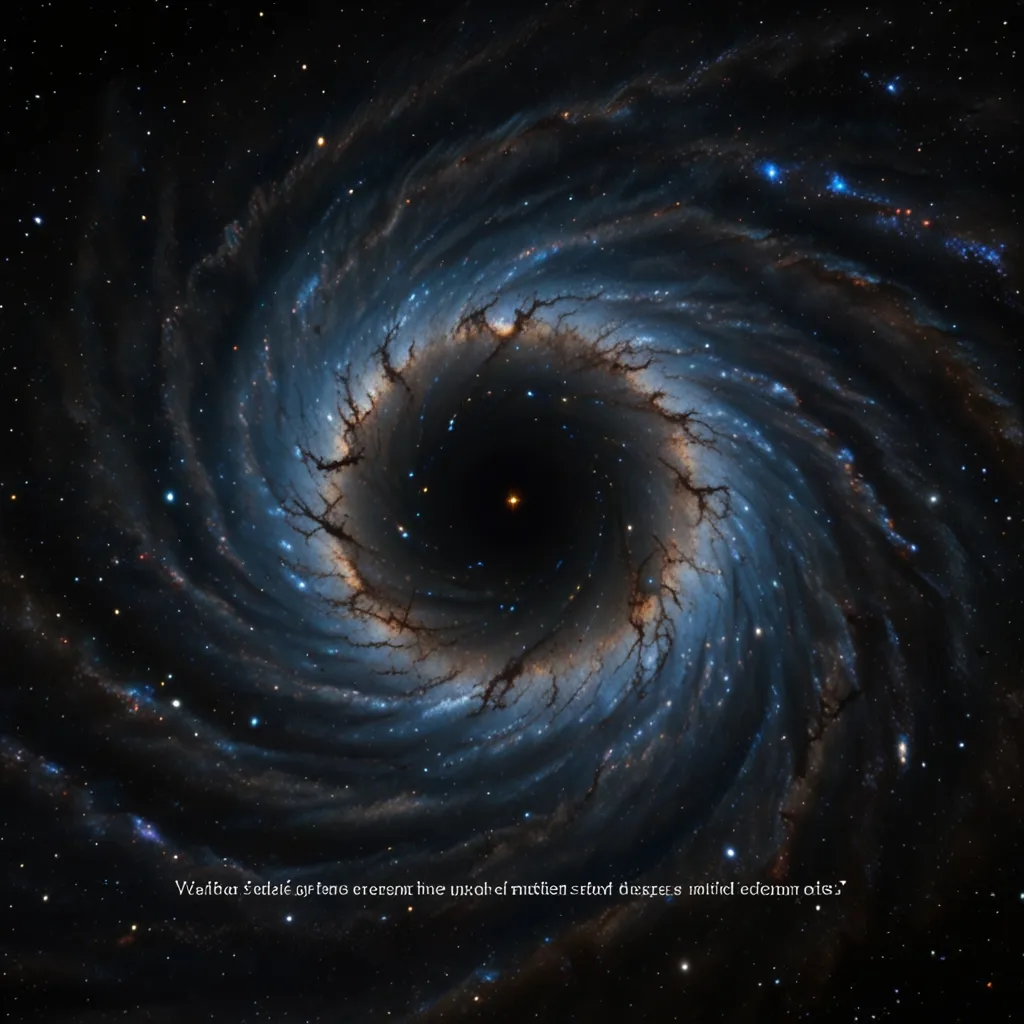
In the late 1970s, astronomer Vera Rubin made a groundbreaking discovery about the motion of stars in galaxies. She observed that stars in the outer edges of spiral galaxies were moving at roughly the same speed as those closer to the center. This observation went against Newton’s law, which asserts that the further an object is from its center of mass, the weaker the gravitational pull and, therefore, the slower it should move. If Newton’s equations held true in this context, stars on the outer edges should travel much slower than those nearer to the center, or else they would drift away into space.
Rubin’s findings turned this understanding on its head. She realized that for stars to move as they did, there had to be more mass in the galaxies than what was visible. This hidden mass exerted enough gravitational force to keep the stars in their proper orbits. The catch? This mass was invisible; it didn’t emit any light or radiation.
This mysterious, invisible matter is known as dark matter. Despite vast research, we still can’t see dark matter directly. We can only detect it through the gravitational pull it exerts on visible matter.
Rubin’s work laid the foundation for our current understanding of the universe and continues to influence astronomical research today. It serves as a humbling reminder of how much there is yet to discover in the cosmos.