science

What If Our Universe Had More Than Four Dimensions?

Space-Time: The Four-Dimensional Quilt Sewing Together Life and Stability

What If Our Universe Had More Than Four Dimensions?

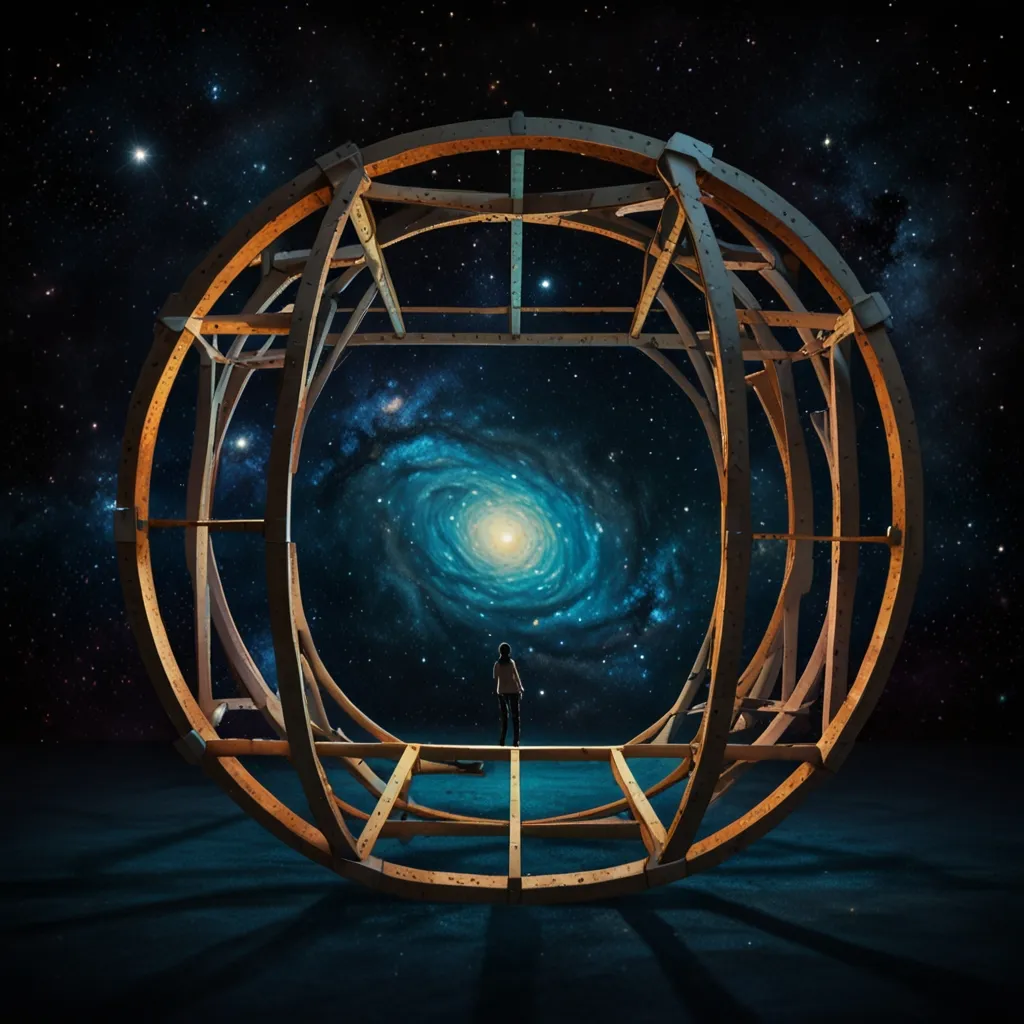
The idea of space-time as a four-dimensional stage where physics unfolds is fascinating. You might wonder, why do we only have three spatial dimensions and one time dimension? Why not more? Additional large spatial dimensions probably don’t exist, as we would have detected them by now. Similarly, having more than one dimension of time could lead to closed time-like loops. Essentially, this means traveling to the past, which could break causality.

Imagine being able to travel back in time and kill your father. You wouldn’t have been born, so you couldn’t have traveled back in time to commit the act. This paradox illustrates why multiple time dimensions are deemed impossible. Studies also suggest that living in any other number of dimensions besides four would result in either no life at all or an unstable universe. This adds up to why our universe is structured the way it is.

It’s this delicate balance that makes the universe hospitable for life and stable enough to last. The concept of dimensions ties closely with the possibility of life and the stability of the universe, making it not just a scientific curiosity but an existential cornerstone.
Similar Posts
Blog Image
What If You Could Live Forever in a Digital Paradise?

Navigating the Digital Renaissance: Turning Mind Uploading from Fantasy into Reality

Blog Image
Can the Future Really Change the Past? The Truth Behind the Delayed Choice Quantum Eraser

Quantum Mysteries: Unraveling the Tricks of the Delayed Choice Quantum Eraser Experiment

Blog Image
Listening to Nature: How Sound Reveals Earth's Hidden Secrets

Bioacoustics studies sounds from living organisms and their environment. It helps monitor biodiversity, animal behavior, and climate change impacts. Researchers use advanced technology to record and analyze ecosystem sounds. This field aids conservation efforts, urban planning, and creates a deeper connection with nature. It's an interdisciplinary area combining biology, ecology, and data analysis, offering insights into ecosystem health and species preservation.

Blog Image
Is Your Belief System Secretly Leading You Astray?

Seeing Through Bias: How Shared Values and Trust Shape Our Beliefs

Blog Image
Did Isaac Newton Unravel the Divine Secrets of the Universe?

When the Cosmos Reveals Its Secrets: From Newton to Modern Physics

Blog Image
The Rise of Personalized Medicine: Tailoring Treatments to Your Genes

Personalized medicine tailors treatments to individual genetic profiles, revolutionizing healthcare. It offers targeted therapies, early disease prevention, and improved drug efficacy. This approach promises more effective, efficient, and cost-effective healthcare, transforming the medical landscape by 2030.