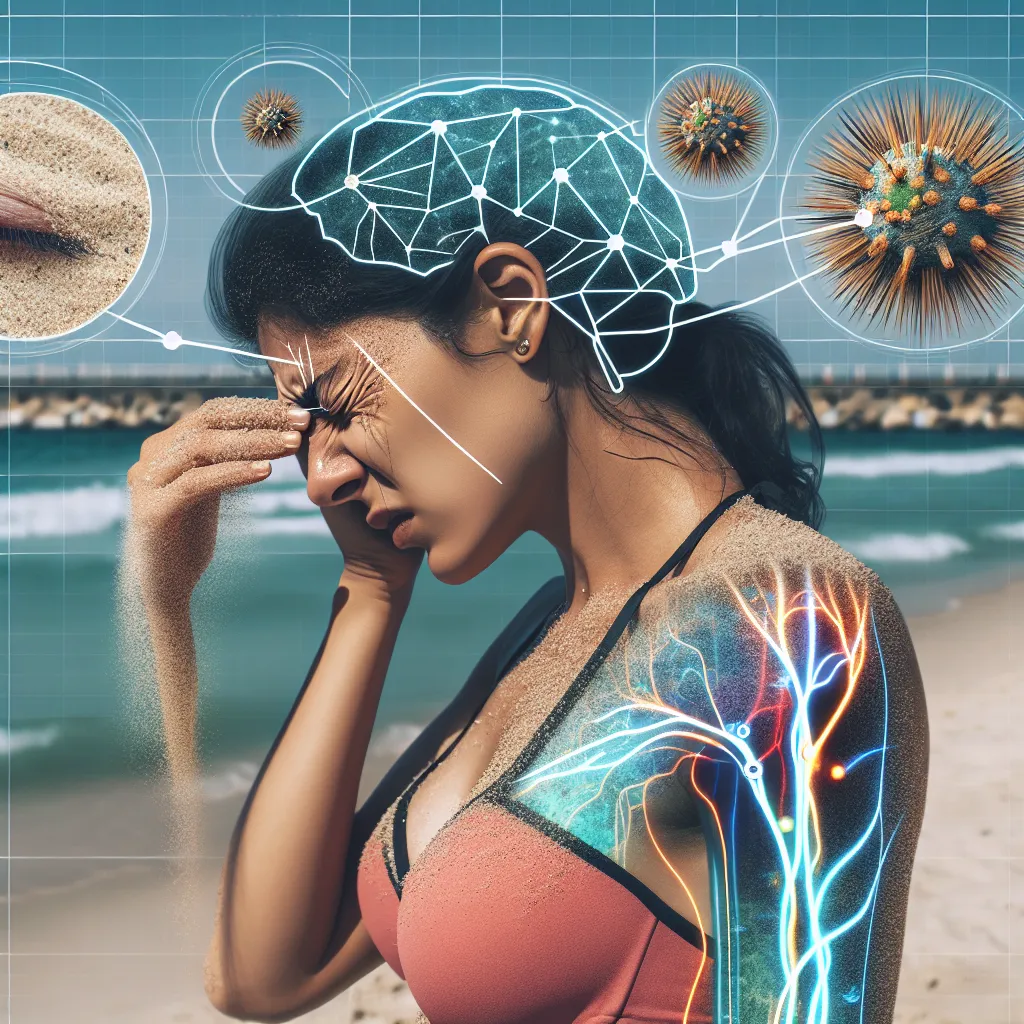
Imagine being at the beach and getting sand in your eyes. You can’t see the sand, but you immediately feel the discomfort. That feeling, known as pain, makes you rinse your eyes until it’s gone. The absence of pain tells you the sand is gone. Pain isn’t just a nuisance; it’s your body’s alarm system. It alerts you to take action to avoid harm.
Some people can’t feel pain. Although this might sound appealing, it’s quite dangerous. Without pain, you wouldn’t know if you were hurt. Pain protects us from harm, including self-inflicted injuries.
As we grow, our bodies develop pain detectors, or nociceptors, in various areas. These specialized nerve cells run from our spinal cord to our skin, muscles, joints, teeth, and some internal organs. They send electrical signals to the brain when something potentially harmful happens.
Imagine touching a needle lightly; you feel the metal, but no pain. Press harder, and eventually, you’ll reach the pain threshold where nociceptors fire off signals to stop. This threshold can change; certain chemicals can lower it, making even light touches painful.
Over-the-counter painkillers like aspirin and ibuprofen work by blocking these chemicals. When cells get damaged, they release arachidonic acid, which enzymes COX-1 and COX-2 turn into prostaglandin H2. This substance then causes inflammation, raises body temperature, and lowers the pain threshold.
Here’s how the painkillers work: Enzymes have active sites where reactions occur. Aspirin blocks these sites permanently by breaking off inside them, while ibuprofen temporarily occupies them without breaking apart. Both prevent the enzymes from producing the chemicals that cause pain.
These drugs don’t specifically target pain areas. They travel through your bloodstream and affect both painful and normal areas.
Pain has more layers, though. Neuropathic pain comes from nerve damage without any external cause. Also, the brain influences how we perceive pain. Your level of pain can vary based on attention and mood.
Pain research is ongoing. Better understanding it could lead to more effective pain management techniques.