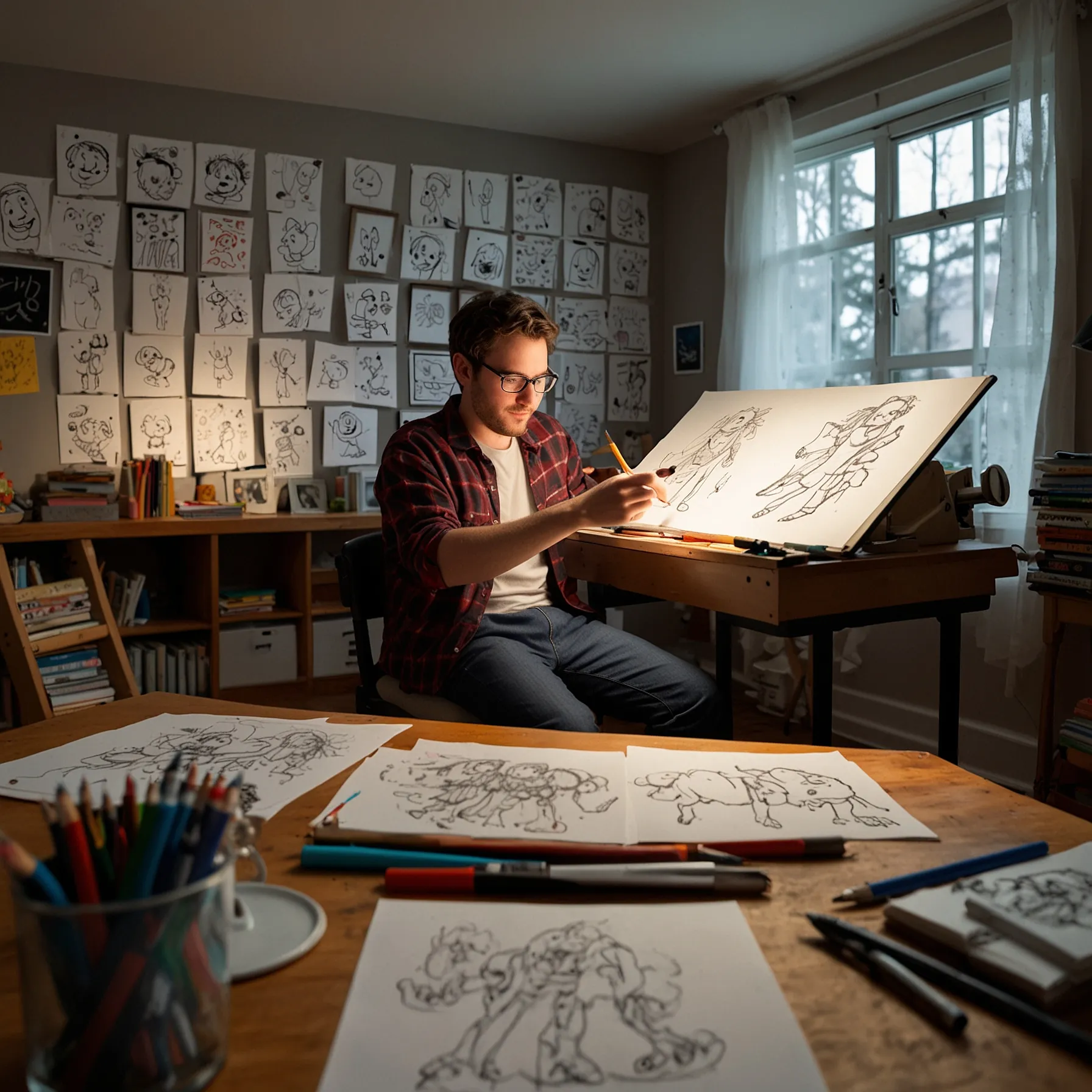
Ever wondered what makes cartoons so special? For many of us, cartoons were an essential part of our childhood. Over the years, they’ve evolved into various forms like comic strips, graphic novels, web comics, and animated shows. Despite this evolution, one thing remains constant: cartoons can make us laugh, cry, think, and feel a range of emotions within seconds. This universal language has allowed cartoons to transcend borders and time, and that’s why they’re still around.
So, what really is a cartoon? It all begins with an idea. This idea can be simple or complex, verbal or visual. Cartoonists draw their inspiration from the everyday world around them. They keenly observe people, places, and behavior, soaking up these details like sponges. Often, they jot down their thoughts and ideas in a small notebook. Whether stored in a book or their mind, these ideas come alive at the cartoonist’s drawing table.
Creating a cartoon is like directing a mini-play. The cartoonist is the playwright, director, stage designer, and costume maker, all rolled into one. Characters need to be dressed appropriately, the background must fit the context, and the dialogue—no matter how brief—has to be spot-on. Every element in the cartoon serves a purpose. This perfect blend of image and words can result in a variety of outcomes, from a graceful dance to an awkward stumble—whatever suits the humor or the message being delivered.
When it comes to execution, every cartoonist has their unique process. Some sketch with pencils before inking, others draw directly with pens. They use different tools like felt-tip pens, mechanical pens, or crow quills, and choose from varied types of paper. To add depth, they might use techniques like gray tones or watercolor for color. Today, digital tools like Photoshop and drawing tablets with styluses have also entered the cartoonist’s toolkit, adding more layers to this creative process.
All these elements—ideas, visuals, dialogues—come together harmoniously to craft a finished cartoon. It’s this masterful dance of words, ideas, and images that makes cartoons not just a fleeting moment of amusement but lasting works of art.