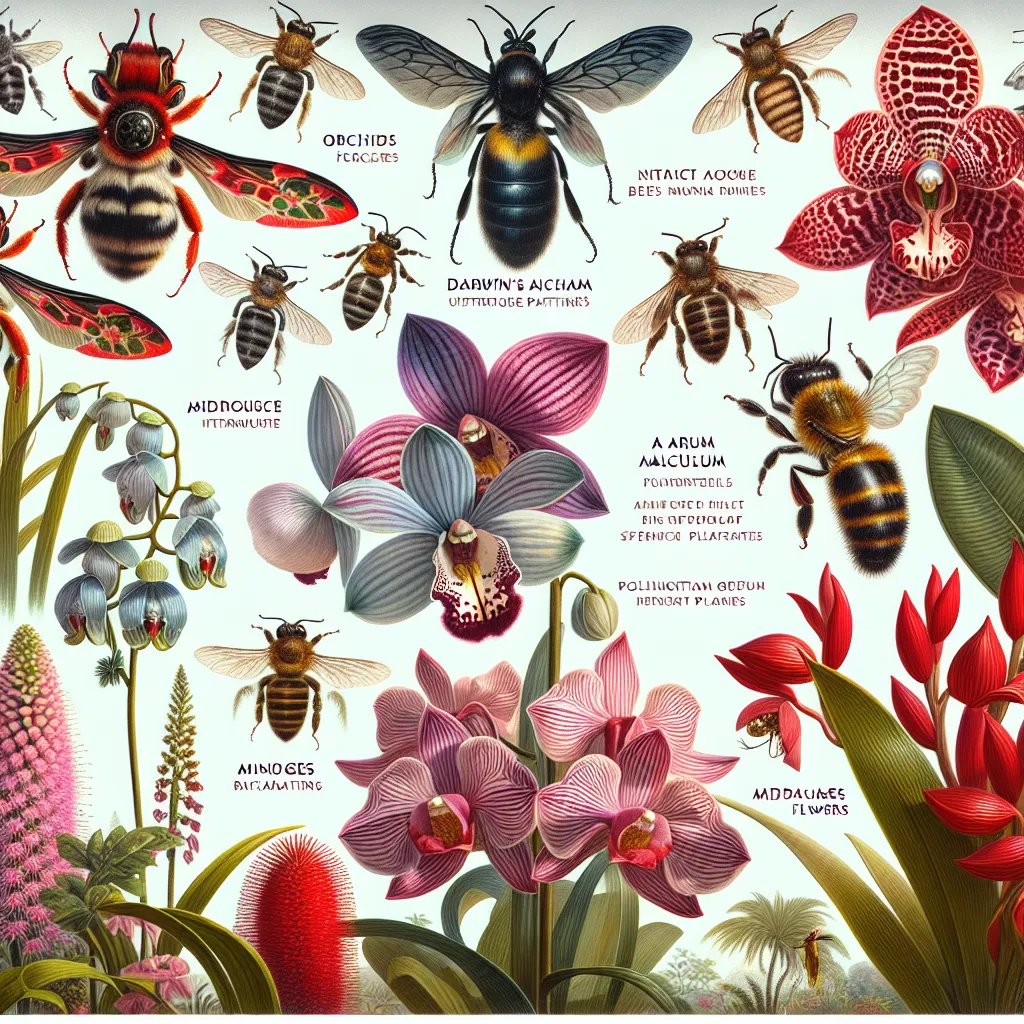
Did you know there are at least a quarter of a million species of flowering plants? It’s mind-blowing! Flowers are a challenge for plants to produce. They require tons of energy and resources. But why do they go through all that trouble? The answer is simple: reproduction.
Plants rely heavily on sexual reproduction to diversify their genetic makeup, which helps them adapt to different environments. Pollen is their vehicle for transmitting genetic information. There are as many types of pollen as there are flowering plants. This diversity can be useful for things like forensic science. Most of the pollen that triggers hay fever for humans is from plants that spread their pollen by the wind. This method is pretty inefficient, which is why there’s so much of it in the air.
However, most species use insects to transfer their pollen, which is a much smarter approach. Insects and other creatures move the pollen directly where it’s needed, so less is wasted. This symbiotic relationship benefits both the plants and the insects. While the insects get nectar, the plants get their pollen spread around.
Some plants have evolved amazing tricks to attract and manipulate their pollinators. For example, some orchids look like other insects to attract their pollinators. There are orchids with complex structures to ensure the insect is thoroughly dusted with pollen before it leaves.
One particularly fascinating plant is Darwin’s orchid. It has a long nectar tube that requires the insect to reach deep inside, ensuring it gets covered in pollen. Charles Darwin even predicted the existence of an insect that co-evolved with this orchid.
Deception is another strategy. Some plants mimic their nectar-rich counterparts to attract pollinators, even though they don’t offer any nectar in return. The mimic gets the pollinator’s attention, and the insect inadvertently spreads its pollen.
Some flowers even deceive insects by mimicking potential mates. Male insects, attracted by what they think are females, end up covered in pollen. Plants like the Dead Horse Arum have evolved to smell like rotting flesh, attracting flies that help pollinate them.
The Arum maculatum, or Lords and Ladies, heats up to attract midges, trapping them inside to ensure they get covered in pollen before being released.
The Philodendron selloum is another marvel. For two days, it metabolizes in a way similar to mammals, producing heat to attract beetles that thrive in warmth. This plant keeps a constant temperature, similar to how mammals regulate body heat.
It’s not just insects involved in pollination. In the tropics, birds and butterflies play significant roles. Many tropical flowers are red because birds and butterflies can see this color well.
Bees, however, see the world differently. They can see ultraviolet light, which reveals patterns on flowers invisible to the human eye. These patterns guide bees to the flower’s nectar and, in turn, help in the pollination process.
Flowers have also managed to captivate humans. We’ve cultivated fields full of them and give them as gifts at weddings, births, and even funerals. It’s fascinating to think that flowers have not only adapted to attract birds, bees, and other pollinators but also managed to worm their way into our human rituals and traditions.
Isn’t nature just incredible?