Can Microbes Finally Solve Our Plastic Problem?
Microbial Evolution Struggles Against Humanity’s Plastic Legacy
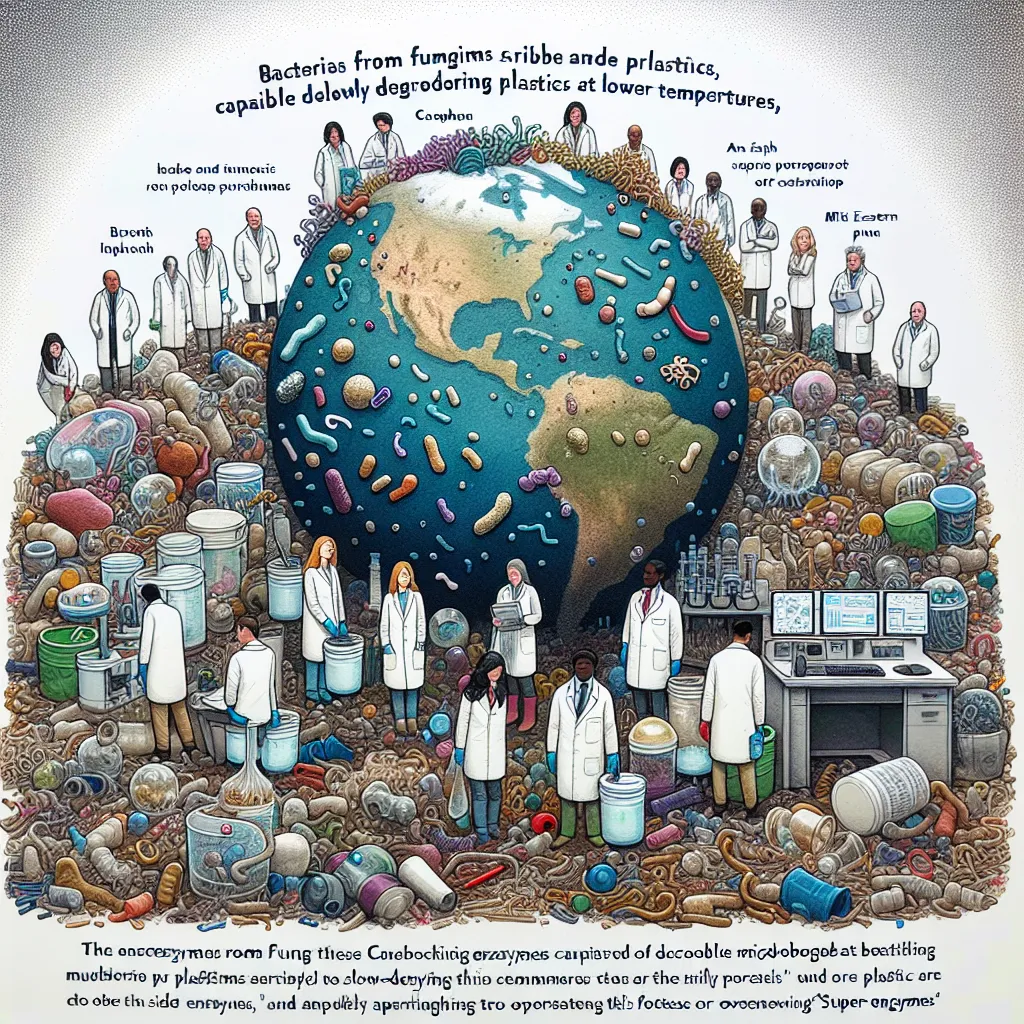
Right now, everything around us is being eaten—by microbes. Bacteria, archaea, and fungi have evolved powerful enzymes to break down tough organic material into nutrients. But there’s one thing they can’t handle: plastics.
To make plastics, we refine oil, gas, and coal into long chains called polymers. This process needs high temperatures and pressure, along with other chemical tweaks. These man-made polymers are way different from natural ones, and microbes haven’t had enough time to evolve enzymes to digest them. Plus, breaking down plastics usually requires high temperatures, which kill most microbes. So, plastics don’t biodegrade; they just turn into tiny pieces that linger around.
We’re producing around 400 million tons of plastic every year. Unfortunately, about 80% of it ends up as trash: only 10% gets recycled, while 60% is incinerated or dumped into landfills. The remaining 30% leaks into the environment and can stay there for centuries, with 10 million tons ending up in oceans every year as microplastic fragments.
But there’s hope. In 2016, Japanese researchers found a bacterium called Ideonella sakaiensis 201-F6 in a plastic-bottle recycling plant. This bacterium had enzymes that could slowly break down PET polymers at low temperatures. Scientists isolated these enzymes and even managed to create super-enzymes that could break down PET much faster. Still, it takes weeks and works best below 40°C.
Meanwhile, another team in Japan found powerful enzymes in compost piles. Known as Leaf Branch Compost Cutinases, these enzymes can degrade PET at around 70°C. This makes the plastic easier to digest. With more research, the future of PET recycling is looking up.
However, PET is just one type of plastic. Other plastics, like Polyethylene (PE) and Polypropylene (PP), start breaking down only at temperatures above 130°C. Right now, we don’t know of any microbes or enzymes that can handle such heat, so we rely on energy-intensive processes to manage these plastics.
Only a small fraction of plastic waste can currently be broken down by microbes. Researchers are hunting for heat-tolerant microbes in extreme environments and engineering better enzymes in labs. But we can’t just rely on science to clean up our mess. We need to rethink our relationship with plastics, use them more efficiently, stop producing more, and develop environmentally-friendly polymers that microbes can easily break down.